

Everyday discomforts like bloating, unpredictable digestion, and stubborn weight challenges often tell a bigger story about your health. If you find yourself frustrated by stalled progress despite your best efforts, your gut may be sending signals that cannot be ignored. Recognizing and addressing a possible gut imbalance could be the key to restoring your metabolism, regulating hormones, and finally seeing real, lasting results on your health journey. In this guide, you will discover practical ways to notice and respond to your gut’s messages for genuine change.
Table of Contents
- Step 1: Identify Symptoms Of Gut Imbalance
- Step 2: Eliminate Common Gut Disruptors
- Step 3: Add Nutrient-Rich And Probiotic Foods
- Step 4: Establish Supportive Daily Habits
- Step 5: Monitor Signs Of Gut Health Improvement
Quick Summary
| Key Insight | Explanation |
|---|---|
| 1. Identify gut imbalance symptoms | Pay attention to bloating, changes in bathroom habits, and energy crashes after meals. These are signs of a potential gut issue. |
| 2. Eliminate common gut disruptors | Remove processed foods, excessive sugar, and manage stress to help restore gut health effectively. |
| 3. Add nutrient-rich and probiotic foods | Incorporate fermented foods and prebiotics to support beneficial bacteria growth within your gut. |
| 4. Establish supportive daily habits | Improve hydration, regular movement, and sleep hygiene to enhance gut health and overall well-being. |
| 5. Monitor signs of gut health improvement | Keep a log to track digestion, energy levels, and mood changes to understand your gut’s healing progress. |
Step 1: Identify symptoms of gut imbalance
Your gut sends signals constantly. Most people ignore them or mistake them for something else entirely. Learning to recognize these signals is your first step toward understanding what’s happening inside your body and why your weight management efforts might be stalling. By identifying gut imbalance symptoms early, you can address the root cause instead of just treating the surface problem.
Start by paying attention to how your body feels after eating. Do you experience bloating that makes your pants feel tight even when you haven’t eaten much? Does your stomach feel distended or uncomfortable for hours after meals? These are classic signs your gut bacteria might be out of balance. Look also for changes in your bathroom habits. Common digestive symptoms include constipation, diarrhea, and excess gas, all of which indicate your microbiome isn’t functioning optimally. You might notice your energy crashes midday, your skin breaks out, or you feel mentally foggy. These aren’t random complaints. They’re your gut telling you something is wrong.
Next, consider whether stress or certain foods trigger your symptoms. Emotional stress can genuinely cause or worsen gastrointestinal issues because of the brain-gut connection. Eat a bowl of pasta and feel sluggish and bloated? That’s worth noting. Skip breakfast and experience intense hunger by 10 AM? That matters too. Pay attention to acid reflux, nausea, or persistent pain in your abdomen or lower digestive tract. Other warning signs include unexplained weight gain despite eating reasonably, chronic fatigue, or food cravings that seem to control you rather than the other way around. These symptoms often cluster together because they all point to the same underlying problem: an imbalanced microbiome that’s affecting your metabolism, hormone regulation, and ability to lose weight.
Keep a simple symptom log for one to two weeks. Write down what you eat, how you feel, and when symptoms appear. You don’t need elaborate entries. Just note “bloating after lunch” or “constipated for three days” or “energy crashed at 3 PM.” This creates a pattern you can actually see and discuss with a healthcare provider. When you notice multiple symptoms occurring together, that’s when you know something systematic is happening in your gut, not just isolated digestive upset.
Pro tip Track your symptoms alongside your meals and stress levels to identify specific triggers, then bring this information to your doctor or a healthcare provider who understands the connection between gut health and weight management.
Step 2: Eliminate common gut disruptors
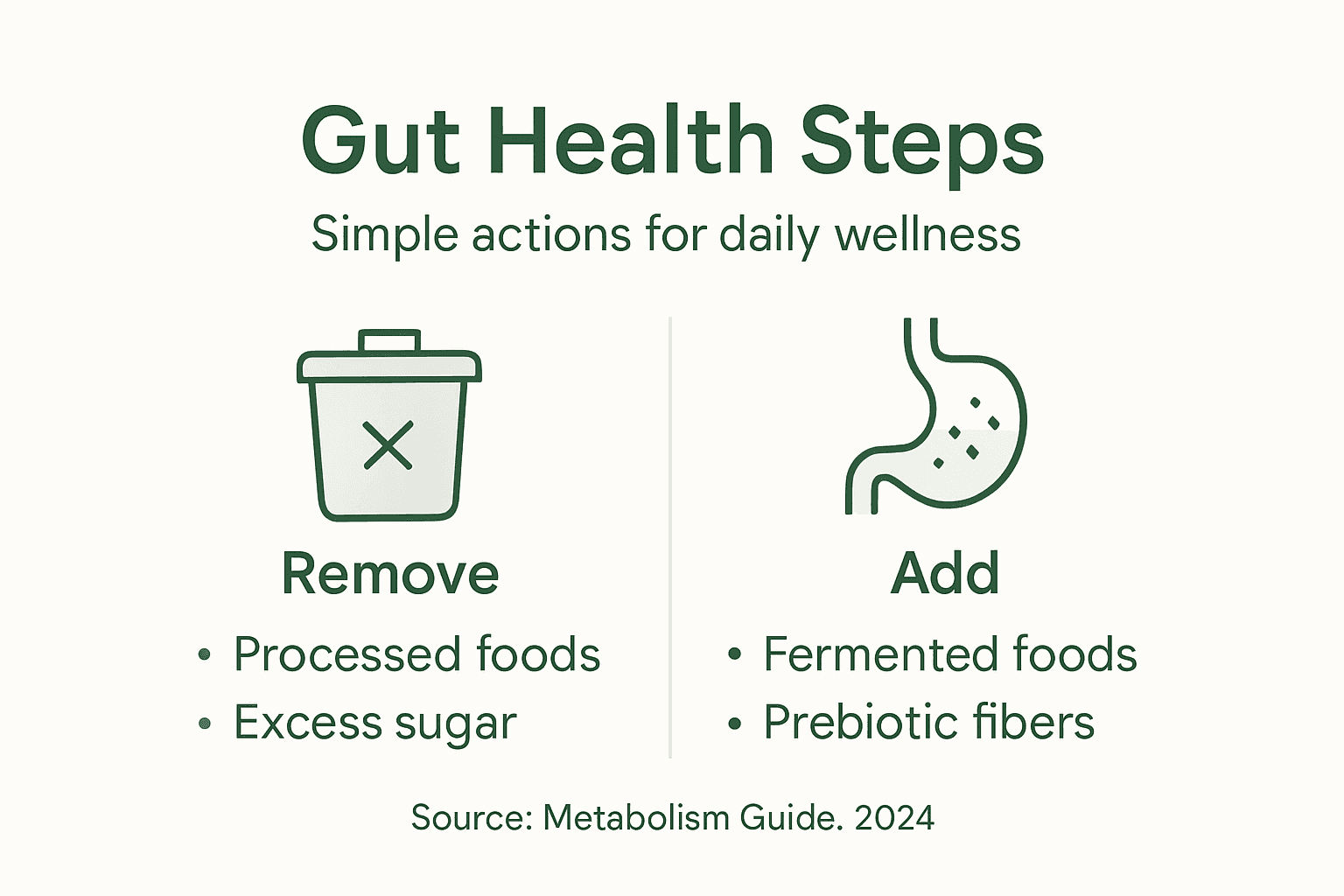
Now that you know what symptoms to watch for, it’s time to remove the things actually causing the problem. Your gut microbiome is like a delicate ecosystem. When you introduce the wrong elements, the balance collapses. The good news? You control most of these disruptors. Removing them can shift your results dramatically in just a few weeks.
Start with your diet. Processed foods and excessive sugar are among the biggest culprits destroying your microbiome diversity. Processed foods contain additives, preservatives, and refined ingredients that feed harmful bacteria while starving beneficial ones. That bag of cookies, frozen dinner, or flavored yogurt might taste fine in the moment, but it’s literally rewiring your gut ecosystem in ways that sabotage weight loss. When you eat processed foods regularly, your good bacteria gradually die off. Your bad bacteria multiply. Your intestinal lining becomes inflamed. Your metabolism slows. Your cravings intensify. This is why so many people in their 30s and 40s find themselves stuck in a weight loss plateau despite eating “reasonably.” It’s not about willpower. It’s about what you’re actually feeding your gut bacteria.
Next, reconsider your relationship with antibiotics. Yes, sometimes you need them. But overusing antibiotics, even taking them when they’re not necessary, decimates your gut bacteria indiscriminately. They kill the bad bacteria causing infection, sure, but they also obliterate your beneficial bacteria that took years to establish. You end up with a wasteland that gets repopulated by whatever colonizes fastest, usually the problematic strains. Additionally, manage your stress levels actively. Chronic stress directly damages your gut lining and shifts your bacterial composition. A high-pressure job, poor sleep, or constant worry doesn’t just feel bad. It literally changes what’s living in your intestines.
Other disruptors include excessive alcohol, which damages your gut barrier, and unnecessary medications beyond antibiotics. Even some common over-the-counter pain relievers can harm your gut lining with regular use. Start eliminating these one at a time rather than overhauling everything overnight. Replace processed foods with whole foods, whole grains, and vegetables. Cut added sugar dramatically. These changes don’t require perfection. They require consistency.
Here is a summary of common gut disruptors and their effects:
| Gut Disruptor | How It Impacts Gut Health | Recommended Action |
|---|---|---|
| Processed Foods | Reduces microbiome diversity | Replace with whole foods |
| Excessive Sugar | Feeds harmful bacteria | Limit added sugars |
| Antibiotics Overuse | Destroys good bacteria | Use only when necessary |
| Chronic Stress | Damages gut lining | Prioritize stress management |
| Excess Alcohol | Weakens gut barrier | Limit alcohol consumption |
| OTC Pain Relievers | Irritates gut lining | Use sparingly |
Pro tip Identify your biggest gut disruptor first, whether that’s processed foods, stress, or antibiotic use, then eliminate just that one thing for two weeks before tackling the next one to avoid feeling overwhelmed.
Step 3: Add nutrient-rich and probiotic foods
Removing the bad is only half the equation. Now you need to actively rebuild your gut microbiome with the right foods. Think of this as replanting a garden after clearing out the weeds. You’re not just creating empty space; you’re introducing species that will thrive, multiply, and create a healthy ecosystem. When you eat the right foods consistently, your beneficial bacteria flourish. They produce compounds that reduce inflammation, stabilize blood sugar, and actually help you lose weight more efficiently.

Start by adding fermented foods like yogurt, kefir, sauerkraut, and kimchi to your regular rotation. These foods contain live beneficial bacteria strains like Lactobacillus and Bifidobacterium that colonize your gut and actively work for you. The key word here is live. Pasteurized versions lose most of their benefit, so look for unpasteurized or refrigerated options that still contain active cultures. A small serving daily makes a real difference. You might add Greek yogurt to breakfast, sneak some sauerkraut into lunch, or eat kimchi with dinner. Start slowly though. When you introduce probiotics after a period of gut imbalance, you might experience temporary bloating or gas as your microbiome rebalances. That’s actually a sign it’s working, not a reason to stop.
But probiotics alone aren’t enough. You also need prebiotics, which are fibers that feed your beneficial bacteria and help them multiply. Foods like garlic, onions, bananas, and whole grains contain these prebiotic fibers. When you eat them alongside probiotic foods, you create an environment where good bacteria don’t just survive but genuinely thrive. A simple approach is building meals around whole foods: grilled chicken with roasted garlic and onions, brown rice, steamed broccoli, and a side of sauerkraut. Add a banana with almonds for a snack. This isn’t complicated or expensive. It’s just real food that your gut recognizes and can actually use.
Focus on variety. Different probiotic strains do different things. Different prebiotic sources feed different bacteria. The more diverse your food intake, the more diverse your microbiome becomes. And a diverse microbiome is a resilient, healthy one that supports weight loss and sustained energy. Track what you’re eating and how you feel. After two to three weeks of consistently adding these foods, most people notice improvements in bloating, energy, digestion, and even their ability to stick to healthier eating patterns.
Compare popular probiotic and prebiotic foods and their main benefits:
| Food Type | Example Foods | Primary Gut Benefit | How to Add to Diet |
|---|---|---|---|
| Probiotic | Yogurt, kefir, kimchi | Introduces live bacteria | Add as side or snack daily |
| Prebiotic | Bananas, garlic, oats | Feeds good bacteria | Mix into meals or snacks |
Pro tip Start with one fermented food you actually enjoy and one prebiotic source you’ll eat regularly, then gradually add variety over a month rather than trying to change everything at once.
Step 4: Establish supportive daily habits
You’ve identified your symptoms, removed the disruptors, and started eating the right foods. Now comes the part that actually determines whether these changes stick or fade. Daily habits are where the real transformation happens. This isn’t about perfection. It’s about consistency. When you build small, sustainable habits into your routine, your gut heals, your hormones stabilize, and weight loss becomes easier because you’re working with your body instead of against it.
Start with hydration and movement. Water is fundamental. Your digestive system needs adequate hydration to function properly. Most people don’t drink nearly enough, especially those attempting weight loss. Aim for half your body weight in ounces daily as a baseline, then adjust based on activity level and climate. Next, incorporate regular physical activity into your daily routine. You don’t need intense workouts. A 20 to 30 minute walk after meals literally helps your gut bacteria thrive by improving blood flow and reducing inflammation. Exercise also stabilizes blood sugar, which reduces cravings and supports sustainable weight loss. Many people in their 30s and 40s find that adding movement after eating transforms their energy levels and digestion within days.
Sleep and stress management matter more than most people realize. Poor sleep actively damages your gut lining and shifts your bacterial composition toward harmful strains. Aim for 7 to 9 hours nightly, with consistent bedtimes. Create a wind-down routine starting an hour before bed. This isn’t luxury. It’s maintenance. Stress management is equally critical. Chronic stress keeps you in fight-or-flight mode, redirecting resources away from digestion and healing. Practice whatever works for you: meditation, deep breathing, journaling, time in nature. Even 10 minutes daily makes a measurable difference in your stress hormones and gut health. One person might do yoga, another might sit quietly with coffee for 15 minutes. Find what actually fits your life.
Finally, track your patterns. Keep a simple log of sleep hours, water intake, movement, stress levels, and how you feel. After two weeks, you’ll see correlations. Maybe you sleep poorly on nights you eat late. Maybe your digestion improves dramatically when you walk after meals. Maybe stress spikes your cravings. Understanding your personal patterns lets you make targeted adjustments that actually work for your unique body.
Pro tip Anchor one new habit to an existing routine you already do daily, like adding a 10-minute walk immediately after lunch or drinking a glass of water when you pour your morning coffee, to make habit formation effortless.
Step 5: Monitor signs of gut health improvement
You’ve made real changes. Your body is responding. But how do you actually know things are improving if you can’t see inside your gut? The answer is simpler than you think. Your body gives you clear signals when your microbiome is healing. Learning to recognize these signals keeps you motivated and helps you understand what’s working specifically for your unique physiology.
Start by monitoring your digestion. Reduced bloating, regular bowel movements, and less abdominal discomfort are among the first signs your gut is rebalancing. If you used to feel distended after every meal, notice when that stops happening. If you struggled with constipation or unpredictable bathroom patterns, pay attention to when things normalize. These aren’t minor improvements. They indicate your bacterial composition is shifting, your intestinal lining is healing, and your digestive system is functioning more efficiently. Most people experience these changes within two to four weeks of consistent dietary and lifestyle modifications. Your pants might fit differently not because you’ve lost weight yet, but because the bloating has resolved.
Beyond digestion, watch for broader health improvements. Energy levels often jump dramatically as your gut heals. You’ll notice you don’t crash at 3 PM anymore. Your mood stabilizes. Brain fog lifts. Your skin improves. Your immune function strengthens, meaning you get sick less often. These changes happen because your gut lining is no longer leaking inflammatory compounds into your bloodstream. Your hormones, which are heavily influenced by gut bacteria, are beginning to rebalance. For people struggling with weight loss due to hormonal imbalance, this is when things shift. Your cravings diminish. Your hunger signals become reliable instead of chaotic. Unexplained weight loss can follow naturally as your body’s metabolic machinery works with you instead of against you.
If you want objective data, ask your doctor about microbiome testing or work with your healthcare provider to monitor your progress. Some advanced clinics use tools that measure your gut microbiome status over time, giving you concrete feedback on whether your interventions are working. But you don’t need a test to know improvements are happening. Your body tells you clearly through energy, digestion, mood, and how your clothes fit. Trust these signals. They’re real, measurable, and worth celebrating.
Pro tip Keep your original symptom log alongside a new progress log for the next 4 to 8 weeks, noting improvements in digestion, energy, mood, and cravings so you can clearly see how far you’ve come and identify which habits matter most for your body.
Take Control of Your Gut Health for Lasting Wellness Today
If you have been struggling with persistent bloating, food cravings, or weight loss plateaus caused by gut imbalance, you are not alone. The challenge lies in understanding how your gut microbiome affects your metabolism, hormones, and overall health. This article revealed the critical role of identifying symptoms, removing disruptors, and nourishing your gut with probiotic and prebiotic foods. However, making and sustaining these changes requires personalized guidance and science-backed strategies.
Unlock your body’s natural potential by joining the Metabolism Guide community. Our doctor-led, evidence-based program goes beyond fad diets by explaining the biology of weight regulation and gut health in straightforward lessons. You will get support through expert medical advice, easy-to-follow educational content, and practical lifestyle tools designed to rebuild your gut and balance your metabolism for long-term success. Stop guessing and start healing your gut with confidence. Begin your journey now at Metabolism Guide and discover how to break free from frustrating dieting cycles for good.
Frequently Asked Questions
What are common symptoms of gut imbalance?
Common symptoms of gut imbalance include bloating, abdominal discomfort, constipation, diarrhea, and fatigue. Start tracking your symptoms alongside your meals and stress levels for one to two weeks to identify patterns and triggers.
How can I eliminate gut disruptors from my diet?
To eliminate gut disruptors, cut down on processed foods, added sugars, and excessive alcohol. Begin by replacing one processed item with a whole food daily and limiting sugar intake for two weeks to observe any improvements in your gut health.
What foods should I add to support gut health?
Incorporate fermented foods like yogurt, kefir, and kimchi along with prebiotic foods such as garlic, onions, and bananas into your meals. Aim to include at least one serving of fermented food and one source of prebiotics daily to encourage the growth of beneficial gut bacteria.
How can I establish healthy daily habits for gut wellness?
To establish healthy habits, focus on drinking plenty of water and including regular physical activity in your routine. Aim for half your body weight in ounces of water daily and walking for at least 20–30 minutes after meals to support gut health.
How do I know if my gut health is improving?
You can monitor improvements in gut health by looking for reduced bloating, regular bowel movements, and increased energy levels. Keep a progress log for four to eight weeks, noting these changes along with any other health improvements you notice.
Is it necessary to consult a healthcare provider when improving gut health?
While you can make many changes on your own, consulting a healthcare provider can provide additional insights and guidance tailored to your situation. Schedule an appointment to discuss your gut health goals and any specific concerns to ensure you’re on the right path.
