

Finding yourself frustrated with stubborn weight despite your best efforts is a reality for many Americans dealing with hormonal imbalances or metabolic issues. Hormones act as microscopic managers, coordinating how your body stores fat, burns calories, and senses hunger. Understanding the science behind these chemical messengers reveals why traditional diets often fall short and highlights the importance of a personalized approach to hormonal weight regulation.
Table of Contents
- What Are Hormones and Their Role in Weight
- Key Hormones Influencing Weight Regulation
- How Hormonal Imbalances Affect Weight Loss
- Hormone Therapy and Medical Weight Loss Options
- Lifestyle Strategies for Balancing Hormones
- Common Myths and Misconceptions About Hormones
Key Takeaways
| Point | Details |
|---|---|
| Understanding Hormones is Key | Hormones play a crucial role in weight management by regulating appetite, metabolism, and energy storage. |
| Hormonal Imbalances Challenge Weight Loss | Disruptions in hormone levels can lead to increased appetite and fat storage, complicating weight loss efforts. |
| Medical Options Exist | Hormone therapies can provide targeted interventions for weight management, addressing specific metabolic issues. |
| Lifestyle Modifications Matter | Nutrition, exercise, and stress management significantly impact hormone balance and overall weight regulation. |
What Are Hormones and Their Role in Weight
Hormones are sophisticated chemical messengers that play a pivotal role in regulating body weight and metabolism. These microscopic communicators travel through the bloodstream, sending critical signals to various organs and tissues about energy storage, expenditure, and hunger management.
At their core, hormones coordinate complex metabolic processes that determine how your body stores fat, burns calories, and maintains energy balance. They act like tiny managers within your biological system, making moment-to-moment decisions about your body’s nutritional needs and energy utilization.
Several key hormones significantly influence weight management:
- Leptin: Regulates appetite and signals the brain about fat levels
- Ghrelin: Stimulates hunger sensations
- Insulin: Controls blood sugar and fat storage mechanisms
- Cortisol: Manages stress responses that can impact weight
- Thyroid Hormones: Directly control metabolic rate
The intricate communication between these hormones determines whether your body stores or burns calories. Hormone imbalances can create significant weight challenges, potentially making weight loss difficult despite diet and exercise efforts. When these chemical messengers become disrupted, they can trigger increased appetite, slower metabolism, and more efficient fat storage.
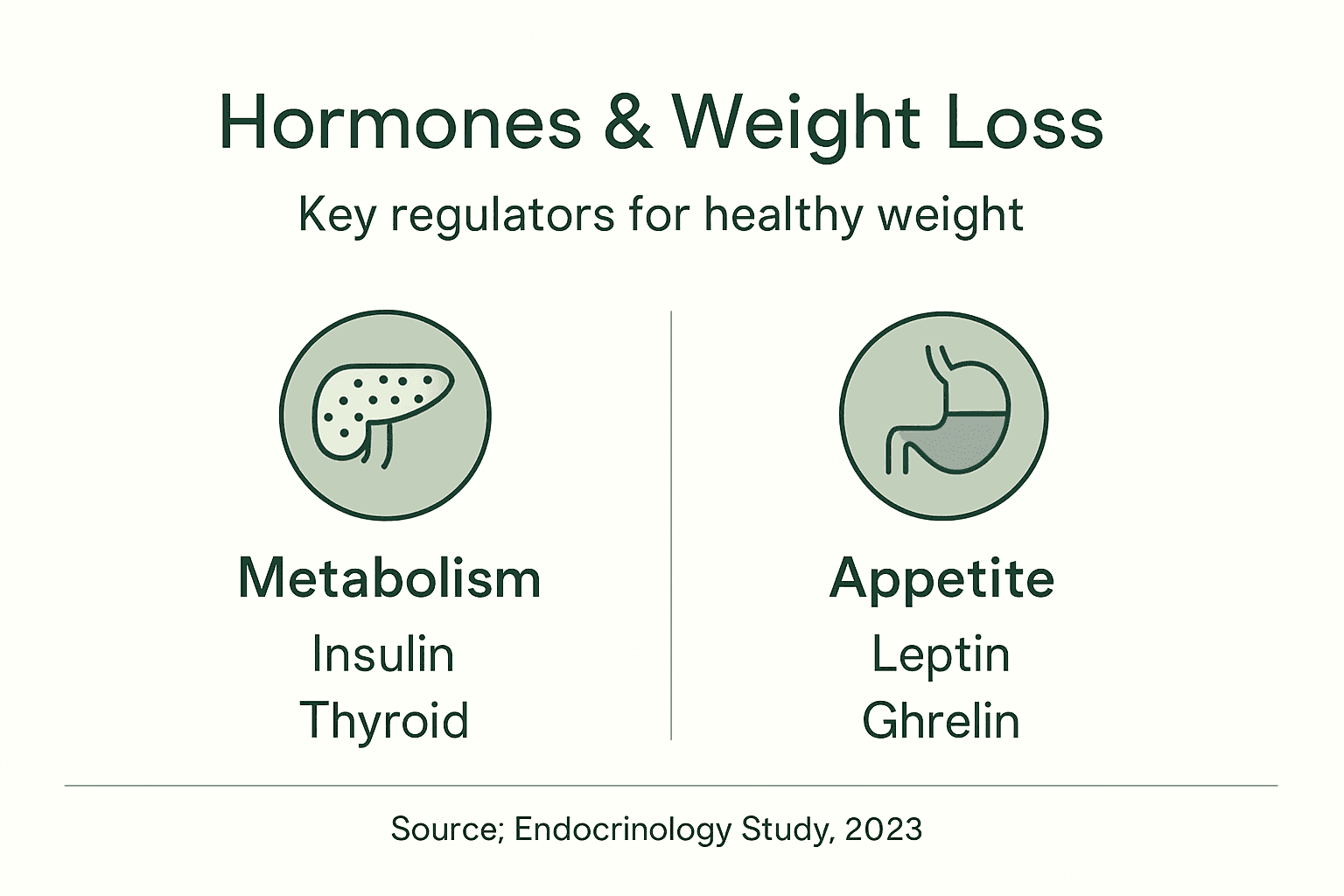
Understanding your hormonal landscape is crucial for effective weight management. Hormones don’t just respond to your diet—they actively shape your body’s metabolic responses, making them far more than passive biological components.
Here’s a quick reference table summarizing key hormones involved in weight regulation and their primary functions:
| Hormone | Main Function | Impact on Weight |
|---|---|---|
| Leptin | Signals fat storage | Regulates appetite |
| Ghrelin | Triggers hunger | Encourages food intake |
| Insulin | Controls blood sugar | Influences fat storage |
| Cortisol | Responds to stress | Promotes abdominal fat |
| Thyroid Hormones | Regulate metabolism | Increase energy usage |
Pro tip: Consider consulting an endocrinologist to get a comprehensive hormone panel that can reveal underlying metabolic patterns affecting your weight loss journey.
Key Hormones Influencing Weight Regulation
The human body’s weight regulation is a complex symphony of hormonal interactions that determine how we store, burn, and utilize energy. Adipose tissue plays a crucial role in secreting hormones that directly impact metabolic processes and body weight management.
Several key hormones emerge as critical players in this intricate metabolic dance:
- Leptin: Often called the “satiety hormone”
- Signals the brain about fat storage levels
- Suppresses appetite and increases energy expenditure
- Adiponectin: Regulates glucose metabolism
- Enhances insulin sensitivity
- Reduces inflammatory responses
- Ghrelin: Known as the “hunger hormone”
- Stimulates appetite and food intake
- Influences energy balance
Hormonal regulation of appetite and weight involves complex interactions between central nervous system signals and peripheral hormonal messengers. When these systems become disrupted, individuals may experience significant challenges in maintaining a healthy weight.
Hormonal imbalances can create a cascade of metabolic complications. For instance, leptin resistance can prevent the brain from recognizing fullness signals, leading to continuous hunger and potential overeating. Similarly, elevated cortisol levels can trigger increased fat storage, particularly around the abdominal region.
Hormones are not just passive biological components but active regulators of metabolic processes that directly influence weight management strategies.
Understanding these hormonal mechanisms provides crucial insights into personalized weight management approaches. Each hormone functions like a specialized messenger, coordinating complex metabolic responses that go far beyond simple calorie calculations.
Pro tip: Consider tracking your hormonal health through comprehensive blood panels that can reveal underlying metabolic patterns affecting your weight regulation.
How Hormonal Imbalances Affect Weight Loss
Hormonal imbalances can dramatically undermine weight loss efforts by disrupting the body’s intricate metabolic mechanisms. Hormone fluctuations profoundly impact weight regulation, creating significant challenges for individuals attempting to shed excess pounds.
Several critical hormonal disruptions can sabotage weight loss goals:
- Cortisol (Stress Hormone)
- Promotes fat storage, especially around the abdomen
- Increases appetite and sugar cravings
- Slows metabolic rate
- Insulin
- Causes excessive fat storage
- Disrupts blood sugar regulation
- Triggers inflammation
- Thyroid Hormones
- Reduces metabolic efficiency
- Decreases energy expenditure
- Impairs fat burning capabilities
Hormonal imbalances interfere with metabolism through complex physiological mechanisms. For instance, elevated cortisol levels can trigger continuous stress responses that encourage the body to store fat as a protective mechanism. This survival strategy directly conflicts with weight loss objectives, making traditional diet and exercise approaches less effective.
The consequences of hormonal disruptions extend beyond simple weight gain. Imbalanced hormones can create a vicious cycle where metabolic inefficiency leads to increased fat storage, reduced energy, and diminished motivation to maintain healthy lifestyle choices.
Hormonal balance is not just about weight—it’s about overall metabolic health and body functionality.
Understanding these intricate hormonal interactions provides crucial insights into why some individuals struggle to lose weight despite consistent efforts. Personalized approaches that address underlying hormonal imbalances offer more sustainable solutions than one-size-fits-all diet strategies.
Pro tip: Work with an endocrinologist to conduct comprehensive hormone panel testing and develop a targeted metabolic health strategy.
Hormone Therapy and Medical Weight Loss Options
Medical science has developed sophisticated hormone therapies that offer targeted approaches to weight management beyond traditional diet and exercise strategies. Hormone-based weight loss interventions represent a cutting-edge approach to addressing metabolic challenges at their biochemical root.
Several key medical weight loss options leverage hormonal mechanisms:
- GLP-1 Analog Medications
- Reduce appetite
- Increase feelings of fullness
- Slow gastric emptying
- Insulin Sensitizers
- Improve metabolic efficiency
- Reduce inflammation
- Help regulate blood sugar
- Thyroid Hormone Therapies
- Boost metabolic rate
- Enhance energy expenditure
- Correct hormonal imbalances
Hormone therapies address complex metabolic dysfunctions by precisely targeting the body’s hormonal regulation systems. These medical interventions go far beyond simple weight loss approaches, addressing underlying physiological mechanisms that contribute to weight gain and metabolic challenges.

The most effective hormone therapies are typically part of a comprehensive treatment plan that includes medical supervision, personalized nutritional guidance, and ongoing monitoring. Endocrinologists carefully assess individual hormonal profiles to develop targeted interventions that address specific metabolic imbalances.
This table compares medical weight loss options and their core benefits:
| Medical Option | Core Benefit | Typical Use Case |
|---|---|---|
| GLP-1 Analog Medication | Reduces appetite | Used for chronic obesity |
| Insulin Sensitizers | Improves metabolism | Treats insulin resistance |
| Thyroid Therapies | Boosts metabolic rate | Addresses thyroid disorders |
Medical weight loss is not about quick fixes, but about restoring fundamental metabolic balance.
Understanding the nuanced role of hormone therapies requires recognizing that weight management is a complex interplay of biological systems. These medical approaches offer hope for individuals who have struggled with traditional weight loss methods, providing scientifically backed solutions to metabolic challenges.
Pro tip: Consult with an endocrinology specialist to understand how personalized hormone therapy might address your unique metabolic profile.
Lifestyle Strategies for Balancing Hormones
Balancing hormones requires a holistic approach that goes beyond medical interventions. Lifestyle modifications play a critical role in supporting the body’s intricate hormonal ecosystem and promoting metabolic health.
Key lifestyle strategies for hormone balance include:
- Nutrition
- Consume whole, unprocessed foods
- Prioritize protein and complex carbohydrates
- Include healthy fats from sources like avocados and nuts
- Physical Activity
- Engage in regular strength training
- Practice consistent cardiovascular exercise
- Include high-intensity interval training (HIIT)
- Stress Management
- Practice daily meditation
- Implement deep breathing techniques
- Maintain consistent sleep schedules
Natural approaches support hormone regulation by creating an optimal internal environment for metabolic function. Regular exercise, for instance, helps regulate insulin sensitivity and reduces cortisol levels, which directly impact weight management and overall hormonal balance.
The connection between lifestyle choices and hormonal health is profound. Chronic stress, poor sleep, and nutritional deficiencies can disrupt hormone production, creating a cascade of metabolic challenges that impede weight loss and overall wellness.
Hormonal balance is a dynamic process that requires consistent, intentional lifestyle choices.
Understanding that hormones respond to daily habits empowers individuals to make meaningful changes. Small, sustainable modifications in diet, exercise, and stress management can significantly improve hormonal function and metabolic efficiency.
Pro tip: Track your daily habits and hormone symptoms in a journal to identify patterns and make targeted lifestyle adjustments.
Common Myths and Misconceptions About Hormones
Weight management involves complex biological processes that are frequently misunderstood by the general public. Common misconceptions about hormones persist, creating significant barriers to effective weight loss strategies and personal health understanding.
Most prevalent hormone-related myths include:
- Willpower Myth
- Assumes weight loss is solely about self-control
- Ignores complex hormonal influences
- Oversimplifies metabolic processes
- Quick Fix Myth
- Believes hormone supplements solve all weight issues
- Disregards individual metabolic differences
- Overlooks comprehensive health approaches
- Single Hormone Causation
- Claims one hormone controls entire weight system
- Neglects interconnected hormonal networks
- Misunderstands metabolic complexity
Scientific research challenges popular weight loss beliefs by revealing the nuanced nature of hormonal interactions. For instance, simply increasing leptin levels does not automatically result in weight loss, as the brain’s complex response mechanisms play a crucial role in metabolic regulation.
These misconceptions can lead individuals down ineffective weight management paths, causing frustration and potential health complications. Understanding that obesity is a multifactorial condition involving environment, genetics, behavior, and hormonal influences is crucial for developing realistic, sustainable approaches.
Hormonal health is not about finding a magic solution, but understanding your body’s unique biological symphony.
True progress in weight management comes from recognizing the intricate dance of hormones, genetics, lifestyle, and individual metabolic responses. Dismissing simplified narratives allows for more personalized, scientifically grounded health strategies.
Pro tip: Consult with healthcare professionals who can provide personalized insights into your specific hormonal landscape and metabolic challenges.
Discover How Understanding Hormones Can Transform Your Weight Loss Journey
If you have struggled with weight loss despite dieting and exercise it might be due to complex hormonal imbalances like leptin resistance or elevated cortisol levels as explained in the article. The frustration of slow metabolism increased appetite or stress-driven fat storage are challenges many face without clear answers. At Metabolism Guide, we specialize in breaking down the science behind hormones and metabolism to give you clear evidence-based insights rather than quick fixes or fad diets.

Take control by exploring our doctor-led program that offers structured video lessons and direct support from medical experts who can help you understand your unique metabolic profile. Dive into topics such as hormone regulation obesity and effective lifestyle strategies so you can finally address the root causes of your weight challenges. Visit Metabolism Guide now and start empowering yourself with proven knowledge to make lasting changes today.
Frequently Asked Questions
What role do hormones play in weight management?
Hormones act as chemical messengers that regulate body weight, metabolism, appetite, and energy expenditure. They help coordinate complex metabolic processes that determine how the body stores fat, burns calories, and manages hunger.
How do hormonal imbalances affect weight loss efforts?
Hormonal imbalances can disrupt metabolism, leading to increased appetite, slower calorie burning, and enhanced fat storage. Conditions like elevated cortisol can promote abdominal fat storage, making weight loss more challenging despite diet and exercise efforts.
Can lifestyle changes help balance hormones for weight loss?
Yes, lifestyle changes such as improved nutrition, regular physical activity, and stress management can significantly help in balancing hormones. These adjustments promote better metabolic function and can support hormone regulation, aiding weight loss.
What are some common misconceptions about hormones and weight management?
Common misconceptions include the belief that weight loss is solely about willpower, that quick fixes like hormone supplements are a solution, and that a single hormone controls weight. Understanding the complexity of hormonal interactions is essential for effective weight management.
