

Struggling to lose weight despite trying countless diets can feel discouraging, especially when hormone imbalances make progress harder. Many in the United States face this challenge and crave solutions that actually address their unique biology. By focusing on evidence-based nutrition planning designed for your body’s needs, you can uncover strategies that support hormone balance, sustainable weight management, and long-term health—not another one-size-fits-all diet.
Table of Contents
- Step 1: Assess Your Unique Nutritional Needs
- Step 2: Define Clear Nutrition Goals And Intentions
- Step 3: Build Balanced Meal Patterns For Hormone Health
- Step 4: Choose Evidence-Backed Food Options For Metabolism
- Step 5: Monitor Results And Adjust Nutrition Strategies
Quick Summary
| Key Point | Explanation |
|---|---|
| 1. Assess Your Unique Nutritional Needs | Collect data on measurements, medical history, metabolism, and diet to personalize your nutrition plan. |
| 2. Set Specific Nutrition Goals | Define measurable objectives with realistic timelines to guide your journey toward sustainable health transformations. |
| 3. Build Balanced Meal Patterns | Focus on protein, nutrient diversity, healthy fats, and portion control to support hormonal balance and overall health. |
| 4. Choose Metabolism-Supportive Foods | Select nutrient-rich foods that boost metabolism through their thermogenic effects and contribute to hormonal balance. |
| 5. Monitor Results and Adjust Strategies | Regularly track body metrics and food intake, adjusting based on what your body needs for optimal progress. |
Step 1: Assess your unique nutritional needs
Creating a personalized nutrition plan starts with understanding your body’s specific requirements. Nutrition assessment involves collecting comprehensive data about your current health status, metabolic profile, and dietary patterns, giving you a precise roadmap for sustainable weight management.
To effectively assess your unique nutritional needs, you’ll want to gather critical information through several strategic approaches:
- Body measurements: Record height, weight, body mass index (BMI), and body fat percentage
- Medical history: Document existing health conditions, medications, and family health background
- Metabolic testing: Consider professional metabolic rate and hormone level assessments
- Dietary tracking: Keep a detailed 7-day food diary noting portion sizes, macronutrient intake, and eating patterns
Your nutrition plan should be as unique as your fingerprint – a customized approach designed specifically for your body’s requirements.
Through comprehensive nutritional assessment methods, you’ll uncover insights about potential micronutrient deficiencies, metabolic challenges, and optimal nutrition strategies. This isn’t about following a generic diet plan, but creating a targeted approach that respects your individual biological needs.
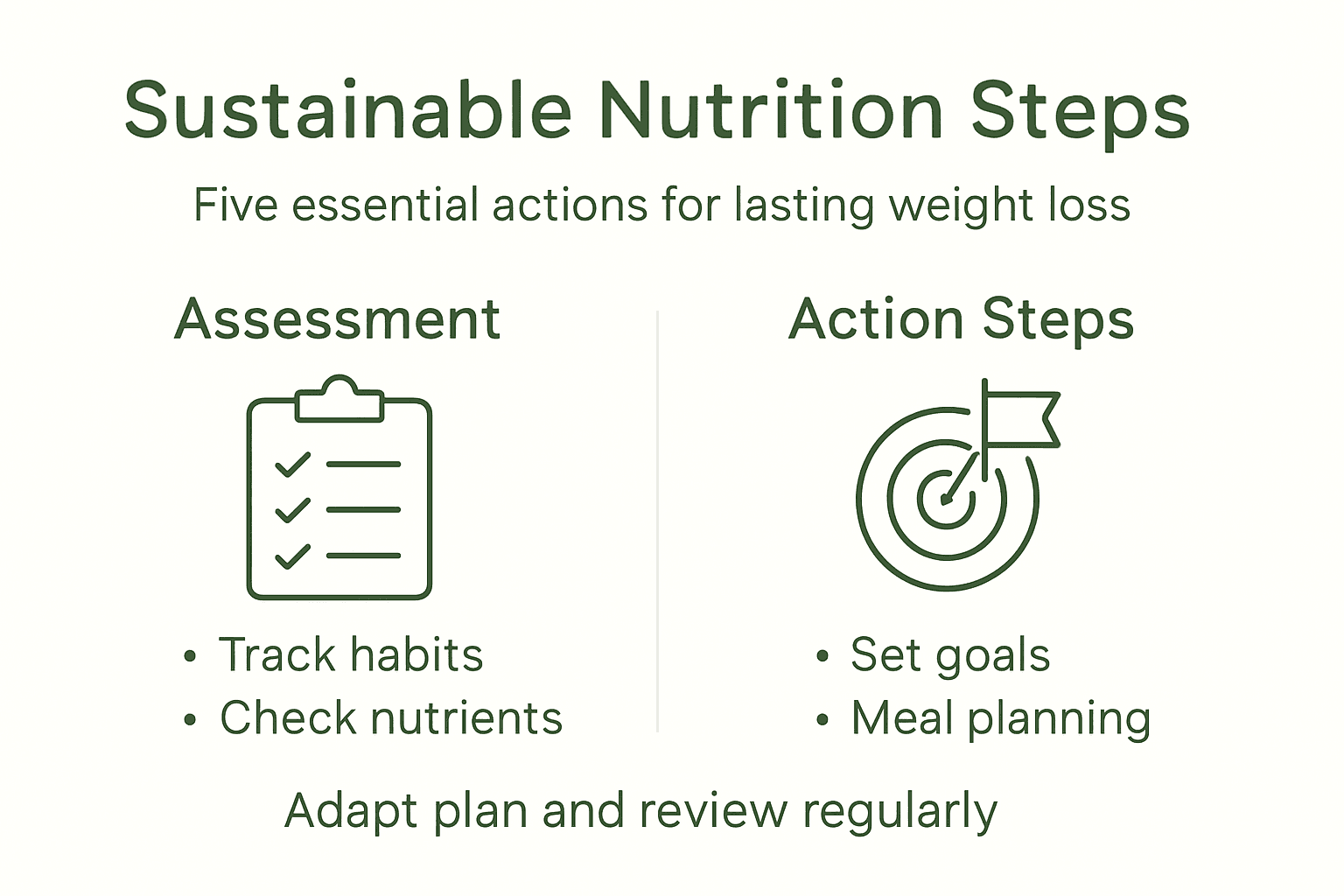
Here’s a comparison of key methods for assessing nutritional needs:
| Method | Information Provided | Best For |
|---|---|---|
| Body measurements | Tracks weight, BMI, fat percentage | Physical baseline assessment |
| Medical history | Identifies chronic issues, risk | Understanding health background |
| Metabolic testing | Assesses metabolic rate, hormones | Detecting metabolic challenges |
| Dietary tracking | Analyzes food intake, eating habits | Revealing real food behaviors |
Pro tip: Consider working with a registered dietitian or nutritionist who can provide professional guidance in interpreting your assessment results and designing a personalized nutrition strategy.
Step 2: Define clear nutrition goals and intentions
Setting specific and meaningful nutrition goals transforms your weight loss journey from a vague aspiration to a strategic plan. National nutrition objectives emphasize creating targeted eating strategies that align with your personal health needs and metabolic profile.
To craft effective nutrition goals, consider these essential components:
- Specificity: Define precise, measurable objectives (e.g., “reduce added sugar intake to less than 25 grams daily”)
- Timeframe: Establish realistic timelines for achieving your nutrition targets
- Health markers: Identify key metrics like blood sugar levels, cholesterol, or body composition
- Behavioral changes: Outline specific dietary habits you want to develop or eliminate
Your nutrition goals are a compass, not a constraint – they guide you toward sustainable health transformation.
Dietary guidelines provide scientific foundations for developing nutrition intentions that go beyond simple weight loss. Focus on nutrient density, balanced macronutrients, and creating eating patterns that support your overall metabolic health. This means thinking holistically about nutrition as a long-term lifestyle adjustment, not a temporary restrictive diet.
Pro tip: Write down your nutrition goals and place them somewhere visible, transforming abstract intentions into a daily reminder of your health commitment.
Step 3: Build balanced meal patterns for hormone health
Developing a nutrition strategy that supports your hormonal balance is crucial for sustainable weight loss and overall metabolic health. Nutrition plays a critical role in hormone signaling, directly influencing how your body processes nutrients, regulates metabolism, and maintains energy levels.
To create hormone-friendly meal patterns, focus on these key principles:
- Protein balance: Include lean protein sources at every meal to support hormone production
- Nutrient diversity: Incorporate a wide range of colorful vegetables and fruits
- Healthy fats: Add sources of omega-3 and monounsaturated fats like avocados, nuts, and fish
- Consistent timing: Eat meals at regular intervals to stabilize blood sugar and hormone levels
- Portion control: Understand serving sizes for balanced nutrition
Hormonal health isn’t about perfection – it’s about creating a sustainable rhythm that supports your body’s natural balance.
Your meal planning should prioritize whole, unprocessed foods that provide steady nutrition and minimize inflammatory responses. This means choosing complex carbohydrates, incorporating protein with each meal, and being mindful of how different foods interact with your unique hormonal landscape.

Pro tip: Experiment with meal prep to ensure consistent, balanced nutrition throughout your week, reducing decision fatigue and supporting your hormonal health goals.
Step 4: Choose evidence-backed food options for metabolism
Transforming your diet requires selecting foods that scientifically support metabolic function and weight management. Certain foods can strategically boost metabolism through diet-induced thermogenesis, helping you burn calories more efficiently.
Focus on these metabolically supportive food categories:
- Protein-rich foods: Lean meats, fish, eggs, and legumes that increase metabolic rate
- Fiber sources: Whole grains, vegetables, and fruits that stabilize blood sugar
- Thermogenic ingredients: Green tea, caffeine, and spices like cayenne that enhance calorie burning
- Nutrient-dense choices: Scientifically recommended whole food options that support metabolic health
- Healthy fats: Avocados, nuts, and olive oil that support hormone regulation
Your metabolism is not just about calories burned – it’s about creating a nutritional environment that supports efficient body function.
Strategic food selection means understanding how different nutrients interact with your metabolic processes. Prioritize whole, unprocessed foods that provide sustained energy, support hormone balance, and minimize inflammatory responses. This approach transforms eating from a simple act of consumption to a deliberate strategy for metabolic optimization.
Below is a summary of how specific foods support metabolic health:
| Food Category | Metabolic Benefit | Example Foods |
|---|---|---|
| Protein-rich foods | Increases thermic effect, preserves muscle | Chicken, beans, eggs |
| Fiber sources | Stabilizes blood sugar, aids digestion | Oats, berries, lentils |
| Thermogenic options | Boosts calorie burn temporarily | Green tea, chili peppers |
| Healthy fats | Supports hormone balance and satiety | Avocado, olive oil, nuts |
Pro tip: Rotate your food choices weekly to prevent metabolic adaptation and keep your body’s nutritional response dynamic and responsive.
Step 5: Monitor results and adjust nutrition strategies
Successful weight loss requires more than just following a plan – it demands ongoing evaluation and strategic adaptation. Continuous nutrition intervention assessment allows you to understand how your body responds to different nutritional approaches and make data-driven adjustments.
To effectively track and modify your nutrition strategy, implement these key monitoring techniques:
- Body measurements: Track weight, body fat percentage, and circumference measurements
- Performance indicators: Monitor energy levels, sleep quality, and workout performance
- Metabolic markers: Check blood sugar, hormone levels, and cholesterol periodically
- Progress photos: Take monthly pictures to visualize physical changes
- Food and mood journal: Record dietary intake and corresponding energy and emotional states
Nutrition is not a static process – it’s a dynamic conversation between your body and your choices.
Remember that plateaus and fluctuations are normal parts of any metabolic transformation. The goal is not perfection but consistent, intentional progress. Approach your nutrition plan with curiosity and flexibility, being willing to experiment and adjust based on your body’s unique signals and responses.
Pro tip: Schedule quarterly nutrition strategy reviews with a healthcare professional to gain expert insights and make scientifically informed adjustments to your plan.
Unlock Your Personalized Nutrition Plan for Lasting Weight Loss
Struggling to build a sustainable nutrition strategy that truly works for your unique body can feel overwhelming. This article reveals the importance of assessing your individual metabolic needs, setting clear nutrition goals, and choosing hormone-friendly foods — all vital steps often missing from generic diet plans. If you are frustrated with quick fixes and cookie-cutter diets that ignore your body’s biology, it is time to embrace an evidence-based approach designed to address your distinct metabolic profile.
Take control of your weight loss journey now by exploring Metabolism Guide, where doctor-led, science-driven modules help you understand how hormones, gut health, and lifestyle factors influence metabolism. Stop guessing and start thriving with personalized support that moves beyond calorie counting and fad diets. Discover how to assess your nutrition needs, build balanced meal patterns, and monitor your progress effectively. Visit Metabolism Guide to begin transforming your health with trusted guidance and a supportive community focused on sustainable results.
Frequently Asked Questions
How do I assess my unique nutritional needs for weight loss?
To assess your unique nutritional needs, start by gathering body measurements, such as height, weight, and BMI. Keep a detailed food diary for at least seven days to track your eating patterns and identify areas for improvement.
What should I include when defining nutrition goals for sustainable weight loss?
When defining nutrition goals, focus on specific, measurable objectives with a clear timeline. For example, aim to reduce added sugar intake to less than 25 grams per day within two months, while also identifying key health markers like cholesterol levels to monitor progress.
How can I create balanced meal patterns that support hormone health?
To create balanced meal patterns that support hormone health, include lean protein sources at every meal and incorporate a variety of colorful fruits and vegetables. Aim for consistent meal timing, eating at regular intervals throughout the day to help stabilize blood sugar and hormone levels.
What types of food should I choose to boost my metabolism?
Focus on selecting protein-rich foods, fiber sources, and thermogenic ingredients to support your metabolism. Incorporate options like lean meats, whole grains, and spices such as cayenne pepper to enhance calorie burning and overall metabolic function.
How do I monitor my results and adjust my nutrition strategies?
To monitor your results, regularly track body measurements, performance indicators, and metabolic markers. Set a schedule to review your progress monthly or quarterly, allowing you to make data-driven adjustments to your nutrition plan as needed.
What are effective methods for dietary tracking during my weight loss journey?
Effective dietary tracking methods include maintaining a food and mood journal, where you record what you eat alongside your energy and emotional states. This practice can help you identify patterns and make informed decisions about your nutrition strategy.
