

Counting calories and following strict diets often leave many Americans frustrated as the scale refuses to budge. Amid endless advice, the real reasons for weight loss struggles are often overlooked—our emotions, habits, and social surroundings play a powerful role. By exploring key concepts in behavioral science, this article offers evidence-based insights to uncover the deeper patterns that shape lasting weight change and practical strategies that go beyond willpower alone.
Table of Contents
- Behavioral Science Basics And Weight Loss Myths
- Key Behavioral Factors Shaping Eating Habits
- How Emotions And Environment Drive Weight
- Sustainable Habit Change Versus Quick Fixes
- Behavioral Approaches Supporting Medical Interventions
Key Takeaways
| Point | Details |
|---|---|
| Weight Loss Is Multifaceted | Successful weight management requires understanding psychological factors beyond just nutrition and exercise. |
| Personalization Is Key | One-size-fits-all diet plans are ineffective; individualized strategies yield better results. |
| Behavioral Change Over Quick Fixes | Sustainable weight management involves gradual behavioral modifications rather than temporary solutions. |
| Emotional Regulation Matters | Developing skills for emotional regulation is critical in maintaining healthy eating habits. |
Behavioral Science Basics and Weight Loss Myths
Weight loss is far more complex than simply counting calories or following restrictive diets. Understanding the psychological and behavioral factors that influence our eating habits is crucial for sustainable weight management. Research indicates that our relationship with food goes far beyond nutritional intake and involves intricate mental and emotional processes.
Behavioral science reveals several critical myths about weight loss that can derail long-term success:
- Weight loss is purely about willpower: Contrary to popular belief, successful weight management involves more than just self-control
- Diets work through restriction: Most traditional diets fail because they ignore psychological and emotional triggers
- One-size-fits-all approach exists: Individual variability in metabolism and behavior makes universal diet plans ineffective
Psychological factors play a significant role in weight management. Complex psychological factors influencing weight loss demonstrate that emotional eating, motivation, and self-efficacy are as important as diet and exercise. Understanding these elements can help individuals develop more sustainable strategies for managing weight.
Key behavioral science insights reveal that successful weight management requires:
- Understanding personal emotional triggers
- Developing intrinsic motivation
- Creating realistic, personalized strategies
- Building long-term behavioral change skills
Social and environmental cues significantly impact our eating behaviors. Body image, stress levels, and social norms can dramatically influence food choices and weight management efforts. These psychological dimensions are often overlooked in traditional diet approaches.
Psychological acceptance emerges as a critical component in sustainable weight management. Rather than fighting against current body states, individuals who practice self-compassion and develop adaptive coping mechanisms tend to achieve more consistent results.
Pro tip: Track not just your food intake, but your emotional state and triggers to understand your unique behavioral patterns around eating.
Key Behavioral Factors Shaping Eating Habits
Understanding the psychological mechanisms that drive eating behaviors goes far beyond simple nutrition knowledge. Behavioral science interventions reveal complex psychological pathways that influence how individuals interact with food, making weight management a nuanced psychological experience.
Several critical behavioral factors significantly shape our eating habits:
- Emotional Triggers: Stress, anxiety, and mood directly impact food choices
- Social Conditioning: Family, cultural, and peer influences shape eating patterns
- Reward Mechanisms: Brain chemistry and dopamine responses drive food-seeking behaviors
- Learned Habits: Repetitive eating patterns become deeply ingrained neurological responses
Motivation and psychological satisfaction play pivotal roles in dietary behaviors. Key psychological determinants of eating habits demonstrate that individual responses to dietary interventions are heavily influenced by intrinsic psychological factors such as:
- Personal motivation levels
- Perceived self-efficacy
- Stress management capabilities
- Emotional regulation skills
Individuals often struggle with eating habits due to complex psychological barriers. Disinhibition, perceived stress, and societal norms create intricate challenges that traditional diet approaches frequently overlook. Psychological acceptance emerges as a critical strategy for developing healthier relationships with food.
Environmental and contextual cues play substantial roles in shaping eating behaviors. Personal history, cultural background, and immediate social environment continuously interact to influence food choices, making weight management a deeply personalized journey.
Pro tip: Practice mindful awareness by journaling your emotional state before and after eating to uncover hidden psychological eating patterns.
How Emotions and Environment Drive Weight
Emotional states and environmental influences profoundly shape weight management far beyond traditional diet approaches. Our weight is deeply interconnected with psychological and contextual factors that extend well beyond simple nutrition and exercise.
Key environmental and emotional triggers that impact weight include:
- Stress Responses: Cortisol release leading to increased appetite
- Social Settings: Eating patterns influenced by group dynamics
- Sensory Cues: Food smells, visual stimuli triggering hunger
- Emotional Eating: Using food as emotional regulation strategy
Psychological research reveals complex mechanisms underlying weight fluctuations. Psychological health impacts weight loss patterns demonstrating that mental states significantly determine dietary behaviors and metabolic responses. Depression, anxiety, and emotional resilience create intricate pathways that either facilitate or hinder weight management efforts.
Individuals experience weight challenges through multifaceted lenses:
- Personal emotional history
- Current stress levels
- Environmental food accessibility
- Social support systems
- Psychological coping mechanisms
Emotional regulation emerges as a critical skill in sustainable weight management. Understanding how emotions trigger eating behaviors allows individuals to develop more intentional responses to psychological and environmental stimuli.

Contextual factors such as workplace environments, family dynamics, and cultural food traditions continuously interact to shape eating behaviors. Recognizing these complex interactions helps individuals design personalized strategies that address root psychological and environmental influences.
Pro tip: Create a sensory-aware environment by removing high-trigger food items and replacing them with mindful, nutritious alternatives.
Sustainable Habit Change Versus Quick Fixes
Technology-assisted interventions reveal critical insights into the complex world of lasting weight management. Quick fixes promise rapid transformation, but sustainable change demands a fundamentally different approach rooted in behavioral science and psychological understanding.
The stark differences between quick fixes and sustainable habit change include:
- Temporary Solutions: Crash diets that produce short-term weight loss
- Psychological Investment: Deep behavioral modifications requiring consistent effort
- Metabolic Impact: Approaches that respect individual physiological responses
- Long-Term Mindset: Strategies focused on lifestyle transformation, not momentary results
Multicomponent behavioral interventions demonstrate superior effectiveness in weight management. Behavioral science approaches for lifestyle changes emphasize incremental adjustments and psychological satisfaction over drastic, unsustainable methods. These interventions recognize that successful weight management is more about changing neural pathways than following restrictive dietary rules.
Key strategies for sustainable habit change involve:
- Developing intrinsic motivation
- Creating personalized, flexible nutrition plans
- Building psychological resilience
- Implementing gradual, consistent behavioral modifications
- Practicing self-compassion during setbacks
Habit formation requires understanding that neurological change happens slowly. Quick fixes trigger temporary metabolic responses, while sustainable approaches rewire cognitive and behavioral patterns, creating lasting transformations.
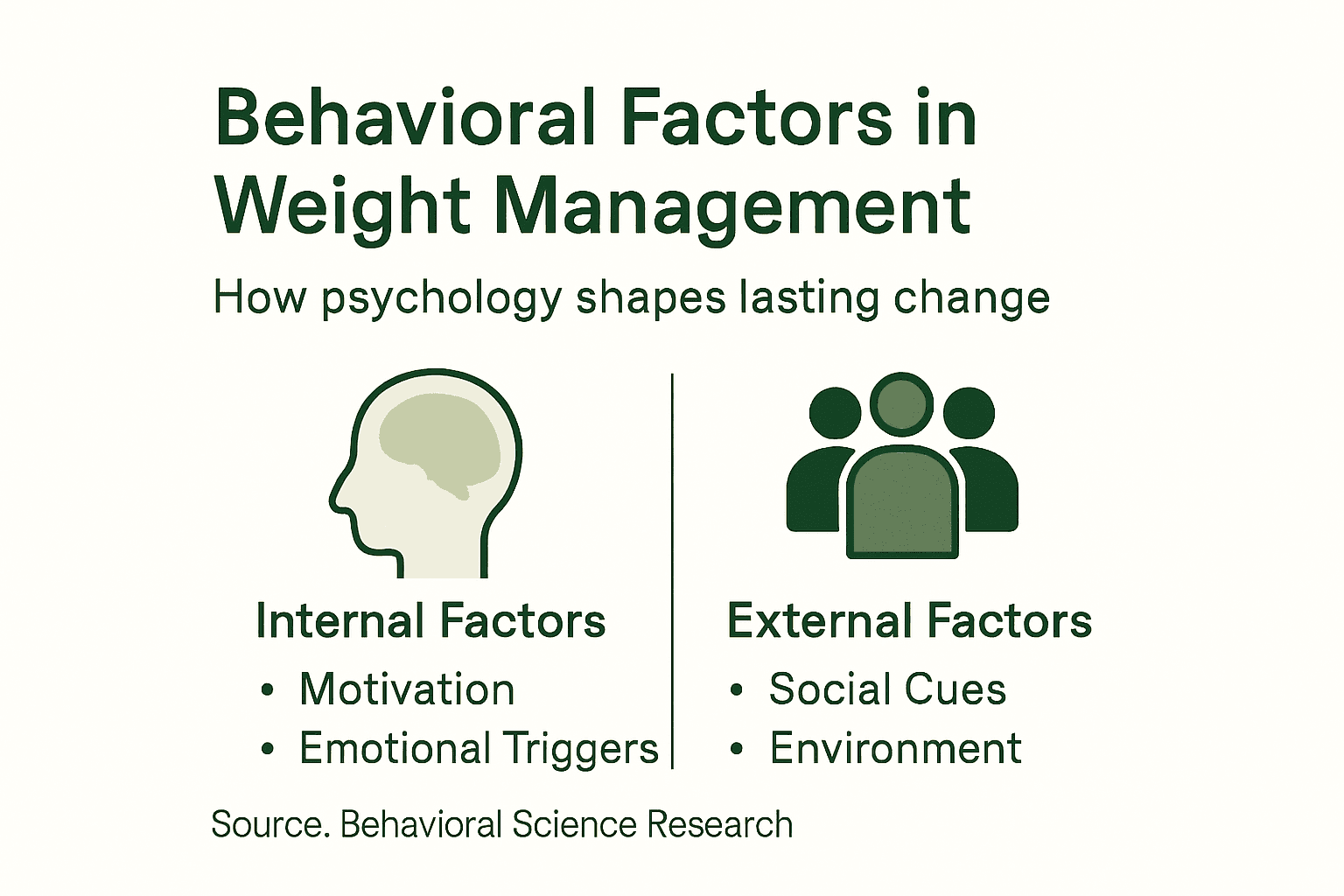
Contextual factors play a significant role in maintaining long-term changes. Personal environment, social support, and individual psychological makeup determine the success of any weight management strategy. Recognizing these nuanced influences helps design more effective, personalized approaches.
Pro tip: Design micro-habits that feel effortless and gradually build complexity to create sustainable lifestyle transformations.
Here’s a comparison of quick-fix diets versus sustainable habit change approaches:
| Aspect | Quick-Fix Diets | Sustainable Habit Change |
|---|---|---|
| Duration | Short-term, often weeks | Long-term, ongoing effort |
| Focus | Calories or restriction | Behavior, psychology, environment |
| Impact on Metabolism | Temporary changes | Gradual, lasting adjustments |
| Lifestyle Fit | Often disruptive | Adaptable, personalized |
| Result Reliability | Frequently inconsistent | More stable over time |
Behavioral Approaches Supporting Medical Interventions
Behavioral science strategies enhance medical weight management by addressing the complex psychological dimensions of obesity treatment. Medical interventions alone cannot guarantee sustainable weight loss without understanding the intricate behavioral patterns that influence patient outcomes.
Key behavioral strategies supporting medical interventions include:
- Motivational Interviewing: Techniques that enhance patient engagement
- Psychological Assessment: Identifying individual barriers to weight loss
- Personalized Goal Setting: Creating realistic, achievable health objectives
- Stress Management Techniques: Addressing emotional triggers for weight gain
Comprehensive weight management requires an integrated approach. Psychological constructs in medical weight loss demonstrate that successful interventions must address:
- Individual motivation levels
- Self-efficacy development
- Emotional regulation skills
- Personalized coping mechanisms
- Long-term behavior modification strategies
Behavioral support transforms medical interventions from temporary fixes to sustainable lifestyle changes. Traditional medical approaches often overlook the critical psychological components that determine long-term success, creating a gap between treatment and patient outcomes.
Psychosocial factors play a crucial role in treatment adherence. Personal history, emotional resilience, and individual psychological makeup significantly influence how patients respond to medical weight management protocols. Understanding these nuanced interactions allows for more targeted and effective interventions.
Pro tip: Develop a collaborative relationship with healthcare providers that focuses on holistic behavioral and medical approaches to weight management.
To summarize behavioral strategies supporting medical interventions:
| Strategy | Description | Practical Example |
|---|---|---|
| Motivational Interviewing | Boost patient engagement | Open-ended questions in sessions |
| Psychological Assessment | Identify personal barriers | Screening for emotional triggers |
| Personalized Goal Setting | Tailor objectives to individuals | Setting gradual daily activity goals |
| Stress Management | Reduce emotional eating behavior | Teaching relaxation techniques |
| Behavioral Support | Foster lasting changes | Weekly follow-up for accountability |
Break Free From Weight Loss Myths With Science-Backed Strategies
Struggling with the endless cycle of diets that only offer quick fixes instead of lasting change is frustrating and emotionally exhausting. This article reveals that successful weight management is about understanding your unique behavioral triggers, intrinsic motivation, and creating sustainable habits rather than relying on willpower alone or restrictive diets. If you want to stop the confusion caused by dieting myths and truly address the psychological and environmental factors impacting your weight, it is time to get a deeper understanding of your body’s biology and behavior.
Explore how Metabolism Guide offers a doctor-led, evidence-based program designed specifically for individuals tired of short-term solutions. Using behavioral science and metabolic health insights, our platform empowers you with personalized education on hormones, gut health, and lifestyle impact instead of just calorie counting. Take control now with proven strategies that respect your body’s complex signals and foster real, lasting change. Visit Metabolism Guide today to start transforming your weight management journey the right way.
Frequently Asked Questions
What are the key psychological factors that influence weight management?
Key psychological factors include emotional triggers, motivation levels, self-efficacy, stress management capabilities, and emotional regulation skills, which significantly impact dietary behaviors and long-term weight management success.
How do emotional states affect eating habits?
Emotional states can lead to emotional eating, where individuals use food to cope with stress, anxiety, or mood fluctuations. Recognizing these triggers is crucial for developing healthier eating patterns.
Why do traditional diets often fail?
Traditional diets often fail because they focus primarily on calorie restriction and do not address the psychological and emotional factors that drive eating behaviors, leading to unsustainable weight management solutions.
What is the role of behavioral science in sustainable weight loss?
Behavioral science emphasizes understanding and changing the intricate psychological and environmental influences on eating behaviors, promoting personalized strategies that support long-term lifestyle changes for effective weight management.
