

Struggling with weight that refuses to budge, especially when hormones and metabolism seem to hold the key, can be frustrating for Americans seeking lasting change. Many people find that standard diets and trends just do not deliver real results. Evidence-based weight loss strategies, supported by research from clinical trials and systematic reviews, offer practical and scientifically tested methods for sustainable progress, helping you move beyond disappointment toward genuine, long-term transformation.
Table of Contents
- Defining Evidence-Based Weight Loss Methods
- How Science Drives Sustainable Weight Loss
- Personalizing Strategies: Hormones, Metabolism, And Gut Health
- Behavioral And Medical Interventions Compared
- Realistic Expectations And Common Pitfalls
Key Takeaways
| Point | Details |
|---|---|
| Evidence-Based Approaches | Sustainability in weight loss is best achieved through evidence-based methods that focus on behavioral modification, nutritional changes, and personalized strategies. |
| Comprehensive Metabolic Understanding | Recognizing individual metabolic responses is crucial for developing effective, tailored weight management strategies. |
| Realistic Expectations | Setting achievable goals and understanding non-linear progress can enhance motivation and commitment to weight loss journeys. |
| Holistic Intervention Strategies | A combination of behavioral and medical interventions produces more sustainable results than relying on a single approach. |
Defining Evidence-Based Weight Loss Methods
Evidence-based weight loss represents a scientific approach to sustainable body composition management, moving far beyond traditional diet trends and quick-fix solutions. Unlike fad diets that promise unrealistic results, this method relies on rigorous research, clinical trials, and systematic reviews to determine effective weight management strategies.
The core principles of evidence-based weight loss are grounded in comprehensive scientific research. Systematic reviews of clinical trials demonstrate that successful weight loss depends on a multifaceted approach combining several key components:
- Behavioral modification techniques
- Structured nutritional interventions
- Regular physical activity
- Personalized lifestyle changes
- Potential pharmacological support when medically appropriate
Research consistently reveals that sustainable weight loss is not about restrictive dieting, but about creating holistic lifestyle transformations. The most successful interventions integrate multiple strategies, with a strong emphasis on behavioral therapy and lifestyle modifications. Behavioral weight management interventions have demonstrated significant potential in producing meaningful weight reduction over extended periods.
Key characteristics of evidence-based weight loss methods include:
- Scientifically validated approaches
- Individualized treatment plans
- Comprehensive health assessments
- Ongoing monitoring and adjustment
- Focus on long-term health outcomes
Metabolic adaptation plays a crucial role in understanding weight loss mechanisms. Evidence-based methods recognize that each individual’s body responds differently to dietary and exercise interventions, requiring personalized strategies that account for unique metabolic profiles.
Pro tip: Consult healthcare professionals who specialize in metabolic health and can provide personalized, research-backed weight management strategies tailored to your specific physiological needs.
How Science Drives Sustainable Weight Loss
Sustainable weight loss is a complex biological process that goes far beyond simple calorie counting. Scientific research reveals multifaceted strategies for achieving long-term health and body composition goals, emphasizing a holistic approach that considers physiological, psychological, and behavioral factors.
The scientific framework for sustainable weight loss involves several critical components:
- Understanding individual metabolic responses
- Implementing personalized nutrition strategies
- Developing adaptive behavioral interventions
- Creating sustainable lifestyle modifications
- Monitoring physiological adaptation mechanisms
Researchers have discovered that successful weight management requires more than traditional diet approaches. Obesity management strategies demonstrate that combining nutritional therapy with behavioral counseling and potential medical interventions produces more effective and lasting results.
Key scientific principles driving sustainable weight loss include:
- Precision in caloric management
- Macronutrient quality optimization
- Regular metabolic assessments
- Psychological readiness evaluation
- Long-term health outcome tracking
Metabolic flexibility emerges as a crucial factor in understanding individual weight loss potential. Scientific approaches recognize that each person’s body responds uniquely to dietary and exercise interventions, necessitating personalized strategies that account for genetic, hormonal, and lifestyle variables.
Pro tip: Consult with metabolic health professionals who can provide scientifically tailored weight management strategies designed specifically for your unique physiological profile.
Personalizing Strategies: Hormones, Metabolism, and Gut Health
Personalized weight management represents a revolutionary approach to understanding individual health dynamics. Precision medicine in nutrition reveals that weight loss is not a one-size-fits-all solution, but a complex interplay of genetic, metabolic, and microbiological factors that require tailored strategies.
Key components of a personalized weight loss approach include:
- Genetic profile analysis
- Metabolic rate assessment
- Hormonal balance evaluation
- Gut microbiome mapping
- Individual biomarker tracking
Scientific research demonstrates that our biological makeup significantly influences weight loss potential. Biomarkers predicting diet responses can provide unprecedented insights into how different individuals metabolize nutrients, respond to exercise, and maintain weight loss.
The critical factors driving personalized weight management strategies include:
- Understanding unique metabolic signatures
- Identifying hormonal imbalances
- Analyzing gut microbiome composition
- Evaluating genetic predispositions
- Designing targeted intervention protocols
Metabolic flexibility emerges as a crucial concept in personalized weight management. Each individual’s body responds uniquely to dietary interventions, emphasizing the need for strategies that go beyond generic diet plans and address specific physiological characteristics.

Pro tip: Request comprehensive metabolic and genetic testing from healthcare professionals to develop a truly personalized weight management approach tailored to your specific biological profile.
Behavioral and Medical Interventions Compared
Weight loss interventions represent a complex landscape of strategies designed to address obesity through multiple approaches. Systematic review of intervention outcomes reveals that comprehensive treatment strategies combining behavioral and medical techniques produce more effective and sustainable results compared to single-method approaches.
Key differences between behavioral and medical interventions include:
- Behavioral interventions focus on lifestyle modifications
- Medical interventions target physiological mechanisms
- Comprehensive approaches combine multiple strategies
- Long-term success requires integrated treatment plans
- Individual response varies across intervention types
Research demonstrates the nuanced effectiveness of different weight management strategies. Primary care weight loss recommendations indicate that intensive behavioral counseling provides a foundational approach, with pharmacological support serving as a complementary method for enhanced outcomes.
Comparative analysis of intervention strategies reveals several critical insights:
- Behavioral interventions emphasize psychological and lifestyle changes
- Medical interventions address physiological weight regulation mechanisms
- Combination approaches demonstrate superior long-term results
- Personalized treatment plans maximize intervention effectiveness
- Continuous monitoring improves overall weight management success
Treatment synergy emerges as a critical concept in modern weight loss approaches. The most successful strategies recognize that individual weight management requires a holistic approach integrating psychological, behavioral, and physiological interventions.
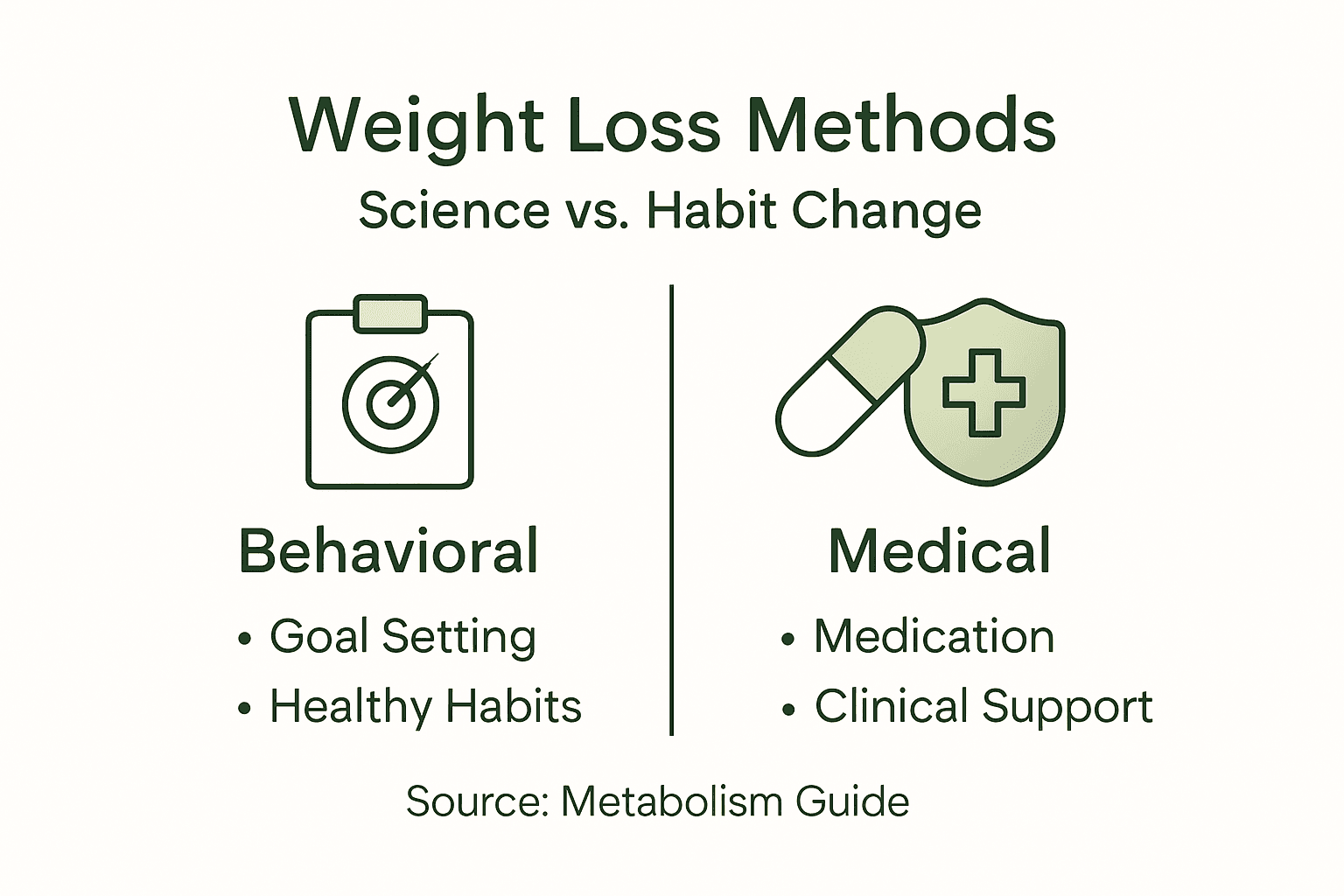
Here’s a concise comparison of behavioral versus medical weight loss interventions:
| Aspect | Behavioral Interventions | Medical Interventions | Combination Approach |
|---|---|---|---|
| Focus | Lifestyle habits and psychology | Physiological mechanisms | Integrates lifestyle and physiology |
| Main Techniques | Counseling, goal setting | Medication, clinical procedures | Tailored blend of both methods |
| Long-Term Effectiveness | Often high with proper support | Varies, depends on individual | Highest when personalized |
| Suitability | Most individuals | People with medical needs | Broad, adjusted per patient |
Pro tip: Consult healthcare professionals to develop a comprehensive weight management plan that strategically combines behavioral coaching with targeted medical support.
Realistic Expectations and Common Pitfalls
Weight loss expectations can dramatically impact an individual’s journey toward health transformation. Weight loss misconception analysis reveals that unrealistic goals often derail sustainable progress, creating a critical need for evidence-based understanding and psychological preparedness.
Common weight loss misconceptions include:
- Expecting rapid, dramatic weight loss
- Believing exercise alone guarantees results
- Assuming linear, consistent progress
- Underestimating lifestyle change requirements
- Neglecting individual metabolic variations
Comprehensive weight loss program evaluation highlights multiple factors contributing to potential failure, emphasizing that successful weight management requires a holistic, nuanced approach beyond simplistic dietary restrictions.
Key strategies for maintaining realistic expectations involve:
- Understanding individual metabolic differences
- Accepting non-linear progress patterns
- Developing adaptable goal-setting techniques
- Focusing on sustainable lifestyle modifications
- Preparing for potential plateaus
Psychological resilience emerges as a critical factor in navigating weight loss challenges. Recognizing that temporary setbacks are normal and part of the transformation process can significantly improve long-term commitment and success.
Summary of common weight loss pitfalls and realistic mindsets for success:
| Pitfall | Impact on Progress | Mindset/Strategy for Success |
|---|---|---|
| Expecting rapid results | Causes disappointment | Focus on steady, gradual change |
| Overreliance on exercise | Neglects dietary factors | Balance exercise with nutrition |
| Ignoring plateaus | Loss of motivation | Prepare for fluctuations |
| Unrealistic goal-setting | Unsustainable efforts | Set adaptable, achievable goals |
Pro tip: Create a comprehensive support system that includes professional guidance, realistic goal tracking, and psychological preparation to navigate the complex weight loss journey.
Discover Science-Backed Weight Loss That Works for You
Struggling with unrealistic weight loss promises and one-size-fits-all diets can leave you frustrated and stuck. This article breaks down the science behind evidence-based weight loss, emphasizing the importance of personalized strategies that consider your unique metabolism, hormones, and gut health. If you are tired of quick fixes and want real, sustainable results through a holistic, medically-guided approach, it is time to explore solutions grounded in science.
At Metabolism Guide, you will find a doctor-led, evidence-based program designed to empower you with knowledge about how your body truly manages weight. Our structured video lessons, expert support, and personalized insights help transform complicated metabolic concepts into simple, actionable steps. Don’t wait to take control of your health by understanding the root causes of your weight challenges. Start your journey towards lasting, scientifically informed success by visiting Metabolism Guide today.
Frequently Asked Questions
What is evidence-based weight loss?
Evidence-based weight loss is a scientific approach focusing on sustainable body composition management through methods supported by rigorous research, clinical trials, and systematic reviews.
How do behavior modifications influence weight loss?
Behavior modifications, such as setting realistic goals and developing healthy habits, are critical for achieving sustainable weight loss. These interventions help individuals adapt their lifestyles long-term for better health outcomes.
Why is personalized weight management important?
Personalized weight management accounts for individual differences in genetics, metabolism, and health conditions. Tailoring strategies ensures interventions are more effective and aligned with each person’s unique physiological needs.
What are common pitfalls in the weight loss journey?
Common pitfalls include expecting rapid results, neglecting to balance diet and exercise, and failing to account for individual metabolic variations. Maintaining realistic expectations and resilience is essential for long-term success.
