

Struggling to see results despite your dedication to a healthier lifestyle can feel defeating, especially when hormonal and metabolic factors stand in the way. Addressing current eating patterns and sustainability matters for both your health and the broader environment. This article guides you through actionable steps, blending science-based nutrition with mindful habits so you can finally break through weight loss resistance and support lasting, positive change.
Table of Contents
- Step 1: Assess Current Eating Patterns
- Step 2: Identify and Replace Unsustainable Habits
- Step 3: Integrate Nutrient-Rich Whole Foods
- Step 4: Adjust for Personal Hormonal and Metabolic Needs
- Step 5: Monitor Progress and Refine Approaches
Quick Summary
| Key Point | Explanation |
|---|---|
| 1. Track Your Eating Habits | Use a food journal for three days to assess your current diet, including portion sizes and triggers. |
| 2. Swap Unsustainable Foods | Identify unhealthy habits and replace one each week with sustainable, plant-based alternatives. |
| 3. Focus on Whole Foods | Include diverse, nutrient-rich whole foods like grains, legumes, and colorful vegetables in your meals. |
| 4. Personalize Nutritional Needs | Monitor your body’s responses to foods and adapt your diet based on metabolic and hormonal needs. |
| 5. Regularly Monitor Progress | Keep track of your energy, mood, and health metrics to assess dietary changes and make adjustments. |
Step 1: Assess Current Eating Patterns
Your first actionable step in creating a sustainable diet involves understanding your current nutrition landscape. This means taking an honest, comprehensive look at what you actually eat and drink throughout the day. Why? Because global dietary patterns significantly impact health and environment.
Start by tracking everything you consume for three consecutive days. Use a detailed food journal or smartphone app to record each meal and snack. Note not just the foods themselves, but portion sizes, preparation methods, timing of meals, and any emotional or situational triggers. Are you stress eating? Grabbing fast food during busy workdays? Skipping breakfast? These patterns reveal more than just calorie intake.
Look for key patterns in your current diet. Are fruits and vegetables minimal? Do processed meats dominate your protein sources? How often do sugary drinks appear? Sustainable dietary guidelines recommend shifting toward plant-based options and reducing processed food consumption. Your journal will become a roadmap for understanding your nutritional starting point.
Pro tip: Be brutally honest in your food tracking and avoid changing your habits during documentation to get the most accurate snapshot of your current eating patterns.
Step 2: Identify and Replace Unsustainable Habits
Transforming your diet requires recognizing and strategically replacing habits that harm both your health and the environment. Sustainable eating involves more than just food choices it demands a comprehensive approach to consumption patterns.
Start by analyzing your food journal from the previous step. Look for repeated patterns that indicate unsustainable habits. Do you frequently consume processed meats? Rely on packaged convenience foods? Overuse single-use plastics during meal preparation? These are prime candidates for strategic replacement. Consider swapping processed meats with plant-based proteins, choosing whole foods over packaged items, and investing in reusable containers.
Dietary diversity supports both personal and planetary health. This means gradually introducing more variety into your meals. Replace one meat-based meal per week with a plant-based alternative. Experiment with legumes, whole grains, and seasonal vegetables. Select locally sourced, sustainably produced ingredients that minimize transportation emissions and support regional agricultural ecosystems.
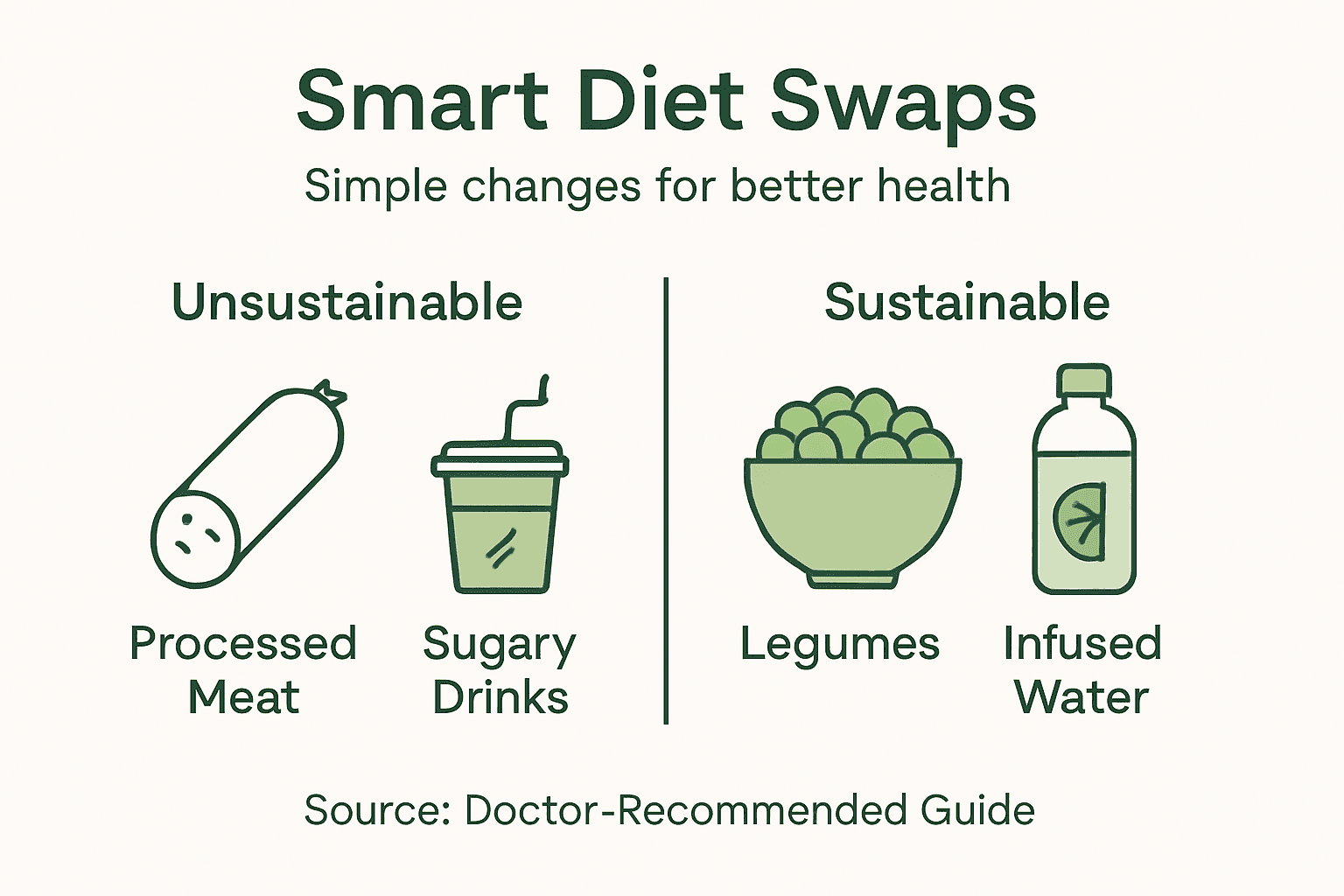
Pro tip: Start small by replacing just one unsustainable food habit per week to make lasting nutritional changes without overwhelming yourself.
Here’s a concise comparison of common unsustainable eating habits and practical, sustainable alternatives:
| Unsustainable Habit | Sustainable Alternative | Health Benefit | Environmental Impact |
|---|---|---|---|
| Frequent processed meats | Plant-based proteins (beans, tofu) | Supports heart health | Reduces carbon footprint |
| Packaged convenience foods | Whole grains and fresh produce | Improves nutrient intake | Lowers packaging waste |
| Sugary drinks | Water or herbal teas | Prevents blood sugar spikes | Less plastic bottle usage |
| Single-use plastics | Reusable containers | Reduces exposure to toxins | Cuts landfill contributions |
Step 3: Integrate Nutrient-Rich Whole Foods
Transforming your diet means purposefully selecting foods that nourish your body while supporting overall health. Whole food approaches deliver comprehensive nutritional benefits by providing essential vitamins, minerals, and critical phytonutrients.

Begin by diversifying your plate with nutrient dense ingredients. Incorporate whole grains like quinoa, brown rice, and farro. Add legumes such as lentils, chickpeas, and black beans for protein and fiber. Expand your vegetable intake beyond basic salads by experimenting with roasted, steamed, and raw preparations. Focus on colorful options like sweet potatoes, kale, berries, and bell peppers that offer maximum nutritional impact.
Plant-based diets support long-term health improvements through strategic food selection. Make gradual shifts by replacing processed items with whole food alternatives. For instance, swap sugary breakfast cereals with oatmeal topped with nuts and fruits. Choose whole fruit instead of juice. Select minimally processed proteins like tofu, tempeh, and beans over packaged meat substitutes. Remember that nutrient diversity matters more than perfection.
Pro tip: Aim to include at least three different colored vegetables in each meal to ensure a wide range of nutrients and maximize nutritional diversity.
For reference, here’s a summary of key nutrient-rich whole food categories and top examples within each:
| Category | Examples | Primary Nutrients |
|---|---|---|
| Whole Grains | Quinoa, brown rice, farro | Fiber, B vitamins |
| Legumes | Lentils, chickpeas, black beans | Protein, iron, folate |
| Vegetables | Sweet potatoes, kale, bell peppers | Antioxidants, vitamin C |
| Fruits | Berries, apples, oranges | Fiber, vitamin C |
Step 4: Adjust for Personal Hormonal and Metabolic Needs
Understanding your unique metabolic landscape requires a personalized approach that goes beyond generic dietary recommendations. Nutrition directly influences hormonal signaling and metabolic functioning, making individual assessment critical for sustainable health improvements.
Start by tracking your body’s specific responses to different foods and nutrients. Pay attention to energy levels, mood, sleep quality, and physical symptoms after meals. Certain nutrients play crucial roles in hormone regulation. For instance, selenium, iodine, and iron significantly impact thyroid function, while protein intake and meal timing can influence insulin sensitivity. Consider working with a healthcare professional to conduct comprehensive hormone and metabolic panels that provide insights into your unique physiological needs.
Personalized nutritional strategies optimize metabolic processes throughout different life stages. Focus on nutrient density rather than calorie restriction. Experiment with meal composition and timing to discover what works best for your body. Some individuals metabolize carbohydrates differently, while others might require more protein or specific micronutrients. Keep a detailed journal documenting how different foods impact your energy, weight, and overall well being.
Pro tip: Schedule periodic metabolic assessments to track how your nutritional needs evolve and adjust your diet accordingly.
Step 5: Monitor Progress and Refine Approaches
Successful dietary transformation requires ongoing assessment and strategic adaptation. Sustainable dietary changes depend on continuous monitoring of your nutritional patterns and their impact on your overall health and wellbeing.
Implement a comprehensive tracking system that goes beyond simple weight measurements. Document your energy levels, mood stability, sleep quality, digestion, and physical performance. Use a digital journal or spreadsheet to record these metrics consistently. Create visual graphs that help you identify trends and correlations between dietary changes and your physiological responses. Pay attention to subtle shifts like improved mental clarity, reduced inflammation, or changes in workout recovery times.
Behavioral factors significantly influence dietary adherence and long-term success. Schedule monthly self evaluations to assess your progress objectively. Be prepared to make incremental adjustments based on your body’s feedback. Not every strategy will work perfectly from the start. Flexibility and patience are key. Consider consulting a nutritionist or healthcare professional periodically to help interpret your data and provide expert guidance on refining your approach.
Pro tip: Take progress photos and body measurements monthly to capture changes that scale weight might not reflect.
Take Control of Your Sustainable Diet with Science-Backed Support
Struggling to replace unsustainable eating habits and tailor your diet to your unique hormonal and metabolic needs can feel overwhelming. The article highlights the challenge of understanding your body’s specific responses and making lasting changes beyond quick fixes or fad diets. If you want to move past confusion about nutrition, hormone balance, and metabolic health, you are not alone in seeking a personalized and evidence-based path.
At Metabolism Guide, we specialize in breaking down complex scientific concepts into clear, actionable steps. Our doctor-led program helps you unlock how your hormones, gut health, and lifestyle impact your metabolism so you can create sustainable, nourishing habits. Start rebuilding your diet with confidence and avoid common pitfalls like calorie counting or one-size-fits-all plans.
Seize this moment to empower yourself with knowledge that transforms your relationship with food for the long term. Visit Metabolism Guide and explore our video lessons, community support, and direct access to medical experts ready to guide you. Your sustainable diet journey deserves a proven, personalized approach that fits your life and body.
Frequently Asked Questions
What is the first step in making sustainable diet changes?
Understanding your current eating patterns is the first step. Track everything you eat and drink for three days, noting portion sizes and triggers, to create a clear picture of your nutrition habits.
How can I replace unsustainable eating habits?
Identify habits that negatively affect your health and the environment, like processed meat consumption. Gradually replace one unsustainable option each week, such as swapping processed meats for plant-based proteins, to develop healthier patterns.
What types of whole foods should I integrate into my diet?
Focus on incorporating a variety of nutrient-rich whole foods like whole grains, legumes, and colorful vegetables. Aim to include at least three different colored vegetables in each meal to enhance nutrient diversity.
How do I adjust my diet based on my hormonal and metabolic needs?
Monitor your body’s responses to different foods and nutrients, paying attention to energy levels and mood. Consider keeping a detailed journal of these observations and schedule periodic assessments to fine-tune your diet as needed.
How can I effectively monitor my progress during diet changes?
Implement a tracking system that goes beyond just weight measurements. Document your energy levels, mood, and overall health consistently to identify trends and make timely adjustments based on your body’s feedback.
What should I do if I encounter challenges in sticking to my sustainable diet?
Be flexible and patient with yourself as you adjust your eating habits. Regularly evaluate your progress, make incremental changes as required, and consider consulting with a nutritionist for expert guidance.
