

Struggling with stubborn weight despite all the right choices is more common than you think. In fact, research shows over 88 million American adults experience some form of metabolic trouble, often related to gut health imbalances. This invisible connection between your digestive system and metabolism could explain persistent weight challenges, no matter where you live. Understanding how gut microbes shape energy and appetite brings new hope for long-term, evidence-based solutions to sustainable weight management.
Table of Contents
- Gut Health And Metabolism Explained
- Key Gut Microbiota Influencing Metabolism
- How Gut Imbalances Affect Weight Regulation
- Hormones, Inflammation, And Gut-Metabolic Link
- Addressing Common Myths About Gut And Diets
Key Takeaways
| Point | Details |
|---|---|
| Gut Health Influences Metabolism | A balanced gut microbiome enhances metabolic efficiency and energy utilization, affecting weight management. |
| Diversity in Diet Supports Gut Health | Consuming a variety of fiber-rich and fermented foods promotes beneficial gut bacteria, essential for metabolic function. |
| Chronic Inflammation Disrupts Metabolism | Gut imbalances and inflammation can lead to increased insulin resistance and hinder weight loss efforts. |
| Myths About Diet and Gut Health | Understanding that balanced eating is more beneficial than extreme dietary restrictions is vital for maintaining gut health and metabolism. |
Gut Health and Metabolism Explained
Your digestive system is far more than just a food processing mechanism. It’s a complex ecosystem where microbiome balance directly influences how efficiently your body converts nutrients into energy. The intricate relationship between gut health and metabolism reveals why some individuals struggle with weight management while others seem to effortlessly maintain their ideal body composition.
At its core, metabolism involves all chemical changes in the body that transform food into usable energy. Your gut plays a pivotal role in this process by breaking down food, absorbing nutrients, and signaling metabolic responses. The digestive system includes multiple organs working in concert – from the stomach and intestines to the liver and pancreas – each contributing to nutrient processing and energy generation.
Specifically, gut microbes influence metabolism through several key mechanisms. They help regulate hormone production, impact insulin sensitivity, manage inflammation levels, and even communicate with your brain about hunger and satiety. When your gut microbiome is balanced, these processes work smoothly. When disrupted, metabolic efficiency can dramatically decrease, potentially leading to weight gain, chronic inflammation, and metabolic disorders.
Pro tip: Focus on consuming diverse, fiber-rich foods that support a healthy microbiome and enhance metabolic function by promoting beneficial bacterial growth.
Key Gut Microbiota Influencing Metabolism
Your gut microbiota is a dynamic ecosystem composed of trillions of microorganisms that play a critical role in metabolic health. Gut microbiota comprises diverse microbes including bacteria, archaea, fungi, and viruses that reside primarily in the large intestine. These microscopic inhabitants are not passive residents but active participants in your metabolic processes, capable of significantly influencing weight management, nutrient absorption, and overall metabolic efficiency.
Some specific gut bacteria have remarkable metabolic capabilities. For instance, certain bacterial species can directly impact cholesterol levels, potentially reducing cardiovascular disease risk. Oscillibacter species, in particular, have been identified as metabolically active microbes that can break down cholesterol through specialized enzymatic processes, demonstrating how specific bacterial strains can modulate systemic metabolic functions.
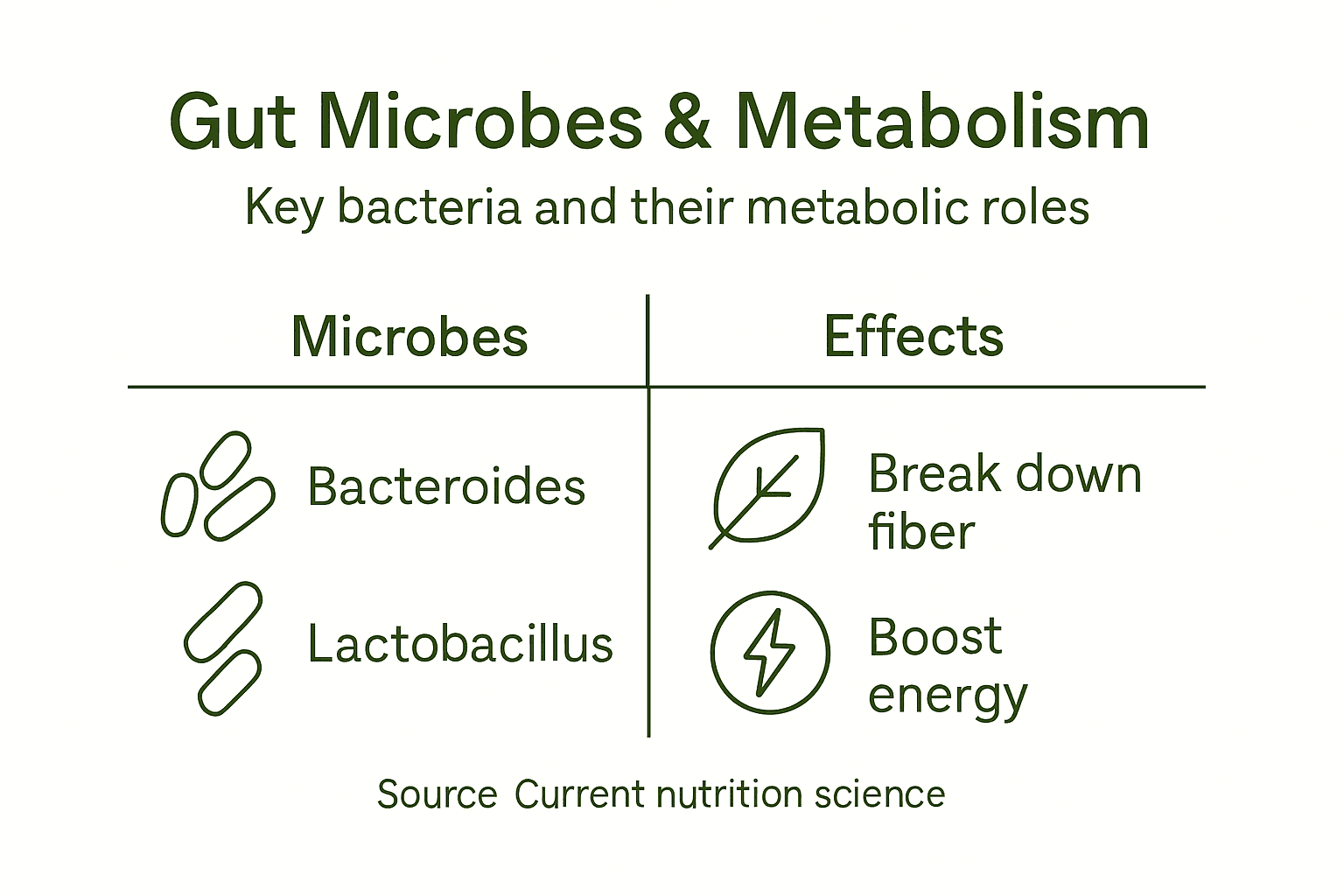
The metabolic influence of gut microbes extends beyond cholesterol management. These microorganisms synthesize essential vitamins, transform dietary fibers into short-chain fatty acids, and produce signaling molecules that communicate with the body’s metabolic systems. They help regulate insulin sensitivity, manage inflammation levels, and even impact hormone production. A balanced and diverse microbiome can enhance metabolic flexibility, potentially improving energy utilization and supporting healthy weight maintenance.
Here’s a summary of how specific gut microbiota impact metabolism:
| Key Microbe Type | Main Function | Metabolic Influence |
|---|---|---|
| Oscillibacter spp. | Cholesterol breakdown | May lower cardiovascular risk |
| Bifidobacteria | Fiber fermentation | Produces healthy short-chain acids |
| Lactobacillus | Vitamin synthesis | Supports nutrient absorption |
| Akkermansia | Gut barrier support | Reduces inflammation risk |
Pro tip: Consider incorporating fermented foods like kefir, kimchi, and yogurt into your diet to introduce diverse beneficial bacteria that support a robust and metabolically active gut microbiome.
How Gut Imbalances Affect Weight Regulation
Gut dysbiosis represents a critical yet often overlooked factor in weight management. Weight regulation involves complex interactions between multiple physiological systems, with gut microbiome balance playing a pivotal role. When your gut microbiome becomes disrupted, it can trigger a cascade of metabolic changes that make weight loss significantly more challenging.
The mechanisms behind gut imbalances are multifaceted. Chronic inflammation and disrupted gut barriers can alter how your body processes nutrients and stores energy. Dysbiosis can increase inflammatory markers, compromise insulin sensitivity, and modify hormonal signals that regulate hunger and satiety. This means an imbalanced gut microbiome doesn’t just affect digestion – it fundamentally changes how your body manages weight and metabolic processes.

Specifically, gut microbiome disruptions can impact weight through several key pathways. Certain bacterial populations influence how efficiently calories are extracted from food, potentially leading to increased energy harvest and fat storage. Imbalanced microbes can also trigger systemic inflammation, which is closely linked to insulin resistance and metabolic syndrome. Additionally, these microbial changes can alter the production of hunger hormones like ghrelin and leptin, potentially increasing appetite and reducing metabolic rate.
Compare major factors impacting weight regulation through gut health:
| Factor | Effect on Weight | Mechanism |
|---|---|---|
| Microbiome balance | Aids maintenance | Optimizes calorie extraction |
| Microbiome dysbiosis | Increases risk | Promotes inflammation |
| Diet diversity | Enhances control | Supports beneficial bacteria |
| Chronic inflammation | Hampers loss | Disrupts hormone signaling |
Pro tip: Incorporate a diverse range of prebiotic and probiotic foods like garlic, onions, yogurt, and fermented vegetables to help restore and maintain a healthy gut microbiome balance.
Hormones, Inflammation, and Gut-Metabolic Link
Metabolic hormones represent a complex communication network that intricately connects your gut, brain, and overall metabolic function. Gut hormones regulate multiple bodily processes, including blood sugar, appetite, and digestive function. These molecular messengers are not just passive indicators but active regulators that can dramatically influence weight management and metabolic health.
Chronic inflammation emerges as a critical disruptor in this delicate hormonal balance. Systemic inflammation impacts metabolic processes by triggering immune responses that can compromise insulin sensitivity and energy regulation. When gut microbiome imbalances occur, they can stimulate inflammatory cytokine production, creating a cascade of metabolic dysfunction that extends far beyond simple digestive issues.
The intricate relationship between hormones and inflammation creates a feedback loop that can either support or undermine metabolic efficiency. Gut-produced hormones like glucagon-like peptides and ghrelin play crucial roles in signaling hunger, managing blood sugar, and coordinating energy utilization. However, when inflammation disrupts these hormonal pathways, the result can be increased insulin resistance, altered appetite signals, and compromised metabolic flexibility. This means your body becomes less efficient at processing nutrients, storing energy, and maintaining a healthy weight.
Pro tip: Incorporate anti-inflammatory foods like turmeric, fatty fish, and leafy greens to help reduce systemic inflammation and support hormonal balance.
Addressing Common Myths About Gut and Diets
Diet myths continue to plague individuals seeking genuine nutritional guidance, creating unnecessary confusion about gut health and weight management. Nutrition myths often lack scientific backing, perpetuating misunderstandings that can sabotage healthy eating strategies. Understanding the truth behind these misconceptions is crucial for developing sustainable approaches to gut health and metabolism.
One persistent myth suggests that completely eliminating food groups or dramatically restricting diet is the key to weight loss. However, balanced eating patterns matter more than extreme restrictions. Whole grains, occasional treats, and a diverse nutritional intake actually support gut microbiome diversity and metabolic health. Skipping meals or believing that certain foods are inherently fattening oversimplifies the complex interactions between nutrition, gut bacteria, and metabolism.
Additionally, many individuals mistakenly believe that gut health is solely about digestion or that probiotics are a universal solution. In reality, gut health involves a sophisticated ecosystem of microorganisms that interact with hormones, immune systems, and metabolic processes. Understanding these nuanced relationships requires moving beyond simplistic dietary rules and embracing a holistic approach that considers individual metabolic responses, microbiome diversity, and overall lifestyle factors.
Pro tip: Focus on dietary diversity and whole foods rather than restrictive dieting, introducing a wide range of nutrients to support your gut microbiome’s complex ecosystem.
Unlock the Power of Your Gut to Transform Metabolism and Achieve Lasting Weight Control
Struggling with weight despite diet attempts often signals deeper issues like gut imbalance and hormonal disruption. This article reveals how your microbiome directly affects metabolism, inflammation, and hunger signals—key factors that traditional diets rarely address. If you are frustrated with quick fixes or confusing advice, understanding your body’s unique biology is the game changer. You deserve a science-backed approach that explains why gut health matters for lasting metabolic balance.
Explore how Metabolism Guide empowers you with doctor-led education and structured support designed for sustainable weight management. Our evidence-based program covers hormones, gut microbiome, and lifestyle factors that impact metabolism—not calorie counting or fad diet promises. Start learning proven strategies to rebalance your gut, reduce inflammation, and optimize metabolic hormones today. Don�27t wait for another cycle of frustration. Visit Metabolism Guide now and take control of your metabolic health with clear science and personalized insights.
Frequently Asked Questions
What is the connection between gut health and metabolism?
Gut health significantly influences metabolism by affecting nutrient absorption, hormone regulation, and inflammation levels. A balanced gut microbiome enhances metabolic efficiency, while imbalances can hinder weight management and energy utilization.
How can I improve my gut health to support my metabolism?
To improve gut health, focus on consuming a diverse range of fiber-rich and fermented foods, such as fruits, vegetables, yogurt, and whole grains, which promote a balanced microbiome and enhance metabolic function.
What are common signs of gut dysbiosis?
Common signs of gut dysbiosis include digestive issues like bloating, gas, or irregular bowel movements, increased cravings for sugary foods, weight gain, and chronic inflammation, which can all negatively impact metabolism.
Can inflammation from gut imbalances affect my weight?
Yes, chronic inflammation from gut imbalances can lead to insulin resistance and disrupt hormone signaling related to hunger and satiety, making weight management more challenging.
