

Most American adults struggling to lose weight are facing metabolic challenges linked to hormonal imbalances. For anyone trying countless diets and workouts with little progress, the problem often runs deeper than calories alone. Tackling weight loss resistance means understanding the science behind metabolism and taking specific actions to support hormonal health. Discover targeted strategies that reveal how proper assessment, nutrition, movement, and lifestyle can transform metabolic health for the long term.
Table of Contents
- Step 1: Assess Your Unique Metabolic Factors
- Step 2: Revamp Daily Nutrition For Metabolic Health
- Step 3: Incorporate Metabolism-Boosting Physical Activity
- Step 4: Optimize Sleep And Stress For Hormone Balance
- Step 5: Track Progress And Adjust Lifestyle Habits
Quick Summary
| Insight | Explanation |
|---|---|
| 1. Assess metabolic health indicators | Track waist circumference, blood pressure, and cholesterol levels to understand your unique metabolic profile. |
| 2. Revamp nutrition for better metabolism | Incorporate whole foods while reducing processed foods to enhance metabolic function and support weight management. |
| 3. Engage in varied physical activities | Aim for 150 minutes of moderate activity weekly and include strength training to boost metabolism and improve health. |
| 4. Prioritize sleep and manage stress | Aim for 7-9 hours of sleep nightly and engage in stress-reduction techniques to maintain hormone balance and metabolic health. |
| 5. Monitor progress and adjust habits | Track body measurements and energy levels regularly; adjust nutrition and exercise plans based on your progress. |
Step 1: Assess your unique metabolic factors
Understanding your metabolism requires a comprehensive evaluation of multiple physiological factors. A thorough metabolic assessment helps you identify potential obstacles preventing optimal weight management and overall health.
To effectively assess your unique metabolic profile, start by gathering key health measurements that reveal metabolic health status. Specific metabolic syndrome measurements include tracking waist circumference, blood pressure, fasting glucose levels, HDL cholesterol, and triglyceride levels. These indicators provide critical insights into your body’s metabolic functioning and potential risk factors.
A structured metabolic assessment typically involves working with healthcare professionals who can interpret these measurements comprehensively. They will help categorize your metabolic risk profile and develop personalized strategies for improving your metabolic efficiency. The goal is not just measurement but understanding how these factors interact and impact your overall health.
Here’s a quick reference for key metabolic health measurements and what they indicate:
| Measurement | What It Assesses | Why It Matters |
|---|---|---|
| Waist Circumference | Abdominal fat levels | Links to heart disease risk |
| Blood Pressure | Cardiovascular health | High levels increase health risk |
| Fasting Glucose | Blood sugar control | Identifies risk for diabetes |
| HDL Cholesterol | Protective blood fats | Low levels raise heart risk |
| Triglycerides | Blood fat storage | High levels can damage vessels |
Pro tip: Consider scheduling a comprehensive metabolic health screening with a medical professional who can provide detailed insights into your unique physiological patterns and potential intervention strategies.
Step 2: Revamp daily nutrition for metabolic health
Transforming your nutrition is a critical strategy for optimizing metabolic function and supporting long-term weight management. Metabolic health starts with understanding how different foods interact with your body and fuel your internal systems.
To effectively revamp your nutrition, focus on dietary guidelines for metabolic health. Prioritize whole nutrient-dense foods that provide sustained energy and support metabolic processes. This means incorporating lean proteins, complex carbohydrates, healthy fats, and abundant vegetables into your daily meals. Minimize processed foods, refined sugars, and excessive sodium which can disrupt metabolic efficiency.
Implementing strategic nutritional changes requires thoughtful planning and gradual adaptation. Begin by slowly replacing processed snacks with whole food alternatives, increasing vegetable intake, and selecting proteins that support muscle maintenance and metabolic rate. Track how different food choices impact your energy levels and overall well-being to create a personalized nutrition approach that works specifically for your metabolic profile.
Pro tip: Create a weekly meal plan that emphasizes whole foods and prepare ingredients in advance to ensure consistent metabolic-supporting nutrition.
Step 3: Incorporate metabolism-boosting physical activity
Elevating your metabolism requires a strategic approach to physical activity that goes beyond simple exercise routines. Metabolic health depends on consistent movement and targeted exercise that challenges your body and stimulates energy expenditure.

According to current research, physical activity guidelines for metabolic health recommend a comprehensive approach combining aerobic exercises and strength training. Aim for at least 150 minutes of moderate-intensity cardiovascular activities per week and incorporate muscle-strengthening exercises two or more days weekly. This combination helps increase calorie burn, improve insulin sensitivity, and build lean muscle mass which naturally boosts your resting metabolic rate.
Design a balanced workout strategy that includes varied activities to prevent plateaus and maintain metabolic engagement. Mix high-intensity interval training with resistance exercises, incorporate weight training to build muscle, and include low-impact activities like swimming or cycling. Remember that consistency matters more than intensity, so choose activities you genuinely enjoy and can sustain over time.
Pro tip: Schedule your workouts like important meetings and track your progress to maintain motivation and metabolic momentum.
Step 4: Optimize sleep and stress for hormone balance
Balancing hormones requires a holistic approach that prioritizes quality sleep and effective stress management. Your body’s metabolic and hormonal systems are deeply interconnected, making these lifestyle factors critical for overall health and metabolic efficiency.
Understanding sleep and hormone regulation mechanisms reveals how critical rest is for metabolic function. Aim for 7-9 hours of uninterrupted sleep each night, maintaining a consistent sleep schedule that supports your body’s natural circadian rhythms. Create a sleep-friendly environment by keeping your bedroom cool, dark, and quiet, and establish a relaxing pre-sleep routine that helps transition your body from daytime stress to nighttime recovery.
Stress management is equally important for hormonal balance. Implement daily practices like meditation, deep breathing exercises, or gentle yoga to reduce cortisol levels and support metabolic health. Regular physical activity, social connections, and mindfulness techniques can help mitigate chronic stress that disrupts hormone production and metabolic processes. Remember that small consistent changes create significant long-term improvements in your body’s hormonal ecosystem.
Pro tip: Create a wind-down ritual 60 minutes before bedtime that signals to your body it is time to relax and restore.
Step 5: Track progress and adjust lifestyle habits
Successful metabolic transformation requires consistent monitoring and strategic adjustments to your health journey. Understanding how to effectively track your progress will help you maintain motivation and make informed decisions about your lifestyle changes.
Lifestyle habit change strategies emphasize the importance of recognizing your current behavior stage and setting realistic goals. Begin by establishing clear metrics for tracking your progress such as body measurements, energy levels, sleep quality, and workout performance. Use a dedicated journal or digital app to record your daily habits and weekly measurements, allowing you to identify patterns and trends in your metabolic health.
Develop a flexible approach to habit adjustment by reviewing your tracking data every four to six weeks. Look for consistent patterns in your progress and be prepared to modify your nutrition, exercise, or stress management strategies if you are not seeing desired results. Remember that metabolic health is a dynamic process your body continuously adapts to your lifestyle choices. Stay patient and view each adjustment as an opportunity for learning and improvement.
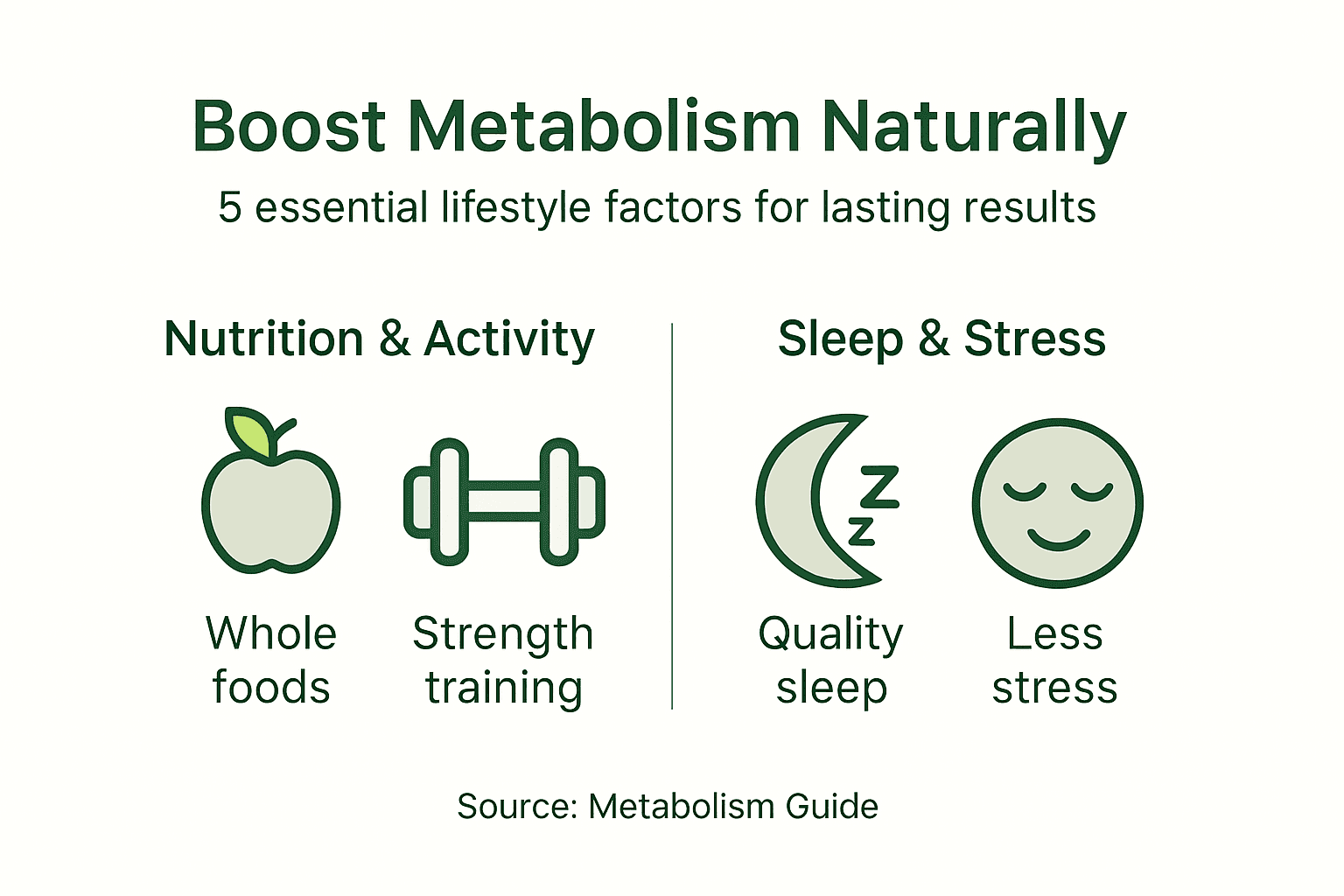
Below is a summary of how nutrition, physical activity, sleep, and stress each impact metabolic health:
| Factor | Role in Metabolism | Benefits of Optimization |
|---|---|---|
| Nutrition | Provides fuel and nutrients | Sustains energy, balances hormones |
| Physical Activity | Increases calorie burn | Boosts metabolism, builds muscle |
| Sleep | Regulates hormones | Helps recovery, stabilizes appetite |
| Stress Management | Balances cortisol | Reduces fat storage, improves mood |
Pro tip: Take progress photos and measurements monthly instead of obsessing over daily weight fluctuations.
Unlock Your Metabolism with Science-Backed Support
If you are frustrated by the difficulty of boosting your metabolism naturally despite efforts with nutrition, exercise, and stress management you are not alone. This article highlights key challenges like managing hormonal balance, understanding your unique metabolic profile, and creating lasting lifestyle habits. Without personalized insights and clear guidance it can feel overwhelming to know which changes really make a difference for sustained metabolic health.
At Metabolism Guide, we provide an evidence-based program designed to help you understand exactly how hormones, gut health, and lifestyle factors influence your metabolism. Our doctor-led lessons and virtual community give you the tools to move past dieting myths and discover science-driven strategies tailored to your body. Take the next step to finally stop guessing and start optimizing your metabolism with expert support. Visit Metabolism Guide now to begin your journey toward lasting metabolic balance and weight management success.
Frequently Asked Questions
How can I assess my unique metabolic factors?
To assess your unique metabolic factors, gather key health measurements such as waist circumference, blood pressure, fasting glucose levels, HDL cholesterol, and triglyceride levels. Schedule an appointment with a healthcare professional who can interpret these results and help you understand your metabolic risk profile.
What dietary changes can I make to boost my metabolism?
To boost your metabolism naturally, focus on incorporating whole, nutrient-dense foods like lean proteins, complex carbohydrates, healthy fats, and plenty of vegetables into your diet. Replace processed snacks with whole food alternatives, aiming to increase your vegetable intake and track how different foods affect your energy levels.
What type of physical activity is best for boosting metabolism?
Engage in a combination of aerobic exercises and strength training to effectively boost your metabolism. Aim for at least 150 minutes of moderate-intensity cardio each week, and include muscle-strengthening activities two or more days a week to enhance calorie burn and build lean muscle.
How can I improve my sleep to support metabolic health?
To support metabolic health, aim for 7-9 hours of quality sleep each night. Establish a consistent sleep schedule and create a relaxing pre-sleep routine to help your body wind down, which can enhance hormone regulation and overall metabolic function.
What stress management techniques can help my metabolism?
Utilize stress management techniques such as meditation, deep breathing, or gentle yoga to lower cortisol levels that can adversely affect metabolic health. Incorporate these practices into your daily routine for at least 15 minutes, aiming to reduce stress and support hormone balance.
How often should I track my progress when working on my metabolism?
You should track your progress every four to six weeks to make informed adjustments to your lifestyle habits. Monitor your key metrics, including body measurements, energy levels, and workout performance, to identify patterns and ensure you stay on the right track toward your metabolic goals.
