

Nearly one in three American adults faces stubborn weight loss plateaus caused by underlying hormonal imbalances and unoptimized daily routines. If you have tried countless diets or fitness plans without lasting results, resetting your metabolism might be the missing piece. This guide delivers practical, science-backed steps tailored for health-conscious American readers who want lasting metabolic change, helping you overcome obstacles and unlock new energy.
Table of Contents
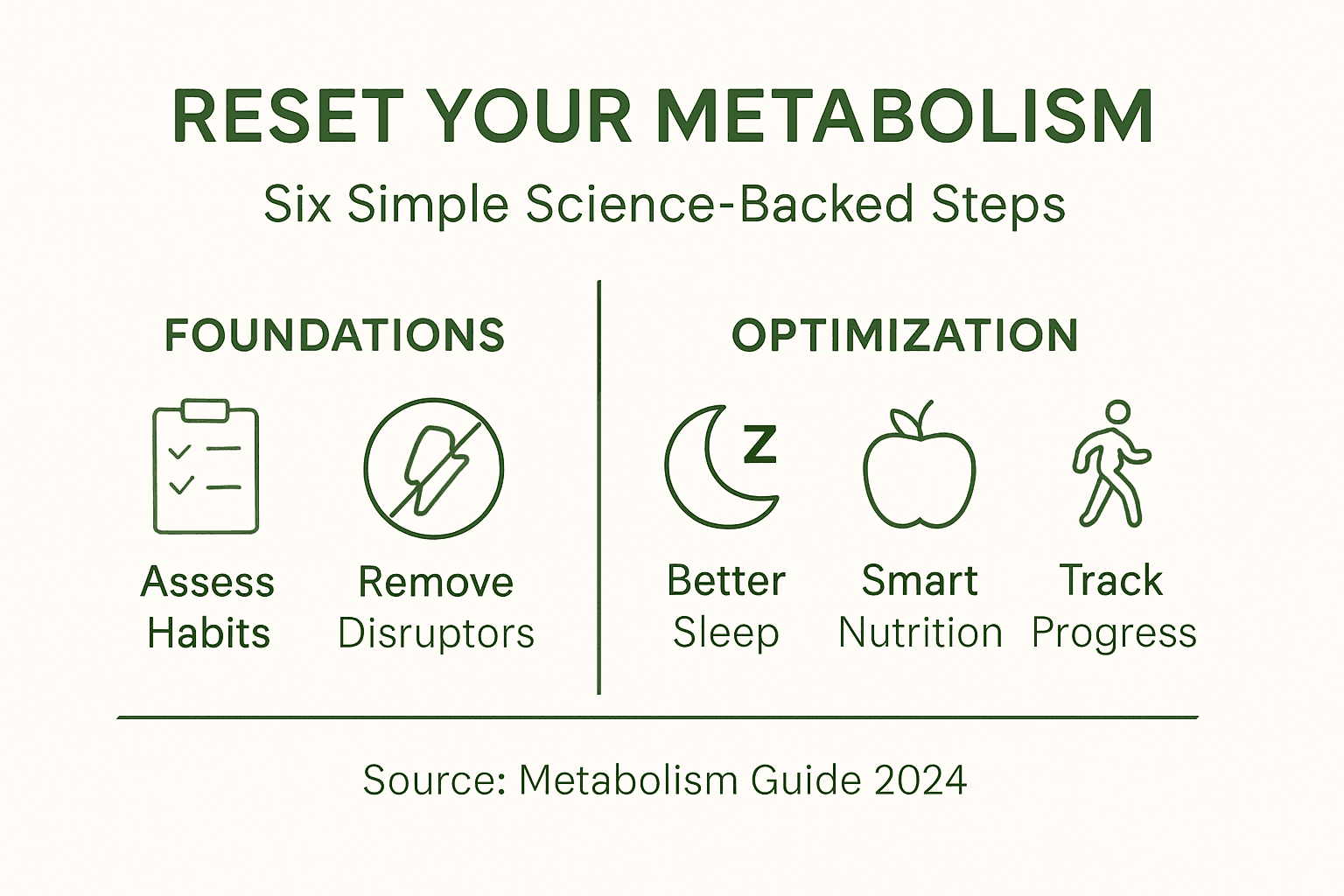
- Step 1: Assess Your Current Lifestyle and Habits
- Step 2: Eliminate Metabolic Disruptors From Your Routine
- Step 3: Optimize Sleep and Stress Management
- Step 4: Revamp Your Nutrition for Metabolic Health
- Step 5: Incorporate Strategic Physical Activity
- Step 6: Track Progress and Adjust Your Approach
Quick Summary
| Key Takeaway | Explanation |
|---|---|
| 1. Assess your current habits | Track nutrition, activity, sleep, and stress for insights into metabolic health. |
| 2. Remove metabolic disruptors | Audit your environment and replace harmful products to promote better metabolism. |
| 3. Prioritize quality sleep | Establish a consistent sleep schedule and create a calming pre-sleep routine. |
| 4. Revamp your nutrition | Focus on whole foods and balanced meals to support metabolic function and energy. |
| 5. Incorporate targeted physical activity | Engage in cardio and strength training to boost metabolism and overall health. |
Step 1: Assess your current lifestyle and habits
To reset your metabolism effectively, you need to start by understanding your current lifestyle and how your daily habits impact your metabolic health. Identifying risk factors and unhealthy patterns allows you to develop targeted strategies for metabolic improvement.
Begin by creating a comprehensive lifestyle snapshot that covers four key areas: nutrition, physical activity, sleep patterns, and stress management. Track your daily food intake using a detailed journal or app, noting not just calories but the quality of nutrients you consume. Observe your movement patterns tracking steps, structured exercise, and overall daily activity levels. Monitor your sleep duration and quality examining factors like bedtime consistency, interruptions, and how refreshed you feel upon waking. Evaluate your stress levels by noting triggers, emotional responses, and physiological reactions like muscle tension or digestive changes.
Your goal is to create a baseline understanding of how your current lifestyle might be influencing your metabolic rate. Metabolism is influenced by genetics and lifestyle modifications, so gathering objective data helps you design personalized interventions. This assessment provides insights into potential metabolic roadblocks and opportunities for strategic improvements.
Pro tip: Use a tracking app or notebook to document your lifestyle patterns consistently for at least one week to capture a representative snapshot of your current metabolic health.
Here’s a quick overview of factors that can impact your metabolism and how each influences metabolic health:
| Factor | How It Impacts Metabolism | Example Response to Improvement |
|---|---|---|
| Nutrition Quality | Determines nutrient intake | Enhanced energy stability |
| Physical Activity | Regulates calorie expenditure | Increased muscle mass |
| Sleep Consistency | Supports hormonal regulation | Better recovery and mood |
| Stress Management | Influences cortisol levels | Lower cravings and tension |
Step 2: Eliminate metabolic disruptors from your routine
To reset your metabolism effectively, you must proactively identify and remove environmental and dietary factors that interfere with your body’s natural metabolic processes. Environmental contaminants act as significant metabolic disruptors by disrupting hormone receptors and molecular mechanisms that regulate metabolism.
Start by conducting a comprehensive audit of your environment and daily consumption patterns. Focus on three critical areas of metabolic disruption. First, evaluate your kitchen and food storage. Replace plastic containers with glass or stainless steel to reduce exposure to endocrine disrupting chemicals. Check food packaging and opt for fresh, whole foods instead of processed items with long ingredient lists. Second, scrutinize your personal care and cleaning products. Many conventional products contain chemicals that can interfere with metabolic signaling. Select natural alternatives with minimal synthetic ingredients. Third, assess your water sources. Consider using filtered water to minimize potential chemical contaminants that might impact metabolic function.
Lifestyle interventions emphasize eliminating metabolic disruptors through strategic dietary and environmental modifications. Your goal is creating a clean metabolic environment that supports efficient energy processing and hormone balance. Pay attention to subtle changes in your body as you remove these potential metabolic obstacles and create space for optimal physiological function.
Pro tip: Implement changes gradually and track your bodys response to help identify specific disruptors that might be unique to your metabolic profile.
The table below summarizes common metabolic disruptors and recommended actions to minimize their effects:
| Disruptor Category | Typical Source | How to Minimize Impact |
|---|---|---|
| Chemical Contaminants | Food packaging | Use glass containers |
| Synthetic Ingredients | Personal care products | Switch to natural alternatives |
| Water Pollutants | Tap water | Use filtered water |
Step 3: Optimize sleep and stress management
Restoring your metabolism requires a strategic approach to sleep and stress management that goes beyond simple relaxation techniques. Quality sleep plays a critical role in metabolic health by enabling your body to recover, repair tissues, and regulate essential energy production processes.
Design a comprehensive sleep optimization protocol that addresses multiple dimensions of rest and recovery. Begin by establishing a consistent sleep schedule that allows for 7 to 9 hours of uninterrupted rest each night. Create a sleep sanctuary by minimizing electronic device exposure at least one hour before bedtime and maintaining a cool room temperature between 60 and 67 degrees. Implement a pre sleep ritual that includes relaxation techniques such as gentle stretching, deep breathing exercises, or light meditation to signal your body that it is time to transition into rest mode. Healthy lifestyle habits significantly influence sleep quality by reducing stress and supporting metabolic function.
Manage stress through intentional practices that interrupt your bodys chronic stress response. Incorporate daily mindfulness techniques like progressive muscle relaxation, journaling, or guided meditation. Regular physical activity can also serve as a powerful stress management tool by releasing endorphins and helping regulate cortisol levels. Pay attention to how your body responds to these interventions and be willing to adjust your approach based on your individual stress patterns and metabolic signals.
Pro tip: Create a wind down playlist with calming instrumental music to help your nervous system transition into a relaxed state before bedtime.
Step 4: Revamp your nutrition for metabolic health
Resetting your metabolism starts with a strategic approach to nutrition that goes far beyond simple calorie counting. Dietary guidelines emphasize whole nutrient dense foods as the foundation for supporting metabolic function and long term health.

Construct a metabolically supportive nutrition plan by focusing on food quality and metabolic impact. Prioritize lean proteins that require more energy to digest and help preserve muscle mass. Include complex carbohydrates from whole grains, vegetables, and fruits that provide sustained energy and essential micronutrients. Select proteins like chicken, fish, legumes, and eggs that naturally boost metabolism through increased diet induced thermogenesis. Incorporate healthy fats from sources like avocados, nuts, olive oil, and fatty fish to support hormone production and metabolic signaling. High protein foods can stimulate metabolism by increasing the energy required for digestion and helping maintain lean muscle mass.
Avoid restrictive diets that can potentially slow down metabolic rate. Instead, practice portion control and meal timing strategies that keep your metabolism consistently active. Aim for balanced meals that include protein, complex carbohydrates, and healthy fats to stabilize blood sugar and provide steady energy throughout the day. Experiment with meal frequencies that work best for your individual metabolism tracking how your body responds to different eating patterns.
Pro tip: Create a weekly meal prep routine that includes preportioned metabolically supportive meals to simplify your nutrition strategy and maintain consistency.
Step 5: Incorporate strategic physical activity
Revitalizing your metabolism requires a thoughtful and targeted approach to physical activity that goes beyond random exercise routines. Physical activity is essential for metabolic syndrome management by improving insulin sensitivity and supporting overall metabolic function.
Design a comprehensive exercise strategy that includes three critical components. First, prioritize aerobic activities that elevate your heart rate and enhance calorie burn. This could include brisk walking, swimming, cycling, or dance classes that you genuinely enjoy. Aim for moderate intensity workouts that challenge your cardiovascular system without causing excessive stress. Second, integrate strength training exercises at least twice weekly to build lean muscle mass. Muscle tissue is metabolically active and helps increase your resting metabolic rate. Choose resistance exercises using bodyweight, free weights, or resistance bands that target major muscle groups. Third, incorporate flexibility and recovery activities like yoga or stretching to support muscle recovery and reduce potential exercise induced stress. Physical activity guidelines recommend specific exercise frequencies to maximize health benefits and metabolic improvements.
Create a personalized exercise plan that adapts to your fitness level and evolves as your metabolism improves. Start with manageable workout durations and gradually increase intensity and complexity. Track your progress not just through weight or measurements, but by how you feel energy levels, mood, and overall vitality. Remember that consistency matters more than perfection when resetting your metabolism through physical activity.
Pro tip: Schedule your workouts like important business meetings and treat them as non negotiable appointments with yourself.
Step 6: Track progress and adjust your approach
Successfully resetting your metabolism requires more than implementing strategies it demands ongoing monitoring and intelligent adaptation. Monitoring metabolic health progress involves tracking critical markers that reveal how your body is responding to lifestyle changes.
Create a comprehensive tracking system that goes beyond simple weight measurements. Develop a multifaceted assessment approach including body composition analysis, energy levels, sleep quality, mood stability, and key metabolic markers like blood glucose and lipid profiles. Use digital tools or a detailed journal to record daily metrics and weekly trends. Pay attention to subtle shifts in how you feel your workout performance recovery time and overall sense of vitality. Look for patterns that indicate metabolic improvements such as more stable energy levels consistent mood reduced cravings and enhanced physical performance. Research on metabolism highlights continuous evaluation strategies to maintain balanced energy management.
Remember that metabolic reset is not a linear journey but an evolving process. Be prepared to make strategic adjustments based on your bodys feedback. If certain strategies are not yielding expected results consider consulting a metabolic health professional who can provide personalized insights. Your tracking system should be flexible enough to accommodate individual variations and responsive to your unique physiological signals.
Pro tip: Take progress photos and body measurements monthly to capture changes that might not be immediately visible on the scale.
Take Control of Your Metabolism with Science-Backed Support
Resetting your metabolism naturally requires more than just quick fixes or calorie counting. This article highlights the struggles many face with managing sleep, stress, nutrition, and physical activity—all critical factors for lasting metabolic health. If you feel overwhelmed by conflicting advice or frustrated by diets that do not consider how hormones and gut health shape your body’s unique response, you are not alone. Unlocking lasting results means understanding the science behind your metabolism and addressing the specific lifestyle disruptors impacting your health.
Discover how the Metabolism Guide offers a doctor-led, evidence-based program designed to educate and empower you through clear lessons on hormones, metabolism, and behavioral science. The program goes beyond typical dieting myths by providing structured content, virtual community support, and access to medical professionals who understand the biology of weight regulation. Take the first step now to reset your metabolism sustainably with personalized strategies that fit your life. Visit Metabolism Guide and start transforming your approach to weight and metabolic health today.
Frequently Asked Questions
How can I assess my current lifestyle and habits to reset my metabolism?
To assess your current lifestyle, create a comprehensive overview that includes your nutrition, physical activity, sleep patterns, and stress management. Track your daily food intake, step count, sleep duration, and stress triggers for at least one week to gather data on how these factors influence your metabolic health.
What are common metabolic disruptors I should eliminate from my routine?
Common metabolic disruptors include chemical contaminants in food packaging, synthetic ingredients in personal care products, and water pollutants. Focus on replacing plastic containers with glass, choosing natural personal care products, and using filtered water to minimize exposure to these disruptors.
How can I optimize my sleep to improve metabolic health?
To optimize sleep, establish a consistent sleep schedule aiming for 7 to 9 hours of rest each night. Create a sleep-friendly environment by minimizing electronic device exposure before bed and implement a calming pre-sleep routine, such as gentle stretching or deep breathing exercises, to signal your body to wind down.
What dietary changes should I make for better metabolic health?
Prioritize whole, nutrient-dense foods, focusing on lean proteins, complex carbohydrates, and healthy fats to support your metabolism. Avoid restrictive diets; instead, practice portion control and balanced meals that combine these food groups for steady energy and nutrient intake throughout the day.
How can I incorporate physical activity into my daily routine for optimal metabolism?
To reset your metabolism through physical activity, include aerobic exercises, strength training, and flexibility activities in your weekly plan. Aim for at least 150 minutes of moderate-intensity aerobic activity and two days of strength training each week to enhance overall metabolic function.
What should I track to monitor my metabolic progress effectively?
Track a range of metrics beyond just weight, including body composition, energy levels, sleep quality, and mood stability. Develop a system to record these factors regularly, and look for patterns that indicate improvements in your metabolic health, adjusting your approach as needed.
