

Most American adults try dieting at least four times a year but over 80 percent never achieve lasting weight loss. If you are tired of rigid meal plans and struggle with stubborn hormonal issues, the frustration can feel endless. The science reveals new strategies that go far beyond calorie counting, offering real hope for sustainable progress. This guide unpacks evidence-based methods designed for Americans seeking long-term success no matter their metabolic starting point.
Table of Contents
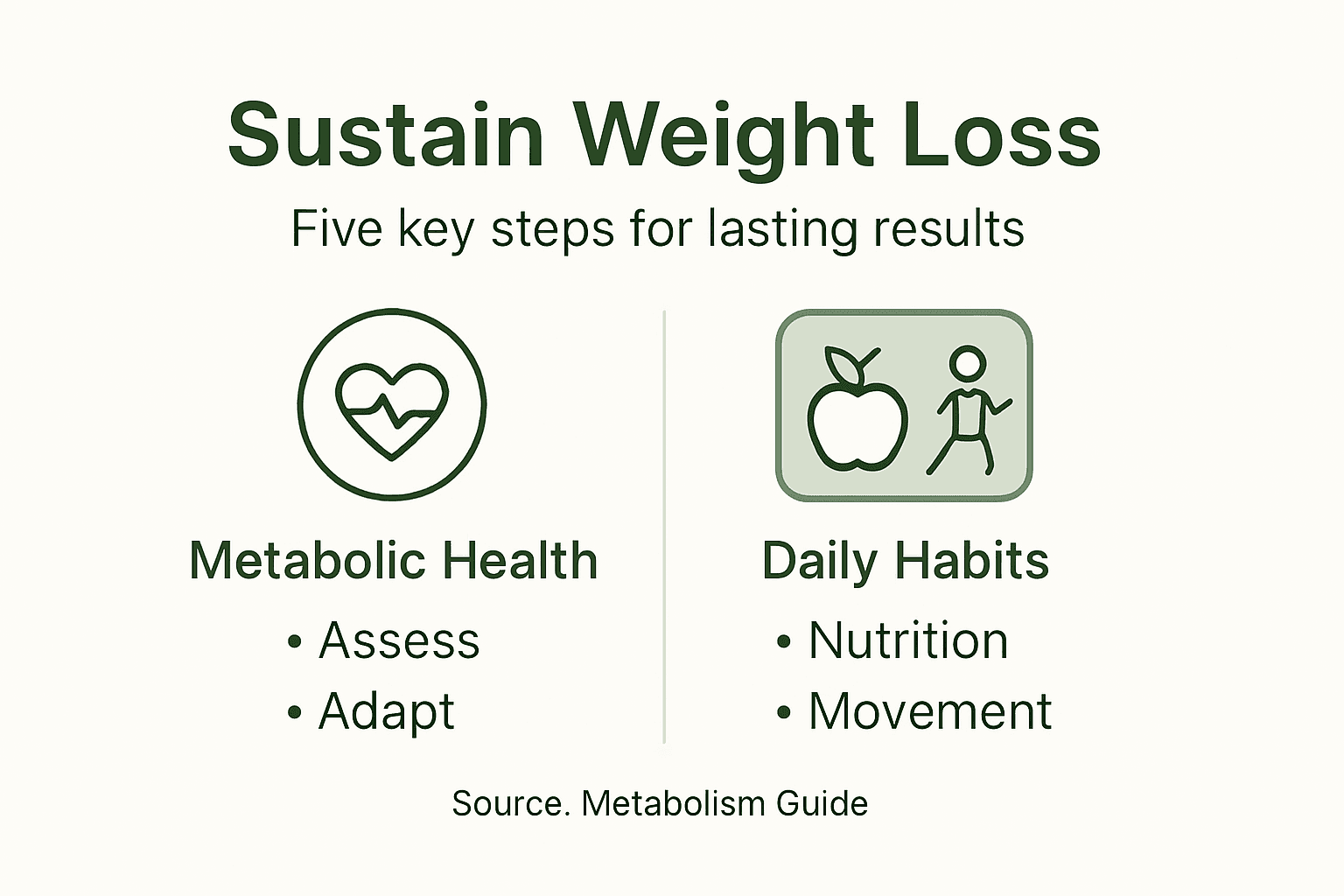
- Step 1: Assess Your Metabolic Health And Readiness
- Step 2: Identify And Modify Hormone-Disrupting Habits
- Step 3: Establish Supportive Nutrition And Eating Patterns
- Step 4: Integrate Sustainable Movement And Lifestyle Changes
- Step 5: Monitor Progress And Adapt Strategies For Lasting Success
Quick Summary
| Key Point | Explanation |
|---|---|
| 1. Assess Metabolic Health First | Understand your metabolic indicators like resting metabolic rate and insulin sensitivity to tailor weight loss strategies effectively. |
| 2. Modify Hormone-Disrupting Habits | Identify and address habits that affect hormone balance, such as stress and poor sleep, to improve weight management. |
| 3. Focus on Nutrition Timing | Implement meal timing strategies that prioritize nutrient-dense foods and earlier calorie consumption for better metabolic outcomes. |
| 4. Create a Sustainable Exercise Routine | Engage in enjoyable, consistent exercise incorporating both aerobics and strength training to support metabolic health and fitness. |
| 5. Regularly Monitor Progress | Use diverse metrics beyond weight to track health improvements and adapt strategies when necessary for ongoing success. |
Step 1: Assess your metabolic health and readiness
Understanding your metabolic health is the foundation for sustainable weight loss. Before diving into any weight management strategy, you need a comprehensive assessment that goes beyond simple weight measurements. This involves evaluating multiple physiological indicators that reveal how efficiently your body processes energy and manages metabolic functions.
To effectively assess your metabolic readiness, start by examining key biomarkers like resting metabolic rate, hormonal balance, and insulin sensitivity. Precision nutrition approaches can help you design a targeted weight loss strategy that considers your unique genetic and lifestyle factors. Consider scheduling a comprehensive metabolic health screening with a healthcare professional who can analyze complex indicators such as fasting glucose levels, lipid profiles, and metabolic rate. Pay special attention to how your body responds to different meal timing strategies, as research indicates that consuming calories earlier in the day can significantly impact weight loss outcomes.
The goal is not just losing weight but understanding the underlying metabolic mechanisms that influence your body composition. Track metrics like waist circumference, body fat percentage, muscle mass, and energy levels to get a holistic view of your metabolic health.
Pro tip: Keep a detailed metabolic health journal documenting your diet, exercise, sleep patterns, and energy fluctuations to identify personalized insights that standard medical tests might miss.
Here is a summary of key metabolic health markers and their importance:
| Marker | What It Measures | Why It Matters |
|---|---|---|
| Resting Metabolic Rate | Calories burned at rest | Indicates energy needs |
| Insulin Sensitivity | Body’s response to insulin | Impacts fat storage and loss |
| Fasting Glucose | Blood sugar after fasting | Reveals risk for diabetes |
| Lipid Profile | Cholesterol and triglycerides | Evaluates heart health risks |
| Waist Circumference | Abdominal fat measure | Linked to metabolic syndrome |
Step 2: Identify and modify hormone-disrupting habits
Your hormonal balance plays a critical role in weight loss success. Understanding and modifying habits that disrupt your metabolic harmony can significantly improve your ability to manage weight effectively and sustainably.
Nutrition and lifestyle interventions are key to addressing hormone-related challenges that impede weight loss. Start by identifying common hormone disruptors such as chronic stress, irregular sleep patterns, poor dietary choices, and exposure to environmental toxins. Focus on reducing inflammation and improving insulin sensitivity through targeted lifestyle modifications. Pay close attention to your cortisol levels by implementing stress management techniques like meditation, regular exercise, and consistent sleep schedules. Metabolic health optimization requires a holistic approach that considers how environmental factors and daily habits impact your hormonal ecosystem.
Consider conducting a comprehensive lifestyle audit to pinpoint specific habits that might be sabotaging your hormonal balance. This includes examining your sleep quality, stress levels, nutrition, physical activity, and exposure to endocrine-disrupting chemicals in your environment. Track your progress by monitoring energy levels, mood, sleep quality, and other key indicators of hormonal health.
Pro tip: Create a detailed hormone health tracking journal to identify patterns and correlations between your daily habits and metabolic performance.
Step 3: Establish supportive nutrition and eating patterns
Creating a nutrition strategy that supports sustainable weight loss requires more than simply counting calories. Your eating patterns play a critical role in metabolic health and long-term weight management success.

Meal timing strategies are crucial for optimizing metabolic outcomes. Focus on developing an eating approach that distributes calories strategically throughout the day, prioritizing nutrient dense foods and implementing time restricted eating windows. Research suggests consuming most calories earlier in the day can enhance fat metabolism and improve insulin sensitivity. Personalized nutrition recommendations emphasize moving beyond generic diet plans to create an approach tailored to your unique metabolic profile. This means understanding how different foods impact your individual hormonal and digestive systems.
Design your nutrition plan by incorporating whole foods that support metabolic health, reducing inflammatory ingredients, and creating consistent eating rhythms. Experiment with meal frequency and timing to discover what works best for your body. Consider consulting a registered dietitian who can help you develop a precise nutritional strategy that addresses your specific metabolic needs and weight loss goals.
Pro tip: Conduct a weekly meal prep session to ensure your nutrition plan remains consistent and aligned with your metabolic health objectives.
Step 4: Integrate sustainable movement and lifestyle changes
Successful weight loss is not about intense short-term exercise but creating a holistic approach to movement that becomes a natural part of your daily routine. Your goal is to develop an exercise strategy that supports metabolic health and feels enjoyable rather than punishing.
Aerobic exercise and high-intensity interval training offer powerful strategies for improving body composition and metabolic markers. Focus on finding physical activities you genuinely enjoy sustainable exercise approaches that match your fitness level and personal preferences. This might mean combining walking, swimming, cycling, or group fitness classes that keep you motivated. Evidence-based lifestyle strategies emphasize the importance of consistent moderate exercise and resistance training to preserve muscle mass and metabolic function.
Design a movement plan that integrates seamlessly into your lifestyle. Start with realistic goals like walking 30 minutes daily, incorporating strength training twice weekly, and gradually increasing intensity as your fitness improves. Remember that consistency matters more than intensity. Track your progress not just through weight changes but also by monitoring energy levels, mood, and overall physical capability.
Pro tip: Schedule your workouts like important business meetings and treat them as non-negotiable appointments with yourself.
Compare these approaches for sustainable weight management:
| Approach | Main Benefit | Potential Limitation |
|---|---|---|
| Personalized Nutrition | Tailored to individual needs | Requires professional guidance |
| Flexible Meal Timing | May improve fat metabolism | Can be challenging to sustain daily |
| Consistent Exercise | Supports muscle and metabolic health | Progress may be gradual |
| Stress Management | Regulates hormone balance | May need time to master techniques |
Step 5: Monitor progress and adapt strategies for lasting success
Sustainable weight loss is not a linear journey but a dynamic process of continuous learning and adjustment. Your ability to track progress and modify strategies will determine your long-term success.
Regular monitoring techniques are crucial for maintaining weight loss momentum. Develop a comprehensive tracking system that goes beyond simple weight measurements. Record multiple indicators including body measurements, energy levels, sleep quality, mood, and fitness performance. These metrics provide a holistic view of your metabolic health transformation. Qualitative and quantitative feedback helps identify potential barriers and celebrate incremental achievements that traditional scale measurements might miss.
Create a flexible adaptation framework that allows you to pivot your approach when progress stalls. This might involve adjusting calorie intake, modifying exercise intensity, addressing potential hormonal imbalances, or consulting with healthcare professionals. Recognize that weight loss plateaus are normal and not indicators of failure. Approach these moments as opportunities to refine your strategy and gain deeper understanding of your body’s unique metabolic responses.
Pro tip: Schedule monthly review sessions to analyze your tracking data and make informed adjustments to your weight loss approach.
Achieve Lasting Weight Loss by Understanding Your Unique Metabolic Health
The article highlights the struggle with sustained weight loss often caused by hidden metabolic imbalances and hormone-disrupting habits. If you’ve experienced frustration from traditional dieting methods or quick fixes that overlook your body’s complex biology, you are not alone. Key challenges like poor insulin sensitivity, disrupted hormone balance, and ineffective meal timing can undermine your efforts despite your dedication. Understanding these internal processes is essential to create a tailored and scientifically sound approach that supports your metabolic health and long-term success.
Take control of your weight management journey today by exploring the comprehensive resources at Metabolism Guide. Our doctor-led, evidence-based program unpacks the science of metabolism, hormones, and nutrition into clear, manageable lessons supported by a virtual community and direct access to medical experts. Don’t settle for one-size-fits-all diets when you can learn how your body’s unique biology affects weight regulation. Start your path to sustainable weight loss now and break free from the cycle of frustration by visiting Metabolism Guide and discover how understanding your metabolism transforms your health for good.
Frequently Asked Questions
How can I assess my metabolic health before starting a weight loss journey?
Understanding your metabolic health involves evaluating key metrics like resting metabolic rate, insulin sensitivity, and fasting glucose levels. Schedule a comprehensive metabolic health screening with a healthcare professional to get a clear picture of your metabolic readiness.
What habits should I modify to support my hormone balance and weight loss?
Identify and reduce habits that disrupt hormonal balance, such as chronic stress, irregular sleep patterns, and poor dietary choices. Implement stress management techniques, establish a consistent sleep schedule, and focus on anti-inflammatory foods.
How can I create a nutrition plan that supports sustainable weight loss?
Develop a nutrition strategy that prioritizes whole foods, incorporates meal timing strategies, and aligns with your unique metabolic profile. Consider planning your meals weekly to ensure you consistently follow your nutritional goals.
What types of exercise should I include for effective weight management?
Incorporate both aerobic exercises and high-intensity interval training to improve body composition and metabolic markers. Start with achievable goals, such as walking for 30 minutes daily, and gradually increase intensity and duration.
How often should I track my progress during my weight loss journey?
Regularly monitor your progress by tracking indicators like body measurements, energy levels, and sleep quality. Schedule monthly review sessions to analyze your data and make informed adjustments to your weight loss strategies as needed.
What should I do if I hit a weight loss plateau?
If you encounter a weight loss plateau, view it as an opportunity to reassess your strategy. Adjust your calorie intake or modify your exercise regimen and reassess your hormonal health to determine what changes might help you move forward.
