

Most American adults struggling with persistent weight gain face more than just mindset hurdles—over 42% of Americans now live with obesity, classified as a chronic disease by the American Medical Association. This shift matters for anyone battling weight loss resistance tied to hormones or underlying health issues. By unpacking common myths and breaking down science-backed facts, you can discover how modern medicine redefines realistic, sustainable obesity management.
Table of Contents
- Obesity As A Disease: Myths And Realities
- Types Of Medical Treatments For Obesity
- How Anti-Obesity Medications Work
- Eligibility And Access To Medical Options
- Risks, Costs, And Alternatives Compared
Key Takeaways
| Point | Details |
|---|---|
| Obesity is a Chronic Disease | Obesity is recognized as a complex medical condition requiring personalized interventions, not merely a result of lifestyle choices. |
| Medical Treatments Vary | Treatment options include lifestyle changes, medications, and surgical interventions, each tailored to individual health profiles. |
| Eligibility Criteria | Medical weight loss treatments generally target individuals with a BMI over 30 or 27 with related health conditions. |
| Consider Risks and Costs | Weighing the benefits and risks of various treatments is crucial for informed decision-making regarding obesity management. |
Obesity as a Disease: Myths and Realities
Obesity represents a complex medical condition far beyond simplistic stereotypes of personal willpower or lifestyle choices. Medical experts now recognize obesity as a genuine chronic disease with intricate biological mechanisms that profoundly impact an individual’s health trajectory.
Contrary to popular misconceptions, obesity is not merely a result of overeating or laziness. Scientific research demonstrates that genetic predispositions, hormonal imbalances, metabolic variations, and environmental factors significantly contribute to weight regulation. World health organizations emphasize obesity’s multifaceted nature, highlighting that individual experiences with weight management are far more nuanced than simplistic diet and exercise recommendations.
The American Medical Association’s landmark decision to classify obesity as a disease marked a critical paradigm shift in medical understanding. This recognition encourages healthcare professionals to approach obesity as a chronic condition requiring comprehensive, personalized medical intervention. Key implications of this classification include:
- Improved medical research funding
- Enhanced insurance coverage for obesity treatments
- Reduced societal stigmatization
- More holistic treatment approaches
By understanding obesity as a complex medical condition, patients and healthcare providers can collaborate more effectively to develop targeted, sustainable strategies for metabolic health management.
Pro tip: Work closely with medical professionals who understand obesity as a multifaceted disease, and seek comprehensive metabolic assessments that go beyond traditional weight loss approaches.
Types of Medical Treatments for Obesity
Managing obesity requires a sophisticated, personalized approach that extends far beyond traditional diet and exercise recommendations. Medical interventions offer multiple strategic treatment options tailored to individual metabolic profiles, health conditions, and weight loss goals.

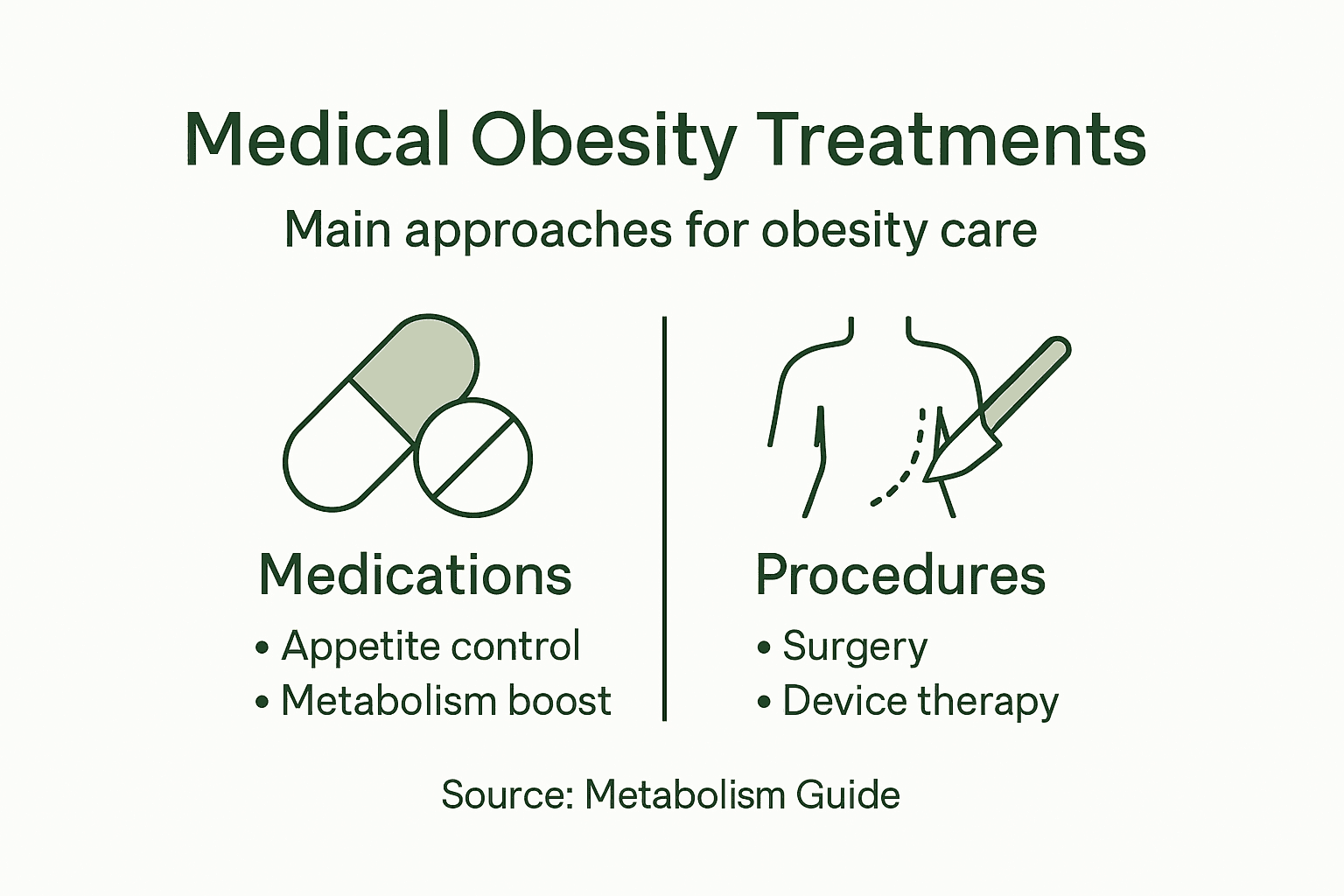
The primary medical treatment categories include pharmacotherapy, lifestyle interventions, and surgical procedures. Pharmacotherapy represents a targeted approach using FDA-approved medications designed to regulate appetite, enhance metabolism, and support sustainable weight management. These medications work by influencing hormonal signals, reducing hunger sensations, or increasing metabolic rate, providing patients with crucial support beyond willpower.
Bariatric surgical interventions offer more aggressive solutions for individuals with severe obesity or significant health complications. Surgical procedures like gastric bypass and sleeve gastrectomy fundamentally alter the digestive system’s structure, creating physiological changes that:
- Restrict food intake capacity
- Reduce nutrient absorption
- Modify hormonal hunger signals
- Improve metabolic functioning
- Potentially resolve obesity-related comorbidities
Choosing the appropriate medical treatment involves comprehensive assessment of individual health factors, including:
- Current body mass index (BMI)
- Presence of metabolic disorders
- Previous weight loss attempts
- Potential medication interactions
- Overall health status
- Psychological readiness
Each treatment strategy requires careful medical supervision, ongoing monitoring, and personalized adjustment to ensure optimal outcomes and patient safety.
Here’s how the major obesity treatments compare on key dimensions:
| Treatment Type | Typical Candidates | Invasiveness | Long-Term Commitment |
|---|---|---|---|
| Lifestyle Changes | Most individuals, any BMI | Non-invasive | Ongoing daily effort |
| Medications | BMI ≥27 with conditions | Low to moderate | Regular monitoring |
| Surgery | Severe obesity, comorbidities | Highly invasive | Lifelong follow-up |
Pro tip: Consult with an obesity medicine specialist who can provide a comprehensive metabolic evaluation and recommend the most appropriate medical treatment strategy for your specific health profile.
How Anti-Obesity Medications Work
Modern medical science has developed sophisticated approaches to addressing obesity through targeted pharmaceutical interventions. Anti-obesity medications operate through complex neurological mechanisms that fundamentally alter the body’s metabolic and appetite regulation systems.
These medications primarily function by manipulating key biological pathways in the central nervous system. Neurotransmitter modulation plays a crucial role, with drugs strategically targeting specific brain receptors responsible for hunger signals and metabolic processes. By influencing neurotransmitters like serotonin and dopamine, these medications can:
- Suppress appetite sensations
- Increase feelings of fullness
- Reduce food cravings
- Modify reward centers related to eating
- Enhance metabolic efficiency
Hormone-based medications represent another sophisticated approach to weight management. These drugs often mimic or interact with natural hormones like GLP-1, which regulates insulin production and appetite. By creating precise hormonal interventions, these medications can:
- Slow gastric emptying
- Reduce insulin resistance
- Decrease overall caloric intake
- Improve metabolic signaling
- Support long-term weight regulation
Critical considerations for anti-obesity medications include individual metabolic variations, potential side effects, and the necessity of comprehensive medical supervision. No single medication works identically for every patient, emphasizing the importance of personalized medical assessment and ongoing monitoring.
Summary of primary mechanisms used by anti-obesity medications:
| Mechanism | Action on Body | Primary Outcome |
|---|---|---|
| Neurotransmitter Modulation | Alters hunger signals | Reduces appetite |
| Hormone Mimicry | Adjusts metabolic hormones | Improves insulin response |
| Gastric Action | Slows stomach emptying | Prolongs fullness feeling |
Pro tip: Request a comprehensive metabolic screening before starting any anti-obesity medication to understand your unique physiological response and potential interaction risks.
Eligibility and Access to Medical Options
Navigating medical weight loss options requires a comprehensive understanding of individual health parameters and professional medical assessment. Obesity treatment eligibility involves multiple critical factors that determine the most appropriate and safe intervention strategy for each unique patient.
Typically, medical weight loss options are considered for individuals meeting specific clinical criteria. Key eligibility parameters typically include:
- Body Mass Index (BMI) over 30 or 27 with obesity-related comorbidities
- Documented unsuccessful attempts at traditional weight loss methods
- Presence of weight-related health conditions like diabetes or hypertension
- No contraindications for specific medical treatments
- Comprehensive metabolic health screening results
- Psychological readiness for sustained lifestyle modifications
The process of accessing medical obesity treatments involves a structured medical evaluation. Patients can expect a multi-step approach that typically includes:
- Initial comprehensive health assessment
- Detailed medical history review
- Metabolic and hormonal screening
- Discussion of potential treatment options
- Personalized treatment plan development
- Ongoing medical monitoring and support
Insurance coverage and financial considerations play a significant role in treatment accessibility. While some medical weight loss options may be covered by health insurance, others might require out-of-pocket expenses. Patients should proactively engage with their healthcare providers and insurance companies to understand potential coverage and financial implications of recommended treatments.
Pro tip: Request a detailed breakdown of potential medical weight loss treatment costs and insurance coverage options during your initial consultation to make an informed financial decision.
Risks, Costs, and Alternatives Compared
Medical obesity treatments reveal complex considerations involving nuanced trade-offs between potential benefits and inherent risks. Understanding these multifaceted dynamics empowers patients to make informed decisions tailored to their unique health profiles and financial circumstances.
The primary obesity treatment options present distinct risk profiles and cost structures. Surgical interventions typically represent the most invasive and expensive approach, with potential complications including:
- Surgical risks during procedure
- Potential nutritional deficiencies
- Long-term metabolic adaptations
- Psychological adjustment challenges
- Recovery and rehabilitation requirements
Pharmaceutical treatments offer a less invasive alternative, characterized by moderate costs and manageable side effects. These medications typically involve:
- Lower upfront medical expenses
- Potential medication side effects
- Ongoing prescription costs
- Periodic medical monitoring
- Gradual weight management approach
Non-medical alternatives provide complementary strategies with minimal financial investment but potentially limited clinical outcomes. These approaches include lifestyle interventions, behavioral therapy, and community support programs that focus on holistic health transformation without direct medical intervention.
Cost considerations extend beyond direct medical expenses, encompassing indirect factors such as long-term health maintenance, potential insurance coverage, and individual metabolic response. Patients must conduct comprehensive evaluations considering personal health status, financial resources, and realistic treatment expectations.
Pro tip: Request a detailed comparative analysis of treatment costs, including both direct medical expenses and potential long-term health impact, during your initial medical consultation.
Take Control of Your Obesity Treatment Journey with Science-Backed Support
Understanding that obesity is a complex medical condition requiring personalized medical options is the first step toward lasting health improvements. If you are frustrated by the one-size-fits-all dieting advice and want to explore how your unique hormonal signals, metabolism, and gut health influence weight management, you are not alone. This article emphasizes the importance of medical interventions tailored to your individual metabolic profile and the critical role of professional guidance to navigate treatment eligibility, risks, and benefits.
Discover a transformative approach at Metabolism Guide, where doctor-led, evidence-based programs break down the science behind obesity and medical weight loss options. Gain access to structured lessons combined with virtual community support and direct medical insights. Empower yourself with knowledge about metabolic assessments, pharmaceutical treatments, and sustainable lifestyle changes to make informed decisions now. Start your personalized journey to improved metabolic health today by visiting Metabolism Guide and learning how to work with medical experts who truly understand the complexity of obesity.
Frequently Asked Questions
What are the main medical treatments for obesity?
Medical treatments for obesity primarily include pharmacotherapy, lifestyle interventions, and surgical procedures. Each of these strategies is tailored to individual patient needs based on their health profiles and weight loss goals.
How do anti-obesity medications work?
Anti-obesity medications work by manipulating neurotransmitters and hormones in the body. They can suppress appetite, increase feelings of fullness, and improve metabolic efficiency, aiding in sustainable weight management.
Who is eligible for medical obesity treatment options?
Eligibility for medical obesity treatments typically includes individuals with a Body Mass Index (BMI) over 30 or over 27 with obesity-related conditions, documented unsuccessful weight loss attempts, and a comprehensive health evaluation.
What are the risks and costs associated with obesity treatments?
Risks and costs vary by treatment type. Surgical interventions are the most invasive and expensive, with potential complications and long-term adjustments. Pharmaceutical treatments are generally less invasive with moderate costs. Non-medical alternatives are typically lower in cost but may offer limited clinical outcomes.
