

Most American adults struggling with obesity have tried countless fad diets, yet nearly 80% regain lost weight within a few years. This ongoing cycle leaves many feeling discouraged and searching for real answers. Medical support for weight loss offers a science-driven, personalized path that understands your unique health needs. Discover how expert guidance and tailored interventions can finally help you achieve lasting results and protect your overall well-being.
Table of Contents
- Defining Medical Support In Weight Loss
- Types Of Medical Weight Loss Programs
- Medical Interventions: Prescription And Surgery
- Benefits Over Fad Diets And Self-Management
- Risks, Costs, And Choosing The Right Care
Key Takeaways
| Point | Details |
|---|---|
| Medical Support is Comprehensive | Successful weight loss relies on a multidisciplinary team addressing physical, nutritional, and emotional factors. |
| Personalized Interventions are Essential | Tailored strategies align with individual metabolic profiles and health conditions for effective weight management. |
| Sustainability is Prioritized | Focus on long-term health improvements rather than rapid weight loss ensures better outcomes. |
| Understanding Risks and Costs is Crucial | Patients must be informed about potential side effects and financial implications of medical weight loss interventions. |
Defining Medical Support in Weight Loss
Medical support in weight loss represents a comprehensive, scientifically guided approach to helping individuals achieve sustainable health transformations. Unlike traditional diet plans, this method integrates professional healthcare expertise to address weight management as a complex physiological challenge. Medical nutrition therapy provides personalized strategies that go beyond simple calorie counting, focusing on individual metabolic profiles, underlying health conditions, and holistic lifestyle modifications.
At its core, medical support involves a multidisciplinary team of health professionals working collaboratively to develop targeted weight loss interventions. This typically includes registered dietitians, behavioral counselors, endocrinologists, and primary care physicians who conduct thorough assessments including body mass index (BMI) measurements, comprehensive health screenings, and detailed medical history evaluations. The primary objective is not rapid weight loss, but sustainable health improvement, often targeting an initial reduction of 5% to 10% of total body weight to mitigate obesity-related health risks.
The diagnostic process in medical weight loss support is rigorous and individualized. Healthcare professionals screen for underlying conditions like diabetes, cardiovascular diseases, and metabolic disorders that might impact weight management. They develop personalized nutrition plans, recommend appropriate physical activity levels, and provide ongoing counseling to address psychological barriers to weight loss. Comprehensive treatment approaches recognize that successful weight management requires addressing physical, nutritional, and emotional aspects of an individual’s health.
Pro tip: Schedule an initial comprehensive medical consultation to understand your unique metabolic profile and develop a personalized weight loss strategy tailored to your specific health needs.
Types of Medical Weight Loss Programs
Medical weight loss programs represent a sophisticated approach to addressing obesity through personalized, scientifically driven interventions. Unlike traditional diet plans, these programs offer comprehensive strategies tailored to individual health needs and metabolic profiles. Medically supervised weight loss options include a range of specialized approaches designed to help patients achieve sustainable weight management through professional guidance and targeted interventions.
The primary types of medical weight loss programs typically encompass several key approaches: nutritional management, behavioral therapy, pharmacological interventions, and in some cases, surgical options. Nutritional management involves working with registered dietitians to develop personalized meal plans that consider individual metabolic needs, food preferences, and health conditions. Behavioral therapy focuses on addressing psychological barriers to weight loss, helping patients develop healthier relationships with food and implement long-term lifestyle changes. Pharmacological interventions may include prescription medications that support weight loss by managing appetite, metabolism, or underlying health conditions.
The table below summarizes the main types of medical weight loss interventions and their target patient profiles:
| Intervention Type | Primary Purpose | Ideal Candidates |
|---|---|---|
| Nutritional Management | Personalized diet planning | Most patients seeking sustainable change |
| Behavioral Therapy | Address psychological challenges | Individuals with emotional eating habits |
| Prescription Medications | Support metabolic weight loss | Patients not achieving results with diet |
| Surgical Options | Intensive obesity treatment | Severe obesity or related complications |
Pro tip: Discuss your complete medical history and weight loss goals with healthcare professionals to determine the most appropriate medical weight loss program tailored to your specific health needs and physiological characteristics.
Medical Interventions: Prescription and Surgery
Medical weight loss interventions extend beyond traditional diet and exercise approaches, offering sophisticated options for individuals struggling with obesity. Prescription medications represent one critical avenue for medical weight management, targeting specific metabolic processes to support weight loss. These pharmaceuticals work by suppressing appetite, increasing metabolic rate, or blocking fat absorption, providing targeted support for patients who have not achieved success through lifestyle modifications alone.
Bariatric surgery options provide a more intensive intervention for individuals with severe obesity. Recommended for patients with a body mass index (BMI) of 40 or higher, or 35 with serious obesity-related health conditions, these surgical procedures fundamentally alter the digestive system to limit food intake or reduce calorie absorption. Surgical interventions can include gastric bypass, sleeve gastrectomy, and adjustable gastric banding, each designed to create significant and sustainable weight loss while potentially resolving associated health complications like type 2 diabetes and hypertension.

Both prescription medications and surgical interventions require comprehensive medical evaluation, ongoing monitoring, and commitment to lifestyle changes. Patients must undergo rigorous screening to determine their eligibility, considering factors such as overall health status, previous weight loss attempts, and potential risks. Success depends not just on the medical intervention itself, but on the patient’s willingness to adopt long-term dietary modifications, regular physical activity, and consistent medical follow-up.
Pro tip: Consult a board-certified obesity medicine specialist to thoroughly evaluate your individual health profile and determine the most appropriate medical weight loss intervention for your specific needs.
Benefits Over Fad Diets and Self-Management
Medical weight loss programs represent a scientifically grounded alternative to the volatile world of fad diets and individual self-management attempts. Unlike restrictive eating plans that promise rapid weight loss, these professional approaches focus on sustainable, holistic health transformation. Fad diets typically fail because they rely on extreme restrictions, eliminate entire food groups, and ignore individual metabolic differences, ultimately leading to nutritional deficiencies and psychological distress.
The fundamental advantage of medical weight loss programs lies in their comprehensive, personalized approach. Where self-management often depends on willpower and generic internet advice, medical professionals conduct thorough assessments of an individual’s metabolic profile, hormonal balance, genetic predispositions, and underlying health conditions. This allows for targeted interventions that address root causes of weight gain, rather than applying one-size-fits-all solutions that ignore individual biological complexity. Medical support provides continuous monitoring, evidence-based nutritional guidance, behavioral therapy, and the ability to adjust strategies based on ongoing progress and physiological responses.
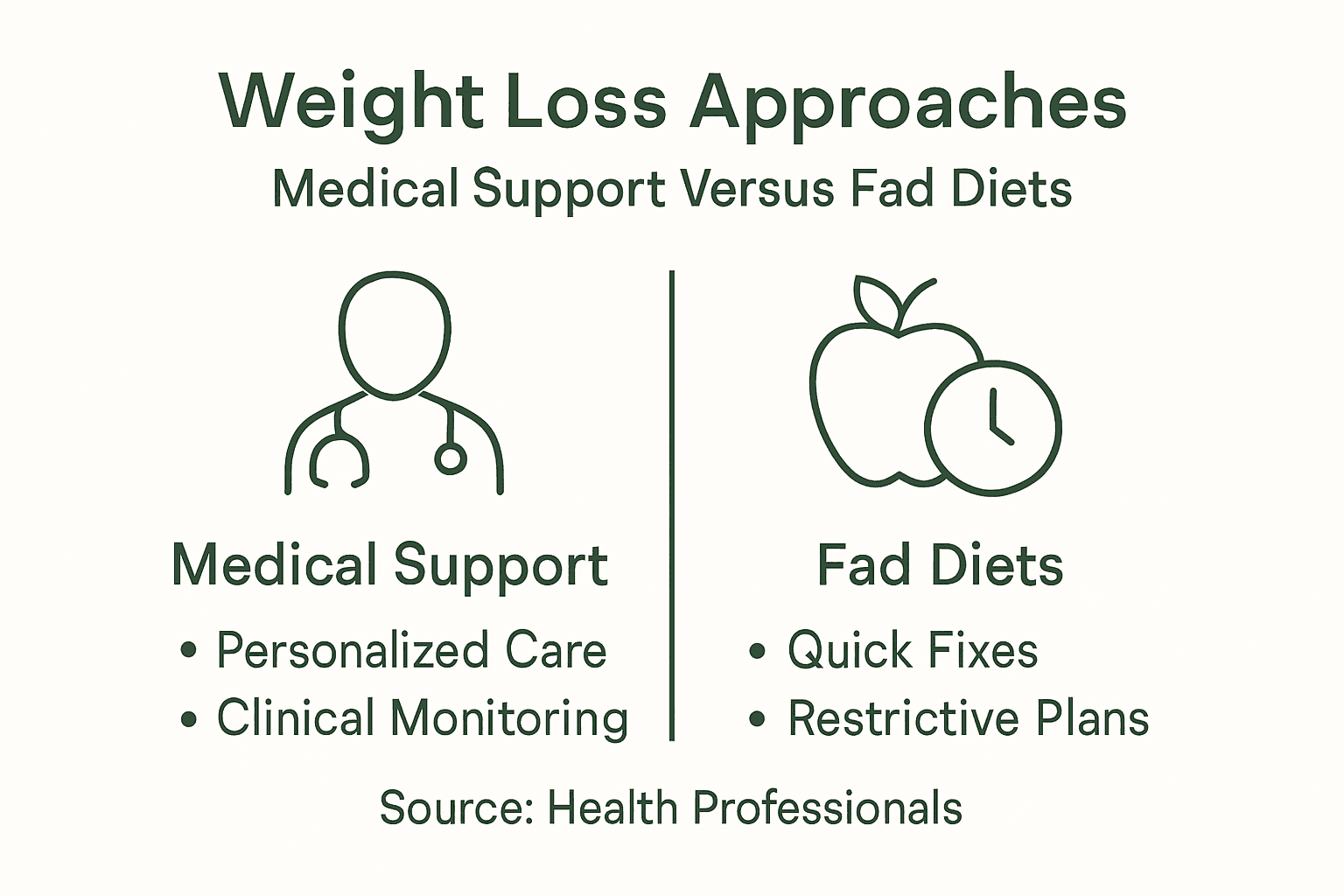
Moreover, medical weight loss programs prioritize long-term health over short-term results. They recognize that sustainable weight management is not about rapid loss, but about creating lasting lifestyle changes that improve overall metabolic health. By integrating nutritional counseling, psychological support, potential medical interventions, and ongoing education, these programs equip patients with the knowledge, skills, and support necessary to maintain weight loss and prevent future health complications.
Here is a comparison of medical weight loss programs versus fad diets and self-management efforts:
| Aspect | Medical Weight Loss Programs | Fad Diets & Self-Management |
|---|---|---|
| Approach | Evidence-based, personalized | One-size-fits-all, generic advice |
| Monitoring | Ongoing medical oversight | Minimal or no expert involvement |
| Long-term Effectiveness | High, focus on sustainability | Low, often leads to relapse |
| Addresses Root Causes | Yes, evaluates health factors | No, ignores underlying conditions |
Pro tip: Schedule a comprehensive metabolic assessment with a board-certified weight management specialist to understand your unique biological factors and develop a personalized, science-driven weight loss strategy.
Risks, Costs, and Choosing the Right Care
Navigating medical weight loss interventions requires a comprehensive understanding of potential risks, financial considerations, and strategic decision-making. Medical treatments are not one-size-fits-all solutions, and patients must carefully evaluate their individual health circumstances, financial resources, and potential outcomes. Significant challenges exist in accessing evidence-based obesity treatments, including complex barriers related to insurance coverage, healthcare provider expertise, and individual health determinants.
Prescription weight loss medications and surgical interventions come with distinct risks and potential side effects that demand thorough professional consultation. Gastrointestinal symptoms, potential metabolic changes, and long-term health implications must be carefully weighed against potential benefits. Financial considerations are equally critical, as many insurance plans provide limited coverage for weight loss interventions. Patients should anticipate potential out-of-pocket expenses, including consultation fees, medication costs, potential surgical procedures, and ongoing nutritional counseling.
Choosing the right medical weight loss approach requires a methodical evaluation process. Patients should seek comprehensive assessments from board-certified specialists who can provide personalized recommendations based on individual health profiles. Key considerations include current body mass index, existing health conditions, metabolic history, genetic predispositions, and personal health goals. A multidisciplinary approach involving physicians, nutritionists, behavioral therapists, and potentially surgical specialists ensures a holistic evaluation of potential interventions.
Pro tip: Request a detailed cost breakdown and insurance coverage analysis before committing to any medical weight loss intervention, and ensure you understand all potential long-term financial and health implications.
Unlock Sustainable Weight Loss with Expert Medical Guidance
Struggling with weight management because fad diets have let you down? The article highlights critical challenges like addressing hormonal imbalances, understanding metabolic health, and navigating medical interventions safely and effectively. You are not alone if you’ve faced frustration from generic advice or quick fixes that ignore your body’s unique biology. Medical support offers personalized care that targets root causes rather than surface symptoms.
Now imagine gaining access to a doctor-led, evidence-based program that explains how factors such as hormones, gut health, and lifestyle shape your metabolism. At Metabolism Guide, you can explore science-driven educational modules, gain insights into medical options for weight loss, and receive ongoing support tailored to your needs. This resource is designed for people just like you who want to stop guessing and start transforming their health sustainably.

Take control today by visiting Metabolism Guide. Discover how to work with your body, not against it, with guidance grounded in medical science and behavior change. Don’t wait to break free from ineffective diets. Learn more about medical support for weight management and set your path toward lasting health now.
Frequently Asked Questions
What is medical support in weight loss?
Medical support in weight loss is a comprehensive approach that combines professional healthcare expertise to address weight management as a complex physiological challenge. It involves a multidisciplinary team that develops personalized strategies focusing on individual metabolic profiles and health conditions.
How do medical weight loss programs differ from fad diets?
Medical weight loss programs are evidence-based and personalized, focusing on sustainable health transformation, whereas fad diets often promise rapid results through extreme restrictions and ignore individual health needs.
What types of medical interventions are available for weight loss?
Medical interventions for weight loss include prescription medications that manage appetite and metabolism, behavioral therapy to address psychological barriers, and surgical options for severe obesity, such as gastric bypass and sleeve gastrectomy.
What are the benefits of choosing a medical weight loss program?
The primary benefits include a personalized, scientifically grounded approach, ongoing medical oversight, high effectiveness in long-term weight management, and strategies that address the root causes of weight gain, leading to sustainable health improvements.
