

More than 88 percent of American adults face metabolic health challenges, many linked to the hidden world of their gut microbiome. If you are struggling to lose weight due to hormonal imbalances, understanding how these trillions of microscopic organisms influence metabolism is more important than ever. This topic goes beyond simple calorie counting and reveals how personalized, science-backed changes could bring lasting improvements for American individuals seeking sustainable health.
Table of Contents
- What Is The Microbiome And Why It Matters
- Types Of Gut Bacteria Linked To Weight
- How Microbiome Interacts With Metabolism
- Mechanisms: Appetite, Hormones, And Inflammation
- Factors Influencing Gut Health And Weight
Key Takeaways
| Point | Details |
|---|---|
| Role of the Microbiome | The microbiome comprises diverse microorganisms vital for health, influencing digestion, immune function, and even mental health. |
| Impact on Weight Regulation | Specific gut bacteria, such as Firmicutes and Bacteroidetes, play key roles in weight management by affecting energy extraction and fat storage. |
| Diet’s Influence | Dietary choices significantly shape microbiome composition, suggesting that a balanced diet is crucial for maintaining gut health and proper metabolic function. |
| Holistic Approach Needed | Factors like stress, sleep, and physical activity also impact gut health and weight, emphasizing the need for personalized, multi-faceted weight management strategies. |
What Is the Microbiome and Why It Matters
The microbiome represents a complex ecosystem of microorganisms living within and on the human body, far more intricate than most people realize. Scientists now understand that these microscopic inhabitants play a crucial role in our overall health, functioning as essential partners rather than unwelcome invaders.
These microorganisms include bacteria, viruses, fungi, and other tiny life forms uniquely adapted to different body sites like the gut, skin, and mouth. Each location hosts a distinct microbial community performing specialized functions critical to human physiology. The gut microbiome, for instance, aids digestion, produces essential nutrients, supports immune system function, and even influences mental health through intricate biological communication pathways.
Understanding the microbiome reveals a profound interconnectedness between human biology and these microscopic inhabitants. Research demonstrates that our microbiome changes dynamically based on factors like diet, medication, stress, and environmental exposures. Disruptions to this delicate ecosystem can potentially contribute to various health conditions, including metabolic disorders, autoimmune diseases, and mental health challenges.
Pro tip: Consider incorporating probiotic-rich foods like yogurt, kefir, and fermented vegetables to support a healthy and diverse microbiome ecosystem.
Types of Gut Bacteria Linked to Weight
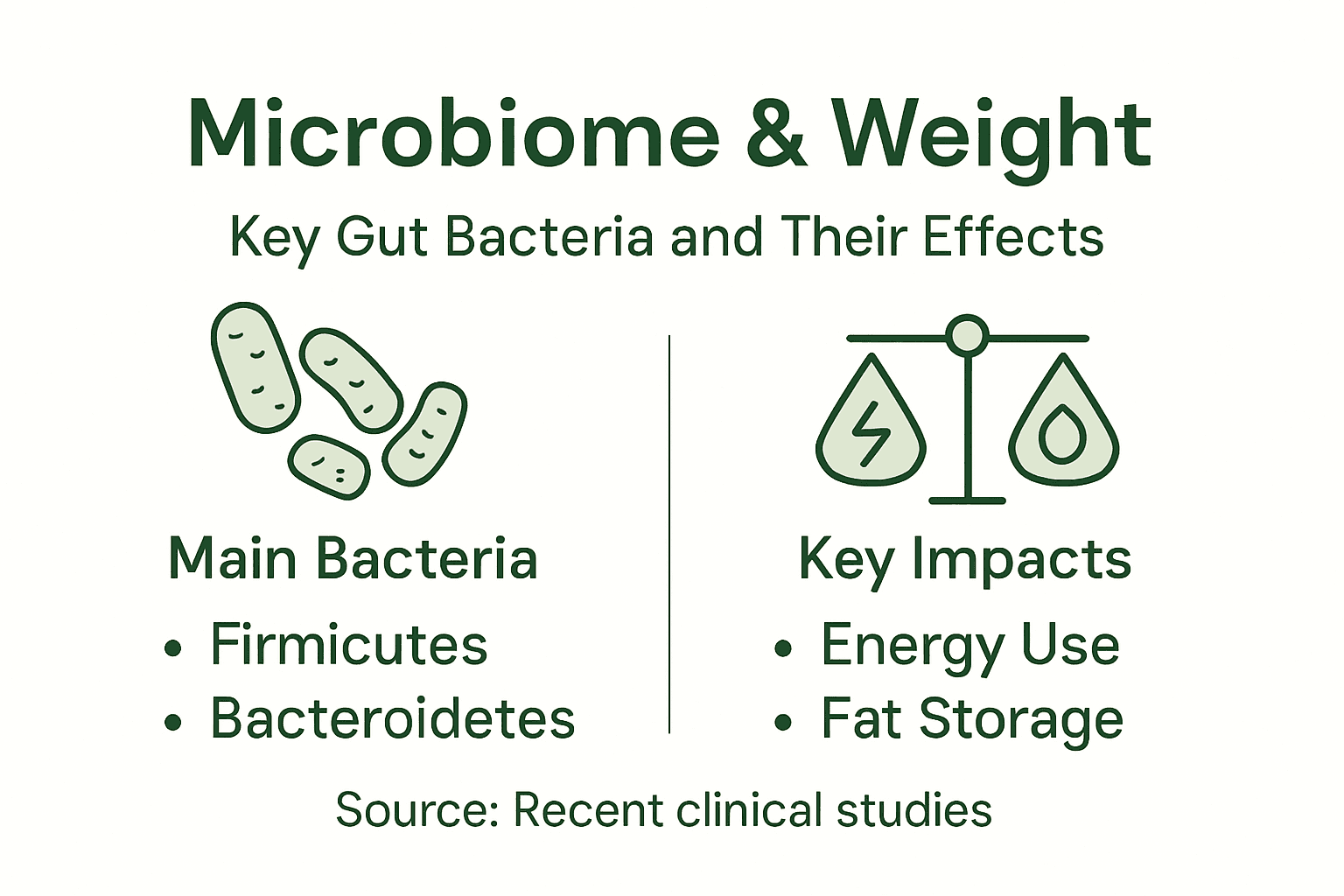
Groundbreaking research reveals that specific types of gut bacteria play a critical role in weight regulation. Two primary bacterial phyla, Firmicutes and Bacteroidetes, emerge as key players in understanding obesity mechanisms. The delicate balance between these microbial populations can significantly influence metabolic processes, energy extraction, and fat storage.
In obese individuals, scientific studies have consistently observed a distinctive microbial profile characterized by a higher ratio of Firmicutes to Bacteroidetes. This altered microbiome composition suggests these bacteria might contribute to increased energy harvest from food, potentially promoting weight gain. Clinical investigations in animals and humans have demonstrated fascinating connections between specific bacterial strains and metabolic function.

Beyond Firmicutes and Bacteroidetes, researchers have identified additional bacterial species that may influence weight regulation. Some bacteria appear to enhance metabolic efficiency, while others might promote inflammation or insulin resistance. The complex interactions between gut microbes and human metabolism suggest that our internal microbial ecosystem is far more than a passive passenger in our body it actively participates in determining our metabolic health.
Here is a summary of key gut bacterial groups and their effects on metabolism:
| Bacterial Group | Key Function | Potential Metabolic Impact |
|---|---|---|
| Firmicutes | Aids fat digestion and energy extraction | May promote energy harvest and weight gain |
| Bacteroidetes | Breaks down complex plant fibers | Associated with leaner body profiles |
| Akkermansia | Maintains gut lining and mucus health | Linked to improved metabolic health |
| Lactobacillus | Produces beneficial metabolites | Supports glucose regulation |
| Prevotella | Ferments carbohydrates to short-chain fatty acids | May boost gut barrier and satiety |
Pro tip: Consider working with a nutritionist to conduct a comprehensive microbiome analysis that can provide personalized insights into your gut bacteria composition.
How Microbiome Interacts With Metabolism
Groundbreaking metabolic research reveals the intricate relationship between our gut microbiome and metabolic processes. The microbiome functions as a dynamic metabolic interface, producing specialized metabolites that directly communicate with human physiological systems. These microscopic organisms generate compounds like short-chain fatty acids and bile acids that play crucial roles in regulating energy balance, glucose metabolism, and immune function.
The interaction between gut bacteria and metabolism occurs through complex signaling mechanisms. Bacteria mediate metabolic responses by influencing hormone release from enteroendocrine cells, which control critical metabolic functions. Specific microbial metabolites act as signaling molecules that trigger the production of hormones like GLP-1, PYY, and CCK. These hormones directly impact glucose tolerance, insulin sensitivity, fat storage, and appetite regulation, demonstrating the profound influence of our microbial inhabitants on metabolic health.
Diet plays a pivotal role in shaping these metabolic interactions. The foods we consume directly influence microbiome composition, which in turn modulates our metabolic processes. Different dietary patterns can either promote a healthy metabolic profile or contribute to metabolic dysfunction. Certain bacterial strains can enhance metabolic efficiency, while others might trigger inflammation or insulin resistance, underscoring the delicate balance within our internal ecosystem.
Pro tip: Incorporate a diverse range of fermented foods and prebiotic-rich vegetables to support a metabolically beneficial gut microbiome.
Mechanisms: Appetite, Hormones, and Inflammation
Appetite regulation involves an incredibly complex network of neural and hormonal interactions centered in the hypothalamic arcuate nucleus. This sophisticated control center responds to gastrointestinal signals and circulating nutrients, integrating information from multiple biological systems to manage hunger and satiety. Key hormones like insulin, leptin, and peptide YY work in concert to modulate energy homeostasis, sending intricate signals that determine when we feel hungry or full.
Gut microbes play a crucial role in this delicate hormonal dance. Enteroendocrine cells in the digestive tract secrete critical hormones including CCK, PYY, GLP-1, GIP, and serotonin, which directly influence metabolic processes. These hormones control fundamental functions like insulin sensitivity, glucose tolerance, and fat storage. Microbial metabolites can stimulate or inhibit hormone release, effectively acting as biological switches that impact feeding behavior and overall metabolic health.
The connection between gut microbes, hormones, and inflammation reveals a complex inflammatory response mechanism. Different bacterial strains can trigger inflammatory pathways that influence metabolic function, potentially contributing to conditions like insulin resistance and weight gain. Some bacteria promote anti-inflammatory responses, while others might increase systemic inflammation, demonstrating the nuanced role of our microbiome in maintaining metabolic balance.
Pro tip: Track your hunger patterns and hormonal responses after meals to better understand your unique metabolic signals.
Factors Influencing Gut Health and Weight
Multiple interconnected factors shape an individual’s gut health and weight management trajectory. These complex interactions involve lifestyle habits, environmental conditions, genetic predispositions, and behavioral patterns that collectively influence metabolic function. Diet quality, physical activity, sleep patterns, and stress levels emerge as primary drivers of gut microbiome composition and metabolic health.
Nutritional choices play a pivotal role in gut microbiome diversity and metabolic function. Processed food consumption and dietary patterns dramatically impact microbial balance, with high-calorie, low-fiber diets contributing to gut dysbiosis and increased obesity risk. Socioeconomic factors like food accessibility, community environment, and economic constraints further complicate individual dietary choices, creating systemic challenges in maintaining optimal gut health.
Beyond nutrition, physiological and psychological factors significantly influence gut microbiome dynamics. Chronic stress, inadequate sleep, sedentary lifestyles, and certain medications can disrupt microbial equilibrium, potentially triggering inflammatory responses and metabolic dysfunction. Individual variations in genetic makeup also modulate how these environmental factors interact with gut microbes, explaining why weight management strategies must be personalized and multifaceted.
This table compares major lifestyle factors affecting the gut microbiome and body weight:
| Factor | Microbiome Impact | Effect on Weight |
|---|---|---|
| Diet Quality | Shapes microbial diversity | Influences fat storage and metabolism |
| Physical Activity | Increases healthy bacteria | Promotes weight loss and balance |
| Sleep Patterns | Disrupted sleep alters microbes | May lead to weight gain |
| Stress Level | Triggers microbial imbalance | Raises risk of metabolic disorder |
Pro tip: Conduct a comprehensive food diary for two weeks to identify dietary patterns that might be disrupting your gut microbiome balance.
Unlock the Power of Your Microbiome for Lasting Weight Management
The article highlights how the unique balance of gut bacteria like Firmicutes and Bacteroidetes directly impacts metabolism, appetite hormones, and inflammation—key challenges in sustainable weight regulation. If you feel frustrated by traditional diets that ignore your body’s biological signals and gut health, you are not alone. Understanding how your microbiome influences energy extraction and hormonal responses is crucial for overcoming obstacles to long-term weight success.

Take control today with Metabolism Guide. Our doctor-led, science-based program dives deep into the role of gut microbes, hormones, and metabolic processes in weight management. You will gain personalized insights and proven strategies to support your gut health, improve metabolic balance, and break free from dieting myths. Visit Metabolism Guide now and start your journey toward a healthier relationship with your body and weight.
Frequently Asked Questions
What is the microbiome and how does it affect weight regulation?
The microbiome is a complex ecosystem of microorganisms, including bacteria, that live in and on the human body. It significantly influences weight regulation by affecting metabolism, energy extraction from food, and fat storage.
How do specific gut bacteria influence weight gain or loss?
Certain types of gut bacteria, particularly the balance between Firmicutes and Bacteroidetes, can determine how efficiently calories are harvested from food. A higher ratio of Firmicutes may promote weight gain, while a prevalence of Bacteroidetes is often associated with leaner body profiles.
Can dietary changes impact my gut microbiome composition?
Yes, dietary patterns play a crucial role in shaping gut microbiome composition. Consuming high-fiber and fermented foods can enhance microbial diversity and improve metabolic health, while processed foods may lead to dysbiosis and obesity risk.
What lifestyle factors can disrupt gut health and weight management?
Lifestyle factors such as poor diet quality, lack of physical activity, inadequate sleep, and high stress levels can disrupt the balance of gut bacteria. This imbalance can lead to increased risk of metabolic disorders and weight gain.
