

Losing weight and keeping it off often feels like a never-ending battle for many American adults. Quick fixes leave you frustrated and stuck, while your body seems to fight every step of progress. Sustainable weight loss is about more than willpower or counting calories. Real results come from understanding how your metabolism, hormones, and gut health shape your journey. This guide explains the science behind lasting weight management so you can break free from common myths and build habits that fit your life.
Table of Contents
- Defining Sustainable Weight Loss and Common Myths
- How Metabolism and Hormones Shape Weight Loss
- Gut Health, Behavior, and Long-Term Results
- Health Risks of Quick-Fix Dieting
- Building Habits for Lasting Weight Management
Key Takeaways
| Point | Details |
|---|---|
| Sustainable Weight Loss Focus | Sustainable weight loss prioritizes individual biology over quick fixes, emphasizing lifestyle changes and long-term health. |
| Myth of Rapid Weight Loss | Quick-fix diets often harm metabolism, leading to muscle loss and health issues, making lasting weight management harder. |
| Importance of Gut Health | A balanced gut microbiome impacts cravings and weight regulation, making gut health essential for effective weight loss. |
| Role of Habits and Support | Building consistent, small habits with a supportive environment is crucial for maintaining weight loss and fostering healthy choices. |
Defining Sustainable Weight Loss and Common Myths
Sustainable weight loss means achieving and maintaining a weight that allows your body to function optimally while preserving the lean muscle mass that powers your metabolism, strength, and physical capability. This distinction matters because you’re not just chasing a number on the scale. You’re aiming for a body composition that supports your daily life, your energy levels, and your long-term health. Most people conflate weight loss with health improvement, but they’re not the same thing. You can lose weight rapidly and feel worse, gain strength during a weight loss journey, or reach your goal weight and discover unexpected health issues remain unresolved. Real sustainable weight loss accounts for your individual metabolism, hormonal patterns, and lifestyle rather than imposing a one-size-fits-all approach.
The problem with nearly every weight loss myth is that it oversimplifies a complex biological system into a catchy rule. Consider the most pervasive myth: thinner always means healthier. This belief drives millions to pursue aggressive weight loss strategies that can actually damage their metabolism and health outcomes. Research shows that rapid weight loss diets are often counterproductive and cause lasting metabolic harm. Another widespread myth suggests that anyone can lose weight through sheer willpower and effort. Your genetics, environmental factors, and metabolic capacity significantly influence your weight regardless of effort alone. Someone with hormonal dysregulation, thyroid dysfunction, or medication side effects cannot simply “try harder” and expect results that ignore their biological reality. A third stubborn myth frames dieting as the primary solution to weight management, yet most diets produce modest weight loss over six months that disappears entirely by twelve months. This cycle explains why chronic dieters feel trapped between restrictive eating and weight rebound.
What separates sustainable weight loss from the endless cycle of dieting is a commitment to understanding your unique biology rather than fighting against it. Sustainable weight loss requires evidence-based, individualized approaches often guided by health professionals who can assess your hormones, metabolism, gut health, and lifestyle context. Instead of asking “How quickly can I lose weight?” the better question becomes “What changes can I maintain for the next five years?” This reframe shifts your focus from temporary restriction to building habits that feel manageable within your real life. The research is consistent here: rapid interventions fail, but modest adjustments supported by accurate information and professional guidance work. You’re not looking for the perfect diet. You’re looking for the sustainable approach that fits your body, your schedule, and your preferences well enough to stick with indefinitely.
Pro tip: When evaluating any weight loss strategy, ask yourself whether you could maintain it for a full year without misery or health consequences. If the answer is no, it’s not sustainable for you, regardless of how fast it promises results.
How Metabolism and Hormones Shape Weight Loss
Your metabolism and hormones work together as the biological infrastructure controlling whether your body stores fat, burns calories, or maintains its current weight. Think of metabolism as the engine running your body 24/7. It determines how many calories you burn at rest, during workouts, and while doing everyday tasks like walking to your car or climbing stairs. But here’s what most people get wrong: your metabolism is not some magical thermostat you can simply turn up by drinking green tea or taking supplements. Metabolic rate is largely determined by genetic factors and varies significantly from person to person. Someone with naturally fast metabolism may burn 300 extra calories daily compared to their genetically similar peer, simply based on inherited differences in how their cells convert fuel to energy. This genetic reality means two people following identical diets and exercise routines can have completely different weight loss outcomes. Yes, you can nudge your metabolism slightly through exercise and muscle building, but sustainable weight loss cannot rely solely on increasing metabolic rate because the genetic hand you were dealt constrains how much change is actually possible.
Hormones are the chemical messengers orchestrating weight regulation at a deeper level, influencing not just how many calories you burn but whether your body wants to store or release fat. Hormones such as insulin, cortisol, thyroid hormones, testosterone, and estrogen profoundly influence weight loss and metabolism in ways that calorie counting completely ignores. Insulin controls whether carbohydrates get stored as fat or used for energy. When insulin sensitivity deteriorates, your body struggles to process glucose efficiently, leading to increased fat storage regardless of calorie intake. Cortisol, your stress hormone, ramps up during chronic stress and signals your body to cling to fat while breaking down muscle. Thyroid hormones regulate your overall metabolic rate and energy expenditure. If your thyroid function is sluggish, you could be doing everything “right” and still experience weight loss resistance. Estrogen and testosterone influence fat distribution, muscle maintenance, and hunger signals. Women experiencing hormonal shifts during their cycle, perimenopause, or menopause often notice their weight becomes stubborn during certain phases despite unchanged eating habits. The point is straightforward: a hormonal imbalance can make weight loss feel impossible because your body is literally working against your efforts, not with them.

The practical implication matters deeply for you. Many people chase faster metabolisms or blame willpower when the real culprit is unaddressed hormonal dysfunction. You might have cortisol dysregulation from poor sleep, thyroid dysfunction from autoimmune disease, or insulin resistance from years of blood sugar mismanagement. Without identifying and addressing these hormonal foundations, you’re essentially trying to lose weight while your own biochemistry actively opposes the goal. This is why sustainable weight loss requires assessment beyond just “calories in versus calories out.” Proper diet, exercise, stress management, and sleep can help balance hormones and support sustainable weight loss, but these adjustments must be informed by understanding your individual hormonal profile. Someone with thyroid dysfunction needs different support than someone with cortisol dysregulation. Someone with insulin resistance needs different carbohydrate strategies than someone with intact glucose metabolism. The one-size-fits-all approach fails precisely because it ignores the hormonal reality shaping your weight.
Pro tip: Before assuming you have a willpower problem, consider tracking one hormonal factor for 30 days, such as sleep quality, stress levels, or menstrual cycle phases if applicable. You may discover that your weight resistance correlates with specific hormonal patterns rather than dietary choices, which points you toward the real solution.
Gut Health, Behavior, and Long-Term Results
Your gut microbiome is not just responsible for digestion. It’s a thriving ecosystem of trillions of bacteria that directly influences whether your body can lose weight and keep it off. The bacteria living in your intestines produce neurotransmitters, regulate inflammation, control hunger signals, and even influence your mood and cravings. When your microbiome is imbalanced, the entire system cascades toward weight gain and metabolic dysfunction. The gut microbiome plays a major role in influencing weight loss ability, with specific bacterial genes associated with successful weight loss or resistance to weight loss on lifestyle interventions. This means two people eating the same foods can experience vastly different metabolic outcomes depending on which bacteria are thriving in their gut. Someone with a microbiome dominated by bacteria that promote efficient energy harvest may gain weight easily from the same diet that causes weight loss in someone with a different bacterial composition. This isn’t about willpower or discipline. Your gut bacteria are literally voting on whether your body cooperates with weight loss attempts or actively resists them.
What makes this even more significant is that your gut health directly shapes your behavior and eating patterns through mechanisms you rarely notice. A dysbiotic gut (one with imbalanced flora) sends constant signals to your brain requesting sugar, refined carbohydrates, and calorie-dense foods because certain bacteria thrive on these nutrients. You experience intense cravings that feel like personal weakness, but they’re actually bacterial communication happening at the neurological level. A diverse and balanced gut microbiome supports digestion, immune function, and metabolic health, thereby influencing your behavior and long-term weight management capacity. The bacteria in your gut produce short-chain fatty acids like butyrate, which signal satiety to your brain. When your microbiome lacks diversity, you produce less butyrate, so your hunger signals stay elevated even after eating adequate food. You feel perpetually unsatisfied. You eat more. Your weight creeps up. Then you blame yourself for lack of self-control when the actual culprit is microbial imbalance. This is why sustainable weight loss often feels impossible for chronic dieters. They’re fighting against a dysbiotic gut driving behavioral choices toward weight gain.
The connection between gut health and lifelong weight management becomes clearer when you understand that imbalanced gut flora creates a self-reinforcing cycle. Poor diet quality damages your microbiome. A damaged microbiome drives cravings for poor diet quality. Poor diet quality further damages the microbiome. You’re trapped in a feedback loop that has nothing to do with calories and everything to do with microbial composition. Breaking this cycle requires intentional interventions targeting gut health specifically. Lifestyle factors like a diet rich in fiber, regular exercise, and stress management promote a healthy microbiome and interrupt the dysbiosis cycle. Your gut bacteria need diverse prebiotic foods, fermented foods with live cultures, and the absence of processed foods that feed pathogenic bacteria. They need exercise, which physically moves food through your digestive system and promotes bacterial diversity. They need sleep and stress management because chronic stress destroys beneficial bacteria while allowing harmful bacteria to flourish. When you address gut health directly, your cravings often normalize without willpower struggle. Your digestion improves. Your energy increases. Your weight becomes manageable for the first time in years.
Pro tip: Start with one fiber source you actually enjoy, whether that’s berries, leafy greens, or legumes, and add it consistently for three weeks before changing anything else. Give your gut bacteria time to adapt and establish beneficial strains before overhauling your entire diet, which can shock your microbiome and cause digestive distress.
Health Risks of Quick-Fix Dieting
Quick-fix diets promise transformation in weeks. Before and after photos show dramatic results. Testimonials describe life-changing weight loss. But behind the marketing is a biological reality that most people discover too late: rapid weight loss through extreme restriction damages your body in ways that persist long after the diet ends. Quick-fix diets often involve extreme calorie restriction or elimination of entire food groups, which can cause nutrient deficiencies, muscle loss, hormonal imbalances, and increased risk of heart disease and metabolic disorders. When you drastically cut calories, your body doesn’t just burn fat. It breaks down muscle tissue for energy because muscle is metabolically expensive to maintain during scarcity. You might lose 20 pounds in eight weeks on a crash diet, but 6 of those pounds could be muscle. That muscle loss directly reduces your resting metabolic rate, making future weight gain easier and future weight loss harder. You’ve essentially sabotaged your metabolism in pursuit of a quick result. Additionally, extreme restriction triggers nutrient deficiencies that cascade into health problems. Cutting entire food groups means missing essential vitamins, minerals, and fatty acids your body needs to produce hormones, maintain bone density, and regulate immune function. Women on extreme diets often experience disrupted menstrual cycles. People on crash diets develop gallstones, experience hair loss, and suffer brain fog from inadequate nutrition. These aren’t minor inconveniences. They’re legitimate health consequences that can persist even after the diet ends.
Perhaps the cruelest aspect of quick-fix dieting is the biological backlash that makes weight regain nearly inevitable. Your body has survival mechanisms designed to protect you during periods of deprivation. Crash diets lead to muscle loss, metabolic slowdown, and hormonal disruptions that promote weight regain, as the body’s natural survival mechanisms resist prolonged calorie deprivation by reducing basal metabolic rate. This is not weakness or lack of discipline. This is your body fighting to survive. When you restrict calories severely, your body lowers your metabolic rate to conserve energy. Hunger hormones like ghrelin increase dramatically, sending constant signals to your brain requesting food. Satiety hormones like leptin decrease, making normal food portions feel unsatisfying. Your brain becomes hyperfocused on food because, from a survival perspective, scarcity is a threat. You finish the diet feeling deprived, hungry, and metabolically damaged. Within weeks, you regain the weight. Often you gain back more than you lost. This yo-yo pattern damages your relationship with food and creates a cycle of self-blame that destroys psychological well-being. You feel like you failed when actually the diet itself was designed to fail from a biological standpoint.
The long-term health consequences of repeated yo-yo dieting are significant and well-documented. Each cycle of rapid weight loss and regain strains your cardiovascular system, increases inflammation, and worsens insulin resistance. Your metabolism becomes increasingly sluggish with each diet attempt. Your risk of developing metabolic disorders, heart disease, and type 2 diabetes increases with each cycle. Beyond the physical damage, the psychological toll compounds. People who have experienced multiple diet failures often develop disordered eating patterns, anxiety around food, and a sense of hopelessness about their ability to manage weight. They become trapped between restriction and overeating with no middle ground. This is exactly the opposite of what sustainable weight loss requires. Instead of quick fixes that damage your body, metabolism, and psychology, lasting weight management depends on gradual, balanced dietary changes combined with physical activity. Small shifts that feel manageable become habits. Habits become your lifestyle. Your metabolism adapts to support weight loss rather than resist it. Your hormones normalize. Your relationship with food heals. The process is slower than a crash diet, but the results actually stick because you’ve built a life you can actually maintain.
Pro tip: If you’re tempted by a diet promising rapid results, ask yourself this question: Can I do this exact same thing one year from now, five years from now? If the answer is no, it’s not a diet worth starting because the results won’t last and the damage compounds with each attempt.
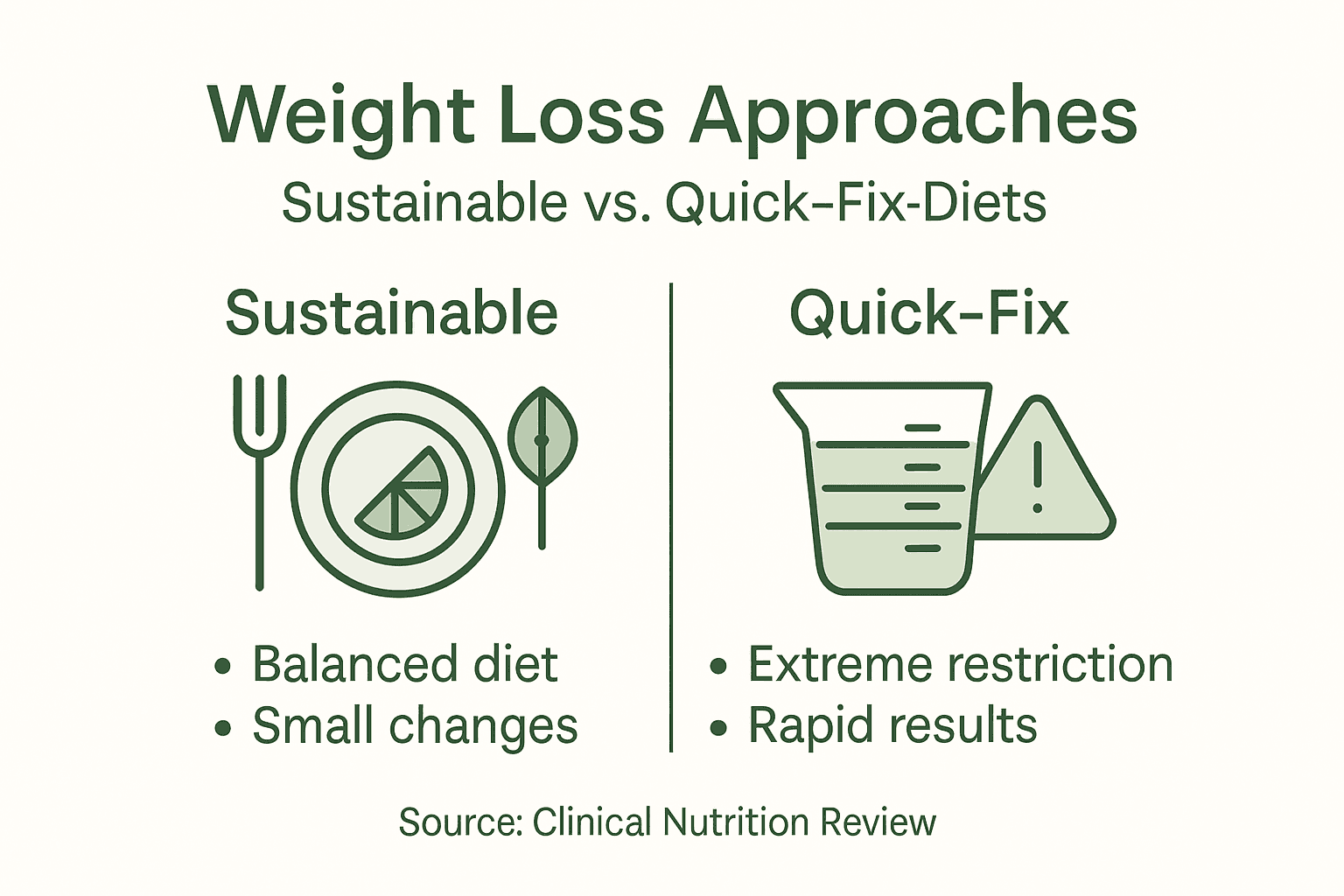
Here’s a comparison of sustainable weight loss strategies versus quick-fix dieting:
| Aspect | Sustainable Weight Loss | Quick-Fix Dieting |
|---|---|---|
| Approach | Individualized, gradual habits | Extreme, restrictive changes |
| Focus | Long-term health and stability | Fast results, short-term focus |
| Metabolic Impact | Preserves muscle, steady metabolism | Causes muscle loss, metabolic slowdown |
| Psychological Effect | Builds confidence, habit strength | Triggers stress, self-blame cycles |
| Likelihood of Lasting Results | High with consistency | Low, frequent regain rates |
Building Habits for Lasting Weight Management
Habits are the invisible architecture of your life. They determine whether you gain weight during stressful periods or stay stable. They decide if you reach for vegetables or processed snacks when hunger strikes. They shape whether you move your body consistently or remain sedentary. The reason habits matter more than willpower is simple: willpower depletes with each decision, but habits operate on autopilot. A person with a habit of morning walks doesn’t need motivation to exercise. A person with a habit of drinking water instead of sugary beverages doesn’t battle cravings. The weight loss that actually sticks isn’t achieved through restriction and heroic effort. It’s built through the patient accumulation of small habits that eventually become your normal. Lasting weight management involves making and maintaining lifestyle changes including healthy eating, regular physical activity, sufficient sleep, and stress management, with successful maintenance more likely when gradual weight loss occurs at about 1 to 2 pounds per week. This pace feels impossibly slow compared to crash diet promises, but it’s exactly what allows your brain, body, and lifestyle to adapt. You’re not shocking your system. You’re gradually training it to operate at a new weight and new behaviors.
What separates people who maintain weight loss from those trapped in yo-yo cycles is their approach to behavior change. Most people make a dramatic change, lose weight quickly, then return to their old patterns. Successful maintainers build gradual changes that integrate into their actual life. They might start by adding one vegetable to dinner rather than overhauling their entire diet. They might commit to a 15-minute walk three times weekly rather than joining a gym and trying to exercise an hour daily. They track their nutrition and activity not to obsess over numbers but to build awareness of patterns. They identify their specific obstacles, whether that’s stress eating, social pressure, or weekend binge cycles, and develop targeted responses. Maintaining weight loss requires psychological commitment and behavior change focused on consistent energy balance through mindful eating habits and portion control, combined with physical activity and self-regulation to overcome obstacles. This psychological dimension explains why support matters so much. A friend who checks in, a health care provider who understands your biology, a community of people pursuing similar goals, these connections make the difference between sustained success and hidden struggle. When you hit a plateau or experience a setback, external support prevents the self-blame cycle that typically triggers diet abandonment.
The practical reality of building lasting habits is that you need a system, not just inspiration. Inspiration fades. Systems persist. Your system might include meal planning on Sunday to remove daily food decisions. It might involve setting a phone reminder for your evening walk. It might mean keeping easy vegetables prepared and processed snacks removed from your home. It might involve telling someone what you’re doing so accountability naturally emerges. It might mean scheduling workouts like appointments you don’t skip. These aren’t exciting strategies. They’re not social media worthy. But they work because they remove friction from desired behaviors and add friction to undesired ones. A person with a gym bag packed and workout clothes laid out does not need motivation to exercise. A person with a specific plan for what to eat after work doesn’t scramble for convenient options. The key is building your system around your unique life, not forcing your life into someone else’s system. Someone working irregular shifts needs different meal prep strategies than someone with a consistent schedule. Someone without access to a gym needs different activity options than someone with free membership. Someone managing depression or anxiety needs psychological support integrated into their approach. Your system must account for your actual circumstances, your unique hormonal and metabolic reality, your specific obstacles, and your real schedule.
Pro tip: Pick one tiny habit to automate this week, something so small it feels almost trivial, like adding one extra vegetable to lunch or taking a ten-minute walk after dinner. Once it becomes automatic, add one more. This incremental approach builds momentum without overwhelm and creates the foundation for sustainable, lasting change.
Key factors influencing healthy weight management are summarized below:
| Factor | Role in Weight Loss | How to Support It |
|---|---|---|
| Metabolism | Determines calorie burn rate | Build muscle, consistent meals |
| Hormones | Regulate fat storage and hunger | Manage stress, check bloodwork |
| Gut Health | Affects cravings and digestion | Eat fiber, fermented foods |
| Habits | Drive daily choices | Form tiny, repeatable actions |
| Support Systems | Encourage consistency | Seek community, professional help |
Discover How Sustainable Weight Loss Transforms Your Life
If you have struggled with quick-fix diets that leave you feeling defeated and exhausted, it is time to explore a science-based alternative that respects your unique biology. This article highlights the challenges many face including hormonal imbalances, gut health issues, and metabolic differences that make traditional dieting frustrating and ineffective. You deserve an approach that honors these complex factors and helps you build long-lasting habits without sacrificing your health or happiness.
Start your journey with Metabolism Guide where doctor-led educational programs dismantle dieting myths and empower you to understand how your hormones, metabolism, and gut health influence weight loss. Learn how to make gradual changes that fit your life, supported by virtual communities and expert advice. Don’t wait another day feeling trapped in the cycle of failure. Visit Metabolism Guide now to get the tools you need for real sustainable weight management and lasting health improvements.
Frequently Asked Questions
What is sustainable weight loss?
Sustainable weight loss refers to achieving and maintaining a healthy weight without resorting to extreme diets or rapid methods. It involves preserving lean muscle mass and making lifestyle changes that can be maintained long term.
Why do quick-fix diets fail for most people?
Quick-fix diets often lead to rapid weight loss followed by weight regain. These diets typically involve extreme restrictions that can harm metabolism, cause nutrient deficiencies, and create unhealthy eating patterns, making them unsustainable.
How do hormones affect my ability to lose weight?
Hormones play a significant role in regulating weight by influencing fat storage and hunger signals. Imbalances in hormones like insulin, cortisol, and thyroid hormones can make weight loss difficult and require tailored approaches for effective management.
Why is gut health important for weight management?
Gut health impacts cravings, digestion, and overall metabolism. A balanced gut microbiome can support weight loss efforts by regulating hunger signals and reducing cravings for unhealthy foods, while an imbalanced microbiome can lead to weight gain.
