

Most adults find themselves stuck at a weight loss plateau, just like millions of others around the world. This ongoing struggle is driven partly by biology, not just willpower. Research reveals that over 80 percent of people who lose weight end up regaining it within two years. Understanding the body’s natural resistance to weight loss uncovers overlooked reasons why traditional diets fail—and highlights smarter ways to improve metabolic health for long-lasting change.
Table of Contents
- Understanding Weight Loss Resistance Mechanisms
- Metabolic Adaptation And Energy Balance
- Hormonal Imbalances Hindering Fat Loss
- Role Of Chronic Inflammation And Gut Health
- Common Pitfalls And Lasting Lifestyle Solutions
Key Takeaways
| Point | Details |
|---|---|
| Weight Loss Resistance is Complex | It arises from hormonal, neurological, and metabolic interactions that challenge weight reduction efforts. |
| Metabolic Adaptation Difficulties | The body reduces energy expenditure during caloric restriction, complicating sustained weight loss. |
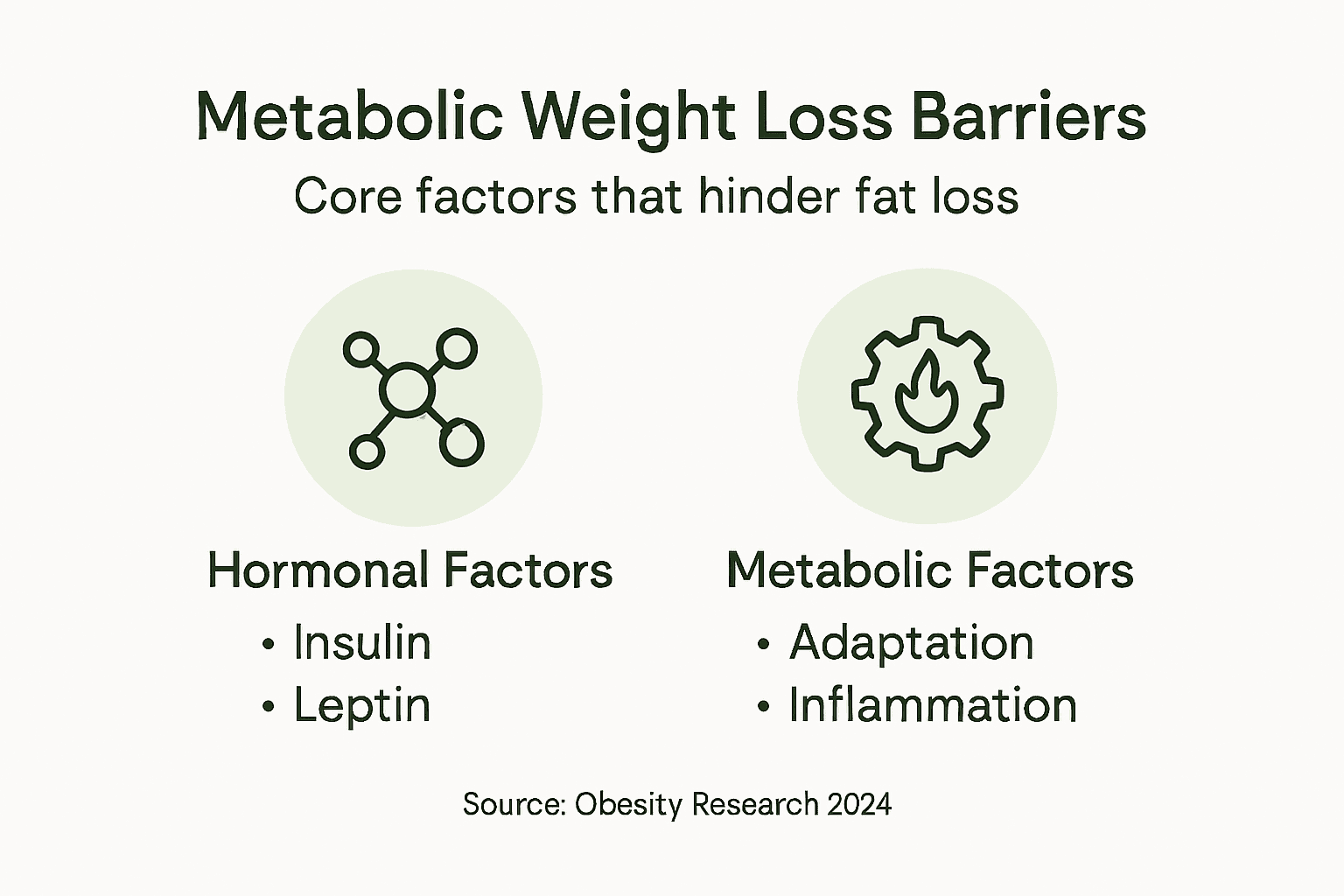
| Hormonal Imbalances Affect Fat Loss | Disruptions in hormones like insulin and leptin lead to increased fat storage and hinder weight management. |
| Chronic Inflammation Impacts Metabolism | Systemic inflammation and gut health issues create barriers to effective weight loss and metabolism. |
Understanding Weight Loss Resistance Mechanisms
Weight loss resistance represents a complex physiological phenomenon where the human body actively counteracts attempts to reduce body mass, making sustained weight reduction significantly challenging. Molecular mechanisms underlying obesity reveal multiple intricate systems that protect existing fat stores and metabolic equilibrium.
The body’s resistance mechanisms involve sophisticated interactions between hormonal, neurological, and metabolic pathways. Adipose tissue, once considered merely a passive energy storage system, functions as an active endocrine organ capable of generating inflammatory signals and metabolic adaptations. These adaptations include reduced metabolic rate, altered hunger signalling, and enhanced energy conservation strategies that fundamentally oppose weight loss efforts.
Research demonstrates that weight loss resistance emerges through multiple interconnected biological processes. Biological markers of metabolic adaptation indicate that chronic inflammation, hormonal imbalances, and genetic predispositions contribute significantly to an individual’s capacity to maintain existing body composition. Key factors include:- Chronic low-grade inflammation- Insulin resistance- Disrupted gut microbiome composition- Neuroendocrine pathway dysregulation- Genetic metabolic variations
Pro tip: Understand that weight loss resistance is not a personal failure, but a complex physiological response requiring strategic, personalised metabolic interventions.
The following table summarises how different physiological mechanisms contribute to weight loss resistance:
| Mechanism | Primary Effect | Example Impact on Weight Loss |
|---|---|---|
| Hormonal disruption | Alters hunger and metabolism | Increases cravings and slows fat loss |
| Chronic inflammation | Impairs metabolic functions | Promotes fat storage and resistance |
| Metabolic adaptation | Reduces energy expenditure | Makes sustained loss harder |
| Gut microbiome imbalance | Disrupts nutrient processing | Affects appetite regulation |
| Genetic predisposition | Influences energy balance | Varies individual response |
Metabolic Adaptation and Energy Balance
Metabolic adaptation represents a complex biological mechanism through which the human body dynamically adjusts energy expenditure in response to caloric restriction. Physiological adaptations during weight loss reveal intricate survival strategies that fundamentally challenge traditional weight management approaches.

During sustained energy deficit, the body initiates sophisticated compensatory mechanisms designed to preserve existing energy stores. These mechanisms include reducing basal metabolic rate, altering hormone signals that regulate hunger and satiety, and decreasing thermogenic activity. Essentially, the metabolic system becomes increasingly efficient at conserving energy, making continued weight loss progressively more challenging.
Research demonstrates that these adaptive responses are deeply rooted in evolutionary survival mechanisms. Metabolic changes triggered by weight loss indicate persistent physiological shifts that extend well beyond initial weight reduction. Key metabolic adaptation processes include:- Decreased resting metabolic rate- Reduced thermogenesis- Enhanced metabolic efficiency- Altered hunger hormone signalling- Increased metabolic sensitivity to caloric restriction
Pro tip: Monitor your metabolic indicators through regular health assessments and work with professionals to develop personalised strategies that account for your unique metabolic adaptation patterns.
Hormonal Imbalances Hindering Fat Loss
Hormonal imbalances represent a critical yet often overlooked barrier to sustainable weight loss, creating complex metabolic obstacles that extend far beyond simple calorie counting. Obesity-induced inflammatory responses demonstrate how hormonal dysregulation fundamentally disrupts the body’s natural weight management mechanisms.
The endocrine system plays a pivotal role in regulating metabolism, with key hormones like insulin, leptin, and cortisol dramatically influencing fat storage and energy expenditure. When these hormonal signals become disrupted, the body enters a state of metabolic confusion, where traditional weight loss strategies become increasingly ineffective. Insulin resistance, for instance, can cause excessive fat storage, while elevated cortisol levels trigger increased abdominal fat accumulation and metabolic slowdown.
Leptin resistance mechanisms provide particularly compelling evidence of hormonal complexity in weight management. This phenomenon occurs when the brain becomes desensitised to leptin, the hormone responsible for signalling satiety and regulating energy expenditure. The consequences are profound: individuals experience persistent hunger, reduced metabolic rate, and significantly impaired weight loss capacity. Key hormonal disruption factors include:- Chronic inflammation- Prolonged high-stress environments- Poor sleep quality- Insulin dysregulation- Thyroid hormone imbalances- Excessive refined carbohydrate consumption
Pro tip: Consult an endocrinology specialist to conduct comprehensive hormone panels, enabling targeted interventions that address your specific metabolic imbalances.
Role of Chronic Inflammation and Gut Health
Chronic inflammation represents a sophisticated biological response that profoundly impacts weight loss mechanisms, creating intricate barriers beyond simple metabolic processes. Obesity-associated inflammatory responses reveal how systemic inflammation disrupts fundamental metabolic regulation and weight management strategies.
The gut microbiome emerges as a critical player in this complex inflammatory landscape, acting as a dynamic ecosystem that influences metabolic function, immune response, and hormonal signalling. Adipose tissue inflammation creates a cascade of physiological changes that impair normal metabolic function, producing a self-perpetuating cycle of metabolic dysfunction. This inflammatory environment triggers increased insulin resistance, disrupts hunger signalling, and reduces the body’s capacity to effectively metabolise and eliminate stored energy.
Immune system changes in weight management demonstrate the profound interconnectedness between inflammatory processes and weight loss resistance. Key inflammatory mechanisms contributing to metabolic disruption include:- Adipose tissue hypoxia- Increased pro-inflammatory cytokine production- Compromised intestinal barrier function- Microbiome dysbiosis- Chronic low-grade systemic inflammation- Impaired metabolic signalling pathways
Pro tip: Incorporate anti-inflammatory foods and consider targeted probiotic interventions to help restore metabolic balance and support your weight management goals.
Common Pitfalls and Lasting Lifestyle Solutions
Weight loss resistance patterns demonstrate that traditional approaches often fail due to oversimplified understanding of metabolic health. Sustainable weight management requires a nuanced perspective that goes beyond numerical metrics, recognising the complex interplay between physiological systems and lifestyle factors.
The journey towards lasting transformation involves moving beyond short-term, restrictive strategies and embracing holistic lifestyle modifications. Typical pitfalls include adopting extreme diets, setting unrealistic expectations, and focusing solely on weight reduction rather than overall metabolic wellness. Successful long-term weight management demands a comprehensive approach that addresses psychological, nutritional, and physiological dimensions simultaneously.
Dietary and behavioral strategies for sustainable weight management emphasise consistent, moderate changes over dramatic interventions. Key recommendations include:- Developing realistic, incremental goals- Maintaining consistent physical activity- Implementing balanced nutritional approaches- Prioritising sleep quality- Managing stress effectively- Cultivating psychological resilience- Creating supportive environmental conditions
Here is a comparison of common pitfalls and sustainable solutions in weight management:
| Pitfall | Negative Outcome | Sustainable Alternative |
|---|---|---|
| Extreme crash diets | Rapid regain, muscle loss | Gradual calorie adjustments |
| Ignoring sleep and stress | Hormonal imbalance | Consistent sleep, stress care |
| Focusing only on scale | Misses health improvements | Prioritise overall wellbeing |
| Restrictive eating patterns | Nutrient deficiencies | Balanced, varied nutrition |
| Unrealistic expectations | Frustration and relapse | Incremental, achievable goals |
Pro tip: Focus on building sustainable habits that improve overall health, rather than pursuing rapid weight loss through extreme measures.
Overcoming the Invisible Barriers to Weight Loss with Preventiv
Weight loss resistance is a deeply frustrating challenge that leaves many feeling powerless despite their best efforts. This article reveals how complex factors such as hormonal disruption, metabolic adaptation and chronic inflammation create biological roadblocks that simple calorie cutting cannot overcome. If you have struggled with persistent belly fat, repeated weight regain or weight loss plateaus, you are not alone. These issues require more than just willpower—they demand a targeted approach addressing root causes like insulin resistance and gut dysfunction.
Preventiv’s doctor-led platform offers expert guidance through these intricate metabolic truths. Explore our Obesity Articles & Medical Weight Management | PREVENTIV to understand how your hormones and metabolism affect your weight journey. Delve into the vital role of digestive health with our Gut Health Articles | PREVENTIV to discover practical ways to reduce inflammation and restore balance. When you are ready to take control, join the MetabolismGuide programme, designed for adults facing stubborn weight challenges. Empower yourself with sustainable strategies that move beyond fad diets to restore metabolic health and achieve lasting transformation today.
Frequently Asked Questions
What causes weight loss resistance in the body?
Weight loss resistance is caused by a combination of hormonal imbalances, chronic inflammation, genetic factors, metabolic adaptations, and disruptions in gut microbiome health. These mechanisms create obstacles that make it difficult for individuals to lose weight sustainably.
How does metabolic adaptation affect weight loss?
Metabolic adaptation occurs when the body adjusts its energy expenditure in response to caloric restriction. This can result in a decreased resting metabolic rate and a reduced ability to continue losing weight as the body becomes more efficient at conserving energy during sustained energy deficits.
What role do hormones play in weight loss resistance?
Hormones such as insulin, leptin, and cortisol play critical roles in regulating metabolism and energy balance. Imbalances in these hormones can lead to increased fat storage, appetite dysregulation, and a slower metabolic rate, impeding weight loss efforts.
How can I improve my gut health to support weight loss?
Improving gut health can be achieved through diet and lifestyle changes. Incorporating anti-inflammatory foods, consuming probiotics to restore microbiome balance, and maintaining a varied and balanced diet can positively influence metabolic function and support your weight loss journey.
