

Most American adults attempt weight loss through dieting, yet over 80 percent regain lost weight within two years, leaving many frustrated and confused. For those facing metabolic resistance or hormonal imbalances, restrictive plans often backfire, making the journey feel impossible. Understanding why typical diets fail, and how biology plays a bigger role, can empower Americans with science-backed strategies tailored for lasting results.
Table of Contents
- Defining Diets And How They Fail
- Types Of Diets And Weight Loss Cycles
- Biological Responses To Calorie Restriction
- The Role Of Hormones And Gut Health
- Psychological Impact And Behavioral Patterns
- Science-Driven Alternatives For Sustainable Change
Key Takeaways
| Point | Details |
|---|---|
| Diets Often Fail | Traditional dieting approaches overlook biological mechanisms, leading to ineffective weight loss strategies. |
| Metabolic Adaptation | Significant calorie restriction activates survival protocols, slowing metabolism and promoting weight regain. |
| Personalization is Key | Understanding individual metabolic profiles and psychological factors is crucial for successful weight management. |
| Holistic Lifestyle Changes | Emphasizing sustainable modifications, rather than restrictive diets, leads to better long-term health outcomes. |
Defining Diets And How They Fail
Diets represent structured eating plans designed to help individuals lose weight, but scientific evidence increasingly reveals their fundamental ineffectiveness. Metabolic research demonstrates that traditional dieting approaches frequently fail because they ignore complex biological mechanisms governing weight regulation.
The typical diet strategy involves dramatic calorie restriction and elimination of entire food groups, which triggers sophisticated physiological defense mechanisms. When individuals dramatically reduce caloric intake, the human body interprets this as potential starvation. In response, metabolism slows down, and hormonal systems activate survival protocols that make sustained weight loss extraordinarily challenging. Professional health resources explain that this metabolic adaptation occurs through precise hormonal shifts, specifically alterations in ghrelin and leptin levels.
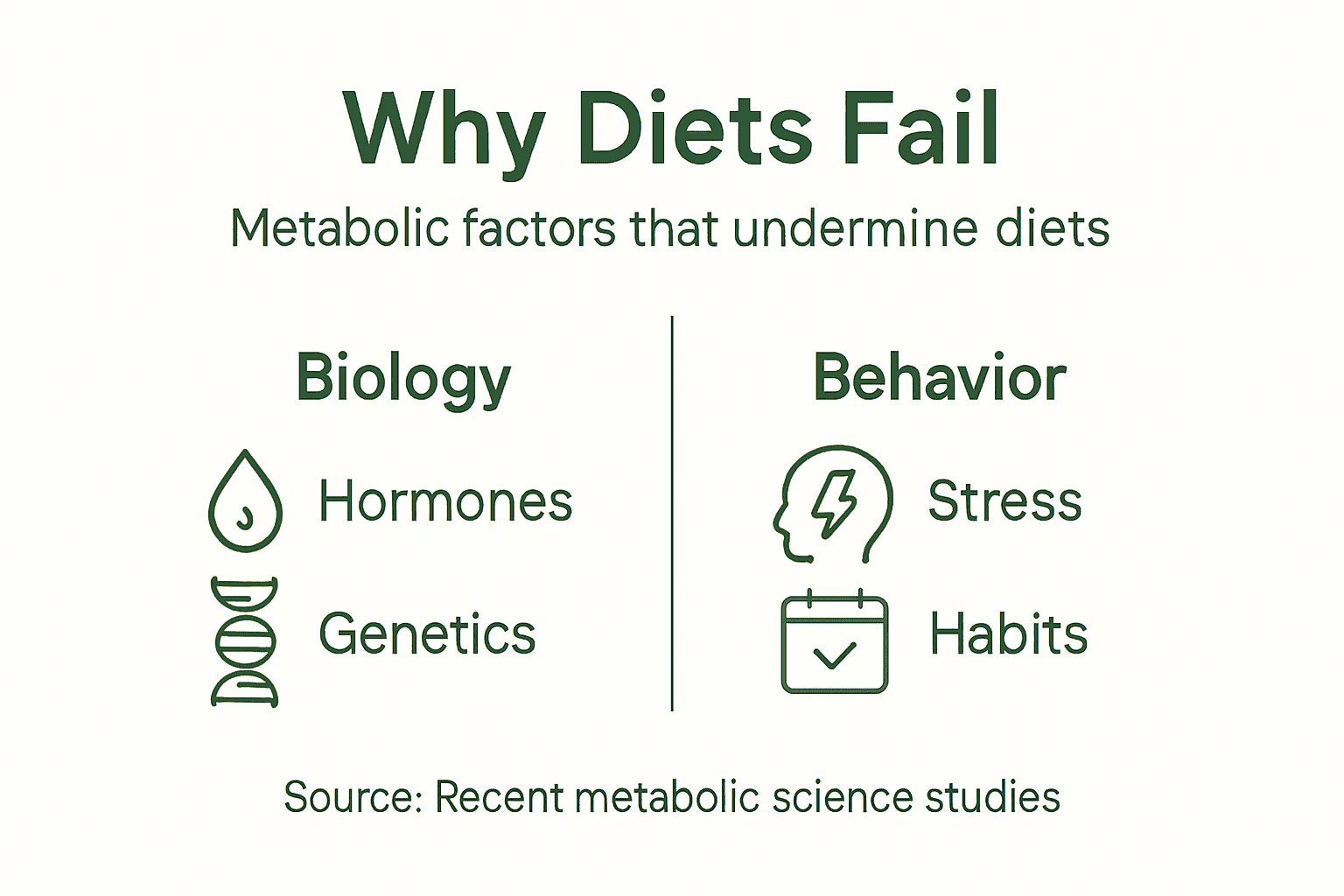
Most diets fundamentally misunderstand human metabolic complexity. They treat weight loss as a simple mathematical equation of calories in versus calories out, when in reality, weight management involves intricate interactions between genetics, hormones, gut microbiome, stress levels, sleep patterns, and individual metabolic rates. Factors like genetic predisposition, socioeconomic conditions, psychological health, and environmental influences play critical roles that traditional diet plans routinely overlook.
Expert Tip: Focus on sustainable lifestyle modifications rather than restrictive short-term diet plans, emphasizing balanced nutrition, consistent physical activity, and understanding your unique metabolic profile.
Types Of Diets And Weight Loss Cycles
Contemporary dietary strategies represent a complex landscape of weight management approaches, each promising transformative results but frequently falling short of sustainable outcomes. These diet types range from low-calorie and low-carbohydrate plans to intermittent fasting and macro-based nutrition strategies, each with unique mechanisms and potential pitfalls.
Low-Calorie Diets typically involve dramatic energy restriction, creating an immediate caloric deficit. While initially effective for rapid weight loss, these approaches trigger metabolic adaptations that ultimately sabotage long-term success. Scientific research demonstrates that the body responds to severe calorie restriction by slowing metabolism, reducing muscle mass, and increasing hunger hormones, making sustained weight loss increasingly difficult.
The most common weight loss cycles follow a predictable pattern: rapid initial weight reduction followed by plateauing, metabolic slowdown, increased hunger, and eventual weight regain. Diets like ketogenic, paleo, and intermittent fasting illustrate this cyclical process, where initial enthusiasm gives way to metabolic resistance. Factors such as individual genetic predisposition, hormonal balance, gut microbiome composition, and psychological stress significantly influence these weight fluctuation patterns.
Here’s how common diet types differ in approach and long-term effectiveness:
| Diet Type | Main Strategy | Short-Term Result | Common Long-Term Outcome |
|---|---|---|---|
| Low-Calorie | Reduce daily calorie intake significantly | Rapid initial weight loss | Metabolic slowdown and weight regain |
| Low-Carb/Ketogenic | Limit carbohydrate consumption sharply | Quick water and fat loss | Plateau, potential rebound weight |
| Intermittent Fasting | Cycle between eating and fasting periods | Appetite suppression, fast weight drop | Difficult adherence, possible overeating |
| Macro-based | Track protein, carbs, fats ratios | Flexible, initial weight drop | Hard to sustain precision |
Expert Tip: Approach dietary changes as comprehensive lifestyle modifications, prioritizing metabolic health and personalized nutrition strategies over generic, one-size-fits-all diet plans.
Biological Responses To Calorie Restriction
Metabolic research reveals complex biological defense mechanisms activated during calorie restriction. When the human body experiences significant energy reduction, it initiates sophisticated survival protocols designed to preserve essential functions and maintain homeostasis, fundamentally challenging the simplistic calories-in-versus-calories-out weight loss model.
The physiological response to calorie restriction involves intricate hormonal and metabolic adaptations. Ghrelin levels increase, stimulating hunger signals, while leptin levels decrease, reducing metabolic rate and energy expenditure. These hormonal shifts create a perfect storm of metabolic resistance, making sustained weight loss extraordinarily challenging. Groundbreaking studies demonstrate that these adaptations extend beyond simple metabolic changes, involving complex interactions with immune system functioning and genetic expression.

Individual biological variations significantly impact how bodies respond to calorie restriction. Factors such as age, sex, genetic predisposition, gut microbiome composition, and previous dieting history create unique metabolic fingerprints that determine weight loss potential. Some individuals experience dramatic metabolic slowdown, while others maintain relatively stable metabolic rates, highlighting the critical importance of personalized nutritional approaches that recognize these fundamental biological differences.
This table highlights key factors influencing personalized weight management outcomes:
| Key Factor | Example Impact |
|---|---|
| Genetics | Can affect fat storage patterns |
| Gut Microbiome | Alters nutrient absorption efficiency |
| Hormonal Balance | Modifies hunger and satiety signals |
| Stress Levels | Increases cravings and eating urges |
| Sleep Patterns | Disrupts metabolism and hormone function |
Expert Tip: Consult medical professionals to understand your unique metabolic profile before initiating any calorie-restricted diet, ensuring a scientifically tailored approach to weight management.
The Role Of Hormones And Gut Health
Metabolic research demonstrates that hormones and gut microbiome play crucial interconnected roles in weight regulation, far beyond simple calorie processing. The human body operates as a complex ecosystem where hormonal signals, gut bacteria, and metabolic processes continuously communicate and influence one another, determining weight management outcomes.
Key hormones like insulin, ghrelin, leptin, and cortisol function as metabolic messengers, regulating appetite, energy storage, and metabolic rate. Insulin controls blood sugar and fat storage, ghrelin stimulates hunger, leptin signals satiety, and cortisol manages stress responses that directly impact weight. The gut microbiome further amplifies these processes by producing neurotransmitters, metabolizing nutrients, and modulating inflammatory responses that can either support or hinder weight management efforts.
Gut health emerges as a critical factor in metabolic efficiency, with research indicating that microbial diversity significantly influences hormonal balance and metabolic function. Different bacterial strains can affect nutrient absorption, inflammation levels, and even psychological factors like mood and stress responses, which indirectly impact weight regulation. Factors such as diet quality, stress levels, sleep patterns, and antibiotic use can dramatically alter gut microbiome composition, creating a complex interplay that determines an individual’s metabolic resilience.
Expert Tip: Prioritize diverse, whole food nutrition and consider probiotic-rich foods to support gut microbiome health and optimize hormonal balance.
Psychological Impact And Behavioral Patterns
Health experts reveal that diet failure extends far beyond simple nutritional choices, deeply embedding psychological mechanisms that sabotage weight management efforts. The complex interplay between mental processes, emotional responses, and behavioral patterns creates a sophisticated feedback loop that undermines traditional dieting approaches.
Dieting triggers profound psychological responses that often counteract weight loss goals. Repeated dietary restrictions can activate survival mechanisms that increase food preoccupation, generate intense cravings, and create emotional stress. When individuals experience frequent diet failures, they develop negative self-perception patterns, experiencing feelings of inadequacy, shame, and diminished self-worth. These emotional states can trigger compensatory behaviors like emotional eating, binge consumption, and metabolic defense responses that ultimately protect the body from perceived starvation.
Psychological research demonstrates that societal weight bias and diet culture significantly contribute to destructive behavioral cycles. Individuals internalize external judgments, creating complex psychological barriers that prevent sustainable lifestyle changes. The continuous cycle of diet attempt, temporary weight loss, and eventual weight regain generates a traumatic relationship with nutrition, where food becomes a source of anxiety rather than nourishment. This psychological trauma can lead to disordered eating patterns, reduced metabolic flexibility, and long-term health complications.
Expert Tip: Cultivate self-compassion and seek professional psychological support to develop a holistic, non-punitive approach to understanding your body’s unique nutritional needs.
Science-Driven Alternatives For Sustainable Change
Comprehensive research reveals that sustainable weight management requires a multifaceted, personalized approach moving far beyond traditional restrictive dieting. The most promising strategies integrate medical insights, psychological support, metabolic understanding, and individualized nutrition plans that respect each person’s unique biological complexity.
Science-driven alternatives focus on holistic lifestyle modifications rather than temporary dietary interventions. This approach includes comprehensive assessments of metabolic health, hormonal balance, gut microbiome composition, and psychological well-being. Metabolic rhythm research suggests strategies like time-restricted eating, personalized macronutrient distribution, and alignment of nutritional intake with individual circadian biology can significantly improve long-term metabolic outcomes and weight management.
Successful sustainable change demands a precision medicine approach that considers genetic predispositions, individual metabolic markers, psychological readiness, and comprehensive lifestyle factors. Key components include targeted nutrition plans, stress management techniques, quality sleep optimization, regular metabolic health monitoring, and developing intrinsic motivation through psychological support. This method transforms weight management from a punitive, restrictive process into a collaborative, empowering journey of understanding one’s unique physiological needs and potential.
Expert Tip: Invest in comprehensive metabolic health assessments and work with professionals who can develop a truly personalized, science-driven approach to your wellness goals.
Unlock Lasting Weight Management by Understanding Your Metabolism
The article “Why Diets Don’t Work The Metabolic Science” highlights the critical challenges many face when traditional diets lead to frustration and weight regain. If you have struggled with cycles of calorie restriction, hormonal imbalances, or gut health issues sabotaging your efforts you are not alone. The complex biological responses such as changes in ghrelin and leptin hormones or metabolic slowdown make simple calorie counting ineffective for lasting results. Understanding these scientific insights is the first step toward a truly sustainable approach.
At Metabolism Guide we empower you to break free from the limitations of fad diets through doctor-led educational modules on metabolism hormones, gut microbiome, and behavioral patterns. Our program offers clear science-driven lessons and virtual community support designed to help you tailor lifestyle changes to your unique biology. Whether you want to overcome metabolic resistance or develop healthier habits that last you will find expert guidance focusing on real-world metabolic science, not empty quick fixes.
Discover how to transform frustration into empowerment today.
Explore the full program and start your journey at Metabolism Guide.
Take control now and learn how your hormones gut health and metabolism truly impact weight by joining Metabolism Guide. Unlock personalized insights that make long-term success possible beyond calorie counting or one-size-fits-all diets.
Frequently Asked Questions
Why do traditional diets often fail?
Traditional diets tend to fail because they ignore the complex biological mechanisms that govern weight regulation, leading to metabolic adaptation and increased hunger signals when individuals severely restrict calories.
What are the common psychological impacts of dieting?
Dieting can trigger negative psychological responses such as increased food preoccupation, cravings, and feelings of shame or inadequacy, which can lead to emotional eating and disordered eating patterns.
How do hormones affect weight loss during calorie restriction?
Hormones like ghrelin and leptin play crucial roles in weight loss by regulating hunger and metabolism. When calorie intake is drastically reduced, ghrelin levels increase, signaling hunger, while leptin levels decrease, slowing metabolism and making sustained weight loss challenging.
What alternatives exist for sustainable weight management?
Sustainable weight management should focus on personalized, science-driven approaches that include holistic lifestyle changes, metabolic health assessments, and psychological support rather than restrictive diets.
