

Losing weight for good can feel like an uphill battle, especially when your body seems to fight every step of progress. Many adults face stubborn weight loss struggles rooted in complex metabolic and hormonal issues, not just a lack of willpower. Obesity is increasingly recognized as a chronic, relapsing disease, with lost weight very frequently reclaimed despite many approaches tested. Discover how understanding the biology behind weight regain can help guide you toward sustainable, evidence-based solutions beyond familiar diet plans.
Table of Contents
- Defining Long-Term Weight Loss Struggles
- Biological Defenses Against Weight Loss
- Hormonal Adaptations That Increase Hunger
- Behavioral And Environmental Drivers Of Regain
- Limitations Of Traditional Dieting Approaches
- Sustainable Strategies For Lasting Weight Loss
Key Takeaways
| Point | Details |
|---|---|
| Complex Biological Mechanisms | Long-term weight loss is influenced by biological defenses like lowered metabolic rates and hormonal changes that promote weight regain. |
| Personalized Strategies are Essential | Effective weight management requires customized approaches that consider individual metabolic patterns and environmental triggers. |
| Holistic Approaches | Successful weight loss integrates nutritional, behavioral, and psychological strategies to address the multifaceted nature of weight management. |
| Ongoing Support is Crucial | Establishing a robust support system and consistent monitoring can enhance adherence and long-term success in weight management. |
Defining Long-Term Weight Loss Struggles
Losing weight is challenging, but maintaining that weight loss represents an even more complex biological puzzle. Obesity research consistently reveals that weight loss is not simply about reducing calories, but understanding intricate metabolic and hormonal systems.
Weight loss struggles extend far beyond individual willpower. Biological mechanisms actively work to restore lost weight, creating a metabolic environment that makes sustained weight reduction extremely difficult. The human body perceives weight loss as a potential threat to survival, triggering complex hormonal responses designed to regain lost energy reserves. Metabolic adaptations include decreased resting metabolic rate, increased hunger signals, and reduced energy expenditure.
Researchers have identified several critical factors influencing long-term weight maintenance. Comprehensive studies demonstrate that successful weight management requires more than diet plans – it demands understanding individual metabolic patterns, psychological readiness, environmental influences, and personalized intervention strategies. Sustainable weight loss involves comprehensive approaches that address nutritional, behavioral, and physiological components simultaneously.
Pro tip: Track your progress through multiple metrics beyond weight, including body composition, energy levels, and metabolic health indicators to gain a more holistic understanding of your weight loss journey.
Biological Defenses Against Weight Loss
Energy homeostasis mechanisms reveal a profound biological strategy designed to protect against weight loss. The human body has evolved sophisticated defense systems that actively resist significant changes in body weight, making sustainable fat reduction an incredibly complex challenge. These intricate physiological responses are fundamentally rooted in survival instincts that prioritize maintaining energy reserves.

The body’s metabolic defense mechanisms operate through multiple interconnected pathways. When significant weight loss occurs, hormonal and neurological systems immediately activate compensatory responses. Leptin levels decrease, ghrelin (the hunger hormone) increases, and metabolic rate slows down. These adaptations create a biological environment that actively fights against continued weight reduction, making each subsequent pound progressively harder to lose.
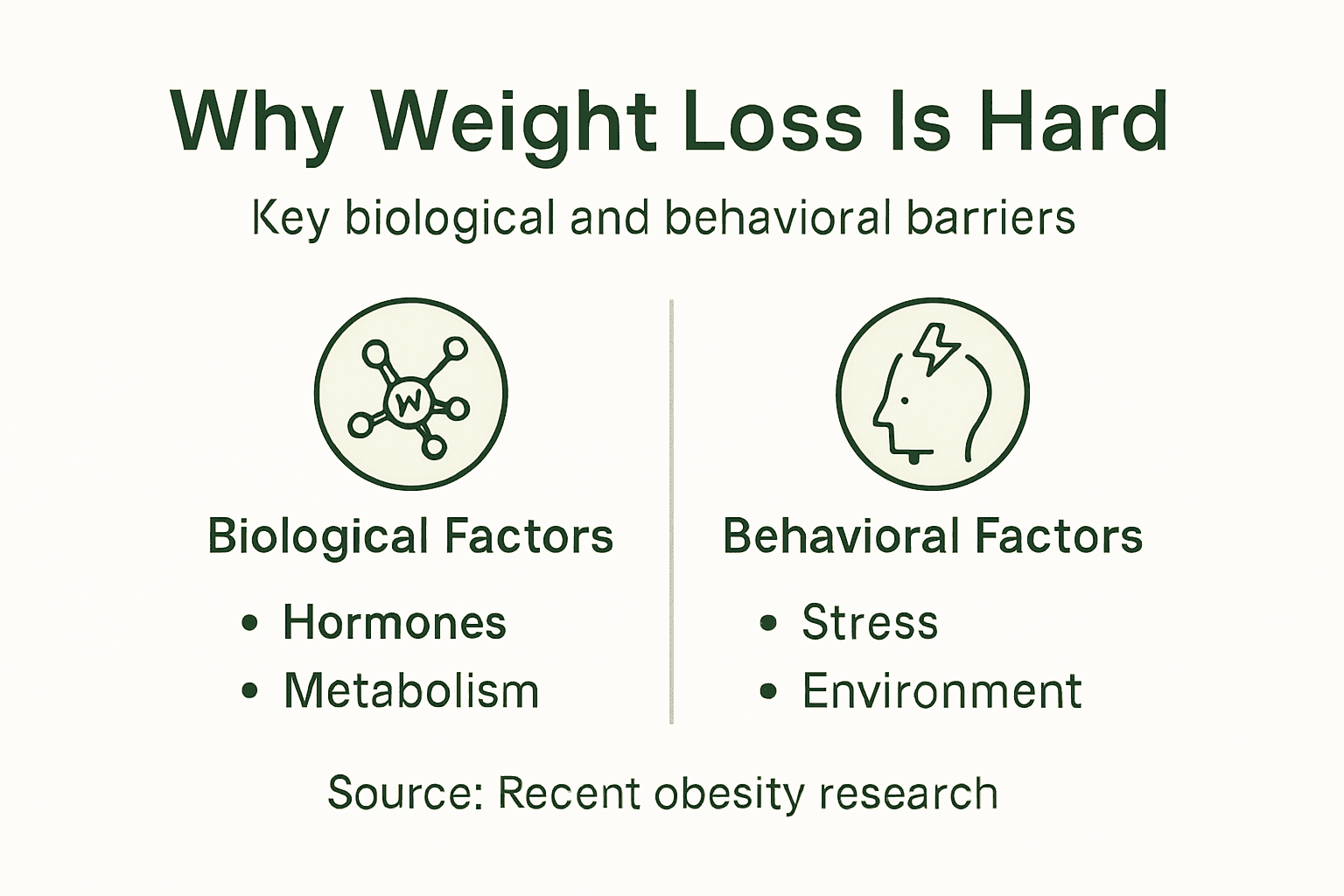
Hormonal systems defending weight represent a complex network that extends beyond simple caloric regulation. Researchers have discovered that these defense mechanisms are not uniform across individuals, suggesting genetic and environmental factors play crucial roles in metabolic adaptability. Some people experience more aggressive metabolic resistance to weight loss, explaining why weight management strategies must be highly personalized and nuanced.
Here’s how key biological defenses make long-term weight loss challenging:
| Biological Mechanism | How It Works | Impact on Weight |
|---|---|---|
| Lowered Metabolic Rate | Reduces daily calorie burn | Makes regaining weight easier |
| Increased Ghrelin | Heightens hunger signals | Triggers overeating |
| Decreased Leptin | Lowers satiety | Makes you feel less full |
| Reduced Energy Expenditure | Lowers movement-based calorie burn | Slows further weight loss |
| Strong Survival Response | Prioritizes energy storage | Promotes regaining lost weight |
Pro tip: Develop a comprehensive weight management approach that acknowledges your body’s biological defense mechanisms by incorporating gradual lifestyle changes, consistent metabolic monitoring, and adaptive nutrition strategies.
Hormonal Adaptations That Increase Hunger
Appetite-regulating gut hormones create a sophisticated biological mechanism that dramatically influences hunger and weight management. When an individual loses weight, these hormonal systems undergo complex transformations designed to drive food intake and restore lost energy reserves. This intricate process represents a powerful survival mechanism deeply embedded in human physiology.
The hormonal cascade involves multiple key players. Ghrelin, often called the “hunger hormone,” increases significantly after weight loss, stimulating appetite and food-seeking behaviors. Simultaneously, leptin levels drop, reducing the body’s ability to feel satiated. Simultaneously, weight loss triggers hormonal adaptations that lower metabolic rate, making weight regain more likely. These physiological changes create a perfect storm of increased hunger and decreased energy expenditure.
Individual variations in hormonal responses mean that weight loss challenges differ dramatically between people. Some individuals experience more aggressive hormonal pushback, with hunger signals becoming dramatically amplified after initial weight reduction. Psychological factors like stress further interact with these hormonal changes, creating additional complexity in weight management strategies. Understanding these nuanced biological mechanisms is crucial for developing personalized and sustainable weight loss approaches.
Pro tip: Monitor your hunger signals and hormonal patterns by tracking not just weight, but also changes in appetite, energy levels, and stress responses to develop a more comprehensive weight management strategy.
Behavioral and Environmental Drivers of Regain
Complex weight regain mechanisms reveal that successful weight management extends far beyond individual willpower. Our modern environment constantly bombards individuals with food-related triggers that undermine weight loss efforts. Obesogenic environments create a landscape of continuous nutritional challenges, making sustained weight reduction exponentially more difficult.
Behavioral patterns play a critical role in weight maintenance. Stress, emotional eating, sedentary lifestyles, and ingrained habits create powerful barriers to long-term weight management. Social networks and workplace environments significantly influence food choices, with peer behaviors and accessible food options driving unconscious eating decisions. Psychological and environmental factors interact in complex ways, creating a dynamic ecosystem that can either support or sabotage weight loss goals.
Understanding personal triggers becomes essential for sustainable weight management. These triggers range from workplace snack cultures to family dining habits, social celebrations, and deeply ingrained comfort eating patterns. Some individuals might find certain environments more challenging, such as high-stress workplaces or social settings where food plays a central role in interaction. Recognizing and strategically navigating these environmental influences requires self-awareness, planning, and potentially redesigning personal and professional spaces to support health goals.
Pro tip: Create a personalized environmental modification strategy by identifying your specific behavioral triggers, redesigning your immediate surroundings to support healthy choices, and developing alternative stress management techniques that do not involve food.
Limitations of Traditional Dieting Approaches
Traditional weight loss paradigms fundamentally misunderstand the complex biological and psychological mechanisms underlying weight management. Most dieting approaches reduce weight loss to a simplistic equation of calories in versus calories out, ignoring the intricate hormonal, metabolic, and environmental factors that dramatically influence body composition and weight regulation.
Standardized diet programs typically fail because they adopt a one-size-fits-all approach that disregards individual metabolic differences. Weight loss program limitations reveal that restrictive diets create unsustainable expectations, triggering metabolic adaptations that ultimately sabotage long-term weight management efforts. These programs often focus exclusively on short-term weight reduction without addressing underlying behavioral patterns, psychological triggers, or metabolic health.
The most significant flaw in traditional dieting approaches is their overemphasis on personal willpower and individual responsibility. Such perspectives ignore systemic barriers, genetic predispositions, socioeconomic influences, and the complex interplay of hormonal systems that regulate hunger, satiety, and energy expenditure. Effective weight management requires a holistic, personalized strategy that integrates nutritional science, behavioral psychology, metabolic understanding, and lifestyle modification.
This summary compares traditional dieting with personalized, sustainable weight management:
| Approach | Key Focus | Strength | Weakness |
|---|---|---|---|
| Traditional Dieting | Short-term calorie restriction | Simple guidelines | Ignores metabolic differences |
| Personalized Strategy | Individual biology & environment | Tailored, adaptable | Requires ongoing support |
| Holistic Methods | Behavioral, metabolic, psychological | Addresses root causes | More complex to implement |
Pro tip: Develop a comprehensive weight management strategy that goes beyond calorie counting by tracking multiple health indicators, understanding your unique metabolic response, and creating flexible, sustainable lifestyle changes.
Sustainable Strategies for Lasting Weight Loss
Long-term weight loss strategies demand a comprehensive, multifaceted approach that extends far beyond traditional diet and exercise models. Successful weight management requires an integrated framework that addresses physiological, psychological, and behavioral components simultaneously. This holistic perspective recognizes that sustainable weight loss is a complex journey involving multiple interconnected systems.
Effective approaches incorporate diverse intervention strategies tailored to individual metabolic profiles. Physical activity, nutritional modification, cognitive behavioral techniques, and potentially pharmacological support create a robust foundation for lasting change. Sustainable weight loss interventions emphasize creating personalized strategies that promote long-term adherence by addressing underlying motivations, environmental influences, and individual physiological responses. This means moving beyond generic meal plans to develop nuanced, adaptive approaches that evolve with an individual’s changing health landscape.
The most successful weight management strategies integrate ongoing support systems that provide continuous guidance, accountability, and psychological reinforcement. This includes professional monitoring, peer support networks, regular metabolic assessments, and flexible intervention protocols that can be adjusted based on individual progress and biological feedback. Understanding that weight management is a dynamic, lifelong process rather than a temporary intervention is crucial for sustainable success.
Pro tip: Create a comprehensive weight management blueprint that includes quarterly metabolic assessments, adaptive nutrition plans, and a flexible support network to maintain long-term momentum and motivation.
Discover Why Sustainable Weight Loss Feels Impossible and How to Overcome It
Struggling with long-term weight loss is not a matter of willpower but a battle against your body’s complex biological defenses like hormonal hunger signals and slowed metabolism. This article explains why traditional dieting often fails to address these challenges and highlights the importance of understanding your unique metabolic responses for lasting success. If you are frustrated by recurrent weight regain and want real answers, it is time to explore evidence-based strategies tailored to your body and environment.
Empower yourself with the science behind metabolism, hormones, and gut health through the doctor-led educational resources at Metabolism Guide. Learn how to navigate biological adaptations, control appetite sustainably, and reshape your lifestyle with personalized support instead of quick fixes. Don’t let biological and behavioral barriers hold you back any longer. Start your journey to lasting weight management today by visiting Metabolism Guide. Take the first step toward reclaiming control over your health now.
Frequently Asked Questions
Why is maintaining weight loss so difficult?
Maintaining weight loss is challenging due to biological mechanisms that trigger hormonal responses and lower metabolic rates, making the body resist further weight reduction and prompting increased hunger.
What biological factors contribute to weight regain after losing weight?
Biological factors include decreased leptin levels, increased ghrelin levels, lowered metabolic rate, and a strong survival response that prioritizes energy storage, all of which contribute to the difficulty of sustaining weight loss.
How do hormonal changes affect hunger after weight loss?
After weight loss, hormones such as ghrelin increase, which heightens appetite, while leptin levels decrease, reducing feelings of fullness. This hormonal pushback can lead to binge eating and challenges in maintaining weight loss.
What are effective strategies for long-term weight management?
Effective strategies for long-term weight management include personalized dietary and exercise plans, behavioral adjustments, regular metabolic assessments, and ongoing support systems to adapt to individual progress and environmental influences.
