

Battling persistent weight gain despite your best efforts feels discouraging, especially when hormonal shifts seem to work against you. Many American adults in their thirties and forties discover that conventional diets often ignore the complexity of metabolism and hormonal balance. By exploring evidence-based and medically supervised strategies, you can move beyond outdated misconceptions and focus on personalized medical interventions designed for lasting health improvements.
Table of Contents
- Medical Weight Loss Explained and Misconceptions
- Key Types of Medical Weight Loss Programs
- How Metabolic and Hormonal Factors Shape Success
- Integrating Doctor-Led Strategies With Lifestyle Change
- Medical Weight Loss versus Conventional Diets
Key Takeaways
| Point | Details |
|---|---|
| Personalized Approach | Medical weight loss focuses on individualized medical interventions tailored to each person’s unique metabolic profile. |
| Holistic Strategy | Successful weight management requires a comprehensive approach that addresses multiple biological and behavioral factors. |
| Ongoing Support | Unlike traditional diets, medical weight loss includes continuous monitoring and medical supervision to ensure long-term success. |
| Integration of Techniques | Programs often combine various methodologies, including behavioral modification, nutritional planning, and metabolic assessments, for effective outcomes. |
Medical Weight Loss Explained and Misconceptions
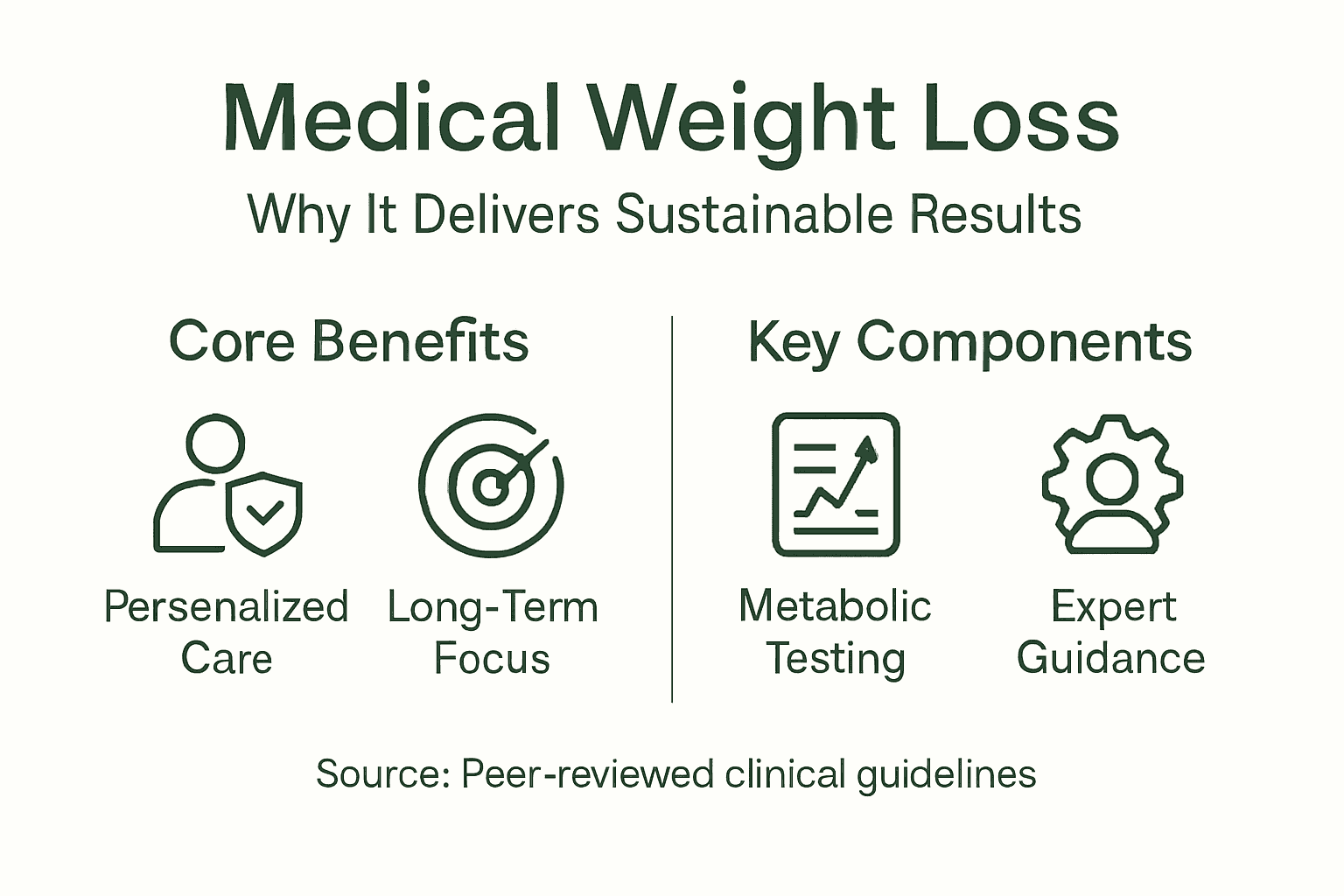
Medical weight loss represents a sophisticated, science-driven approach to addressing obesity as a complex chronic health condition. Unlike traditional diet programs, this method focuses on personalized medical interventions that go far beyond simple calorie counting or generic exercise recommendations.
The core philosophy of medical weight loss centers on treating each individual’s unique metabolic profile. Comprehensive clinical approaches reveal that successful weight management requires a holistic strategy addressing multiple physiological factors:
- Detailed metabolic assessments
- Hormonal balance evaluation
- Personalized nutrition planning
- Medical supervision and tracking
- Behavioral modification strategies
Traditional weight loss misconceptions often suggest that losing weight is simply about willpower and restricted eating. However, medical weight loss recognizes that obesity involves intricate biological mechanisms. Holistic medical interventions demonstrate that sustainable weight management requires understanding an individual’s unique metabolic challenges.
Key differences between medical weight loss and traditional approaches include:
- Scientifically targeted interventions
- Continuous medical monitoring
- Customized treatment plans
- Focus on overall health improvement
- Long-term lifestyle modifications
Comprehensive medical weight loss goes beyond prescribing medications or creating restrictive diets. The approach integrates multiple strategies to support meaningful, sustainable health transformations.
Pro tip: Schedule a comprehensive metabolic assessment to understand your unique weight management challenges and develop a personalized medical weight loss strategy.
Key Types of Medical Weight Loss Programs
Medical weight loss programs have evolved far beyond traditional diet approaches, offering sophisticated and scientifically-backed strategies for sustainable weight management. Multidisciplinary weight management techniques demonstrate the complexity and comprehensive nature of modern medical weight loss interventions.
The primary types of medical weight loss programs include:
- Metabolic Testing Programs: Comprehensive assessments that analyze individual metabolic rates, hormone levels, and genetic factors
- Behavioral Modification Programs: Focused on psychological strategies and lifestyle interventions
- Pharmacotherapy-Based Programs: Utilizing prescription medications to support weight loss
- Nutrition-Centered Programs: Personalized meal planning and dietary guidance
- Surgical Weight Loss Programs: Medical interventions for significant weight reduction
Primary care-based programs have shown remarkable effectiveness by integrating multiple treatment modalities. Integrated weight management strategies typically involve collaboration between medical professionals, offering patients a comprehensive approach to weight loss.
These programs distinguish themselves through their holistic approach, addressing weight management as a complex health challenge rather than a simple matter of diet and exercise. Key components often include:

Use this quick reference to understand major types of medical weight loss interventions:
| Program Type | Key Focus | Typical Candidate |
|---|---|---|
| Metabolic Testing | Analyze metabolic rates & hormones | Individuals with complex weight challenges |
| Behavioral Modification | Psychological and lifestyle support | Those struggling with habits or motivation |
| Pharmacotherapy | Prescription medication | Patients with medical need for drug support |
| Nutrition Planning | Tailored meal guidance | Anyone requiring diet improvement |
| Surgical Programs | Medical intervention for major weight loss | Severe obesity cases |
- Personalized medical evaluation
- Continuous health monitoring
- Customized intervention strategies
- Long-term support and follow-up
- Multidisciplinary professional guidance
Pro tip: Research medical weight loss programs that offer comprehensive assessments and personalized treatment plans tailored to your unique metabolic profile.
How Metabolic and Hormonal Factors Shape Success
Metabolic health represents a complex interplay of biological processes that dramatically influence weight loss potential and overall wellness. Genetic metabolic variations demonstrate how individual biological differences can significantly impact weight management strategies.
Critical metabolic and hormonal factors that shape weight loss success include:
- Insulin sensitivity
- Thyroid hormone levels
- Cortisol stress responses
- Leptin and ghrelin hunger signals
- Testosterone and estrogen balance
- Genetic metabolic predispositions
Hormonal adaptations play a crucial role in sustainable weight management. Metabolic health status reveals that individuals with metabolic complications often experience more profound improvements during targeted weight loss interventions.
The intricate relationship between metabolic processes and weight loss can be understood through several key mechanisms:
- Energy expenditure regulation
- Fat storage and metabolism
- Muscle protein synthesis
- Appetite and satiety control
- Metabolic rate adaptation
Pro tip: Consider comprehensive metabolic testing to understand your unique biological weight loss potential and develop a personalized intervention strategy.
Integrating Doctor-Led Strategies With Lifestyle Change
Medical weight management requires a sophisticated approach that goes beyond traditional diet and exercise recommendations. Multidisciplinary obesity treatment demonstrates the critical importance of comprehensive, personalized medical strategies in achieving sustainable weight loss.
Key components of integrated doctor-led lifestyle interventions include:
- Comprehensive health assessments
- Personalized nutrition planning
- Behavioral modification counseling
- Metabolic monitoring
- Exercise prescription
- Stress management techniques
- Pharmacological support when necessary
Lifestyle medicine represents a holistic approach to weight management, addressing multiple dimensions of health simultaneously. Evidence-based lifestyle interventions emphasize the importance of addressing underlying behavioral and physiological factors that contribute to weight challenges.
Successful integration of medical strategies with lifestyle change requires a systematic approach:
- Comprehensive initial health evaluation
- Individualized treatment plan development
- Regular progress monitoring
- Adaptive intervention strategies
- Long-term support and accountability
Pro tip: Schedule a comprehensive medical consultation to develop a personalized weight management strategy that addresses your unique health profile and lifestyle challenges.
Medical Weight Loss versus Conventional Diets
Traditional dieting approaches often fail because they oversimplify weight management as a simple equation of calories consumed versus calories burned. Diet effectiveness research reveals that sustainable weight loss requires a far more nuanced and comprehensive approach.
Key differences between medical weight loss and conventional diets include:
- Scientific assessment of individual metabolic factors
- Comprehensive health monitoring
- Personalized intervention strategies
- Psychological support and behavioral modification
- Addressing underlying health conditions
- Long-term lifestyle transformation
- Medical supervision and accountability
Health-focused weight management goes beyond mere number tracking on a scale. Holistic health improvement strategies demonstrate that successful weight loss integrates multiple dimensions of wellness.
Here’s a summary comparing medical weight loss programs to conventional diets:
| Aspect | Medical Weight Loss Programs | Conventional Diets |
|---|---|---|
| Supervision | Ongoing medical guidance | Rarely supervised |
| Personalization | Individualized metabolic assessments | Generic meal plans |
| Long-Term Effectiveness | Focus on sustainable lifestyle change | Often short-term results |
| Health Improvement | Addresses root health issues | Mainly targets weight loss |
| Multidisciplinary Support | Doctors, dietitians, and counselors | Usually self-directed |
The fundamental contrasts between medical weight loss and conventional diets can be understood through these critical distinctions:
- Root cause analysis instead of symptom management
- Individualized approaches versus one-size-fits-all solutions
- Continuous medical guidance
- Comprehensive health optimization
- Sustainable lifestyle modifications
Pro tip: Request a comprehensive metabolic assessment to understand your unique weight loss challenges and develop a personalized, medically supervised strategy.
Unlock Sustainable Weight Loss with Science-Backed Medical Guidance
If you have felt stuck struggling with weight loss due to complex metabolic or hormonal challenges the article highlights, you are not alone. Common weight loss obstacles like fluctuating hormones, hidden metabolic barriers, and ineffective conventional diets leave many frustrated and seeking real answers. Understanding your unique biological profile and receiving personalized doctor-led support can turn those challenges into lasting success.
Metabolism Guide offers an evidence-based program that teaches you how hormones, metabolism, gut health, and lifestyle factors truly impact weight management. This is not about quick fixes or one-size-fits-all dieting but a comprehensive, medically informed approach designed to empower you with knowledge and sustainable habits.
Take control of your health with the expert guidance and science-driven education you need to overcome metabolic hurdles now. Visit Metabolism Guide to explore our structured modules and connect with medical professionals who understand the biological basis of weight loss. Start your journey today and experience a lifetime of better health and lasting results.
Frequently Asked Questions
What is medical weight loss?
Medical weight loss is a science-driven approach that involves personalized medical interventions to address obesity as a complex chronic health condition. It focuses on individualized metabolic assessments, hormonal balance evaluations, and tailored nutrition planning, among other strategies.
How does medical weight loss differ from traditional dieting?
Unlike traditional diets that often emphasize calorie counting and restricted eating, medical weight loss programs involve comprehensive health assessments, continuous medical monitoring, and psychological support, aiming for long-term lifestyle transformations rather than short-term results.
What are the key components of a medical weight loss program?
A typical medical weight loss program includes metabolic testing, behavioral modification, personalized nutrition planning, pharmacotherapy if needed, and sometimes surgical options, all guided by healthcare professionals for optimal results.
How do metabolic and hormonal factors influence weight loss success?
Metabolic and hormonal factors such as insulin sensitivity, thyroid hormone levels, and appetite-regulating hormones play a crucial role in weight loss. Understanding these factors can help tailor personal weight management strategies and improve overall success rates.
