

Facing persistent weight loss struggles can feel frustrating, especially when traditional diets and cardio routines fall short. For many American adults, the challenge often lies deeper in the body’s unique metabolic processes. Building and preserving muscle mass is more than a fitness goal—it is a proven way to support metabolism, as muscle burns about 6 calories per pound daily while fat burns only 2. Discover how understanding these core concepts of muscle and metabolism can offer new hope for lasting results.
Table of Contents
- Muscle Mass And Metabolism: Core Concepts
- How Muscle Tissue Burns Calories
- Resting Metabolic Rate Vs. Fat Tissue
- Hormones, Insulin Sensitivity, And Muscle
- Resistance Training’s Role In Metabolic Health
- Common Misconceptions About Muscle And Metabolism
Key Takeaways
| Point | Details |
|---|---|
| Muscle Health is Vital | Skeletal muscle is critical for metabolic health and influences energy balance and hormonal regulation. Maintaining muscle mass is essential as we age to prevent metabolic disorders like type 2 diabetes. |
| Resistance Training Benefits | Incorporating resistance training 2-3 times a week enhances muscle mass, insulin sensitivity, and metabolic rate, leading to better long-term health outcomes. |
| Muscle vs. Fat Metabolism | Muscle burns significantly more calories than fat at rest, making it a key player in energy expenditure and weight management. Prioritizing muscle development is crucial for metabolic efficiency. |
| Busting Myths | Common misconceptions about muscle development can limit potential; understanding that muscle is adaptable and can develop at any age is essential for effective fitness strategies. |
Muscle Mass and Metabolism: Core Concepts
Skeletal muscle plays a fundamental role in human metabolic health, serving as more than just a structural system for movement. Metabolic regulation in skeletal muscle represents a complex biochemical network that significantly influences overall energy balance and physiological functioning.
At its core, muscle tissue is a metabolically active organ that constantly communicates with other body systems. Muscle protein dynamics are governed by an intricate balance between protein synthesis and breakdown, which directly impacts metabolic rate and energy expenditure. This dynamic process is influenced by several key factors:
- Dietary protein intake
- Physical activity levels
- Hormonal signals
- Age and overall health status
- Genetic predispositions
The metabolic significance of muscle mass extends far beyond simple strength and mobility. Researchers have discovered that skeletal muscle contributes substantially to whole-body metabolism, acting as a critical site for glucose and lipid metabolism. Individuals with higher muscle mass typically experience:
- Enhanced insulin sensitivity
- More efficient energy utilization
- Improved metabolic flexibility
- Better hormonal regulation
- Increased resting metabolic rate
Muscle is not just passive tissue, but an active endocrine organ that communicates through myokines and plays a crucial role in metabolic health.
Understanding muscle metabolism reveals why preserving and building muscle mass becomes increasingly important as we age. Muscle loss, known as sarcopenia, is directly linked to metabolic disorders like type 2 diabetes and obesity, highlighting the critical connection between muscular health and overall metabolic function.
Pro tip: Incorporate resistance training 2-3 times per week to maintain and build muscle mass, which can help boost your metabolic rate and improve long-term health outcomes.
How Muscle Tissue Burns Calories
Muscle tissue is far more than a passive structural system – it’s an active metabolic powerhouse continuously burning calories. Muscle metabolism fundamentally transforms energy utilization, dramatically influencing how our body processes and expends energy throughout the day.

Understanding muscle’s caloric expenditure requires examining its dynamic metabolic properties. Resting muscle metabolism demonstrates remarkable energy consumption characteristics, with muscle tissue burning approximately 6 calories per pound daily compared to just 2 calories per pound for fat tissue. This significant difference highlights muscle’s critical role in metabolic health.
The caloric burn mechanism of muscle tissue involves several key processes:
- Protein synthesis and breakdown
- Cellular repair and maintenance
- Hormonal signaling
- Energy production pathways
- Mitochondrial activity
Interestingly, muscle tissue’s metabolic activity extends far beyond simple movement. During exercise, muscle can increase energy utilization more than 100-fold, transforming from a relatively quiet metabolic system to an intense energy-consuming engine. This adaptability makes muscle an essential component of metabolic regulation.
Muscle tissue acts like a metabolic furnace, continuously burning calories even when you’re at rest.
The metabolic benefits of muscle tissue are particularly pronounced during different physiological states:
- At rest: Continuous low-level energy expenditure
- During light activity: Moderate caloric burn
- During intense exercise: Dramatically increased metabolic rate
- Post-exercise: Elevated metabolism for recovery
- Long-term: Sustained metabolic efficiency
Pro tip: Add resistance training to your routine to progressively increase muscle mass and boost your resting metabolic rate, creating a more efficient calorie-burning body.
Resting Metabolic Rate vs. Fat Tissue
Understanding the metabolic differences between muscle and fat tissue reveals critical insights into human metabolism and weight management. Fat-free mass significantly influences resting metabolic rate (RMR), creating a fundamental distinction between how muscle and fat contribute to energy expenditure.
Metabolic activity varies dramatically between muscle and fat tissue. Body composition prediction models demonstrate that fat-free mass (primarily muscle) plays a much more significant role in determining metabolic rate compared to fat tissue. This means muscle is metabolically more active and contributes substantially more to daily energy expenditure.
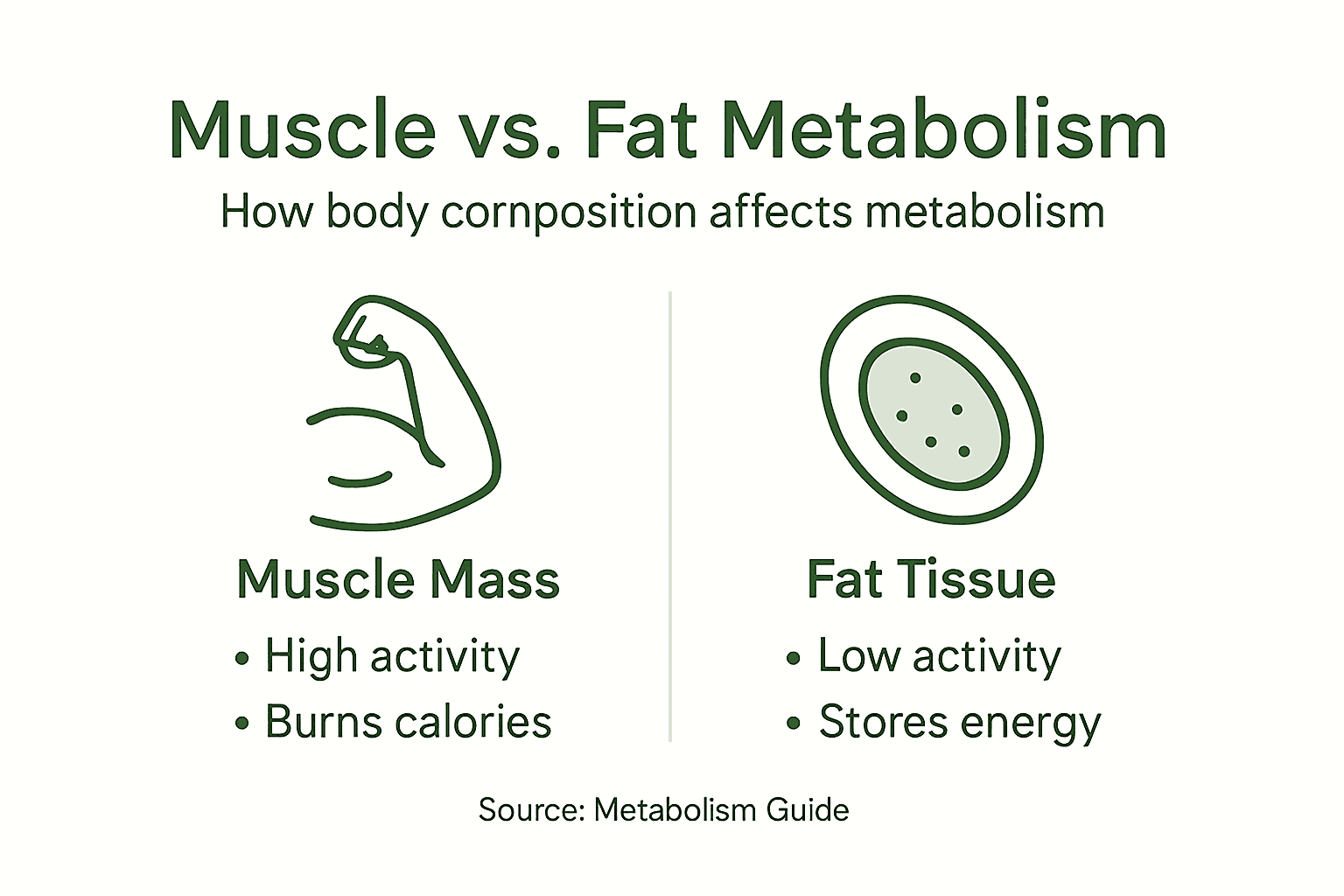
Key differences between muscle and fat tissue metabolism include:
Here’s a side-by-side summary of metabolic activity differences between muscle and fat tissue:
| Tissue Type | Caloric Burn at Rest (per lb) | Primary Function | Impact on Metabolic Rate |
|---|---|---|---|
| Muscle | About 6 calories daily | Energy utilization, movement | Major contributor to higher metabolism |
| Fat | About 2 calories daily | Energy storage | Minimal effect on metabolism |
- Muscle burns approximately 6 calories per pound at rest
- Fat burns only 2 calories per pound at rest
- Muscle requires continuous energy for maintenance
- Fat primarily serves as energy storage
- Muscle tissue has higher mitochondrial density
The metabolic implications of these differences are profound. Muscle tissue acts like a metabolic engine, constantly requiring energy for protein synthesis, cellular repair, and maintenance. In contrast, fat tissue remains relatively inert, serving primarily as an energy storage mechanism.
Muscle mass is the primary driver of resting metabolic rate, making it crucial for long-term weight management and metabolic health.
The metabolic advantages of muscle tissue become even more pronounced when considering long-term health outcomes:
- Higher muscle mass increases baseline metabolism
- More muscle means more efficient energy utilization
- Muscle tissue helps regulate insulin sensitivity
- Enhanced metabolism supports weight management
- Muscle provides metabolic flexibility with age
Pro tip: Prioritize resistance training and protein intake to gradually increase muscle mass, effectively turning your body into a more efficient metabolic machine.
Hormones, Insulin Sensitivity, and Muscle
Skeletal muscle plays a critical role in hormonal regulation and metabolic health, functioning as both a receptor and generator of crucial hormonal signals. Muscle’s endocrine capabilities extend far beyond simple movement, positioning it as a key player in metabolic communication and insulin sensitivity.
At the core of muscle’s hormonal interactions are complex signaling mechanisms that directly impact metabolic function. Insulin-mediated glucose uptake occurs primarily in skeletal muscle, making it the primary site for metabolic regulation and a critical determinant of overall metabolic health.
Key hormones influencing muscle metabolism include:
- Insulin: Regulates glucose uptake and storage
- Growth Hormone: Stimulates muscle protein synthesis
- Testosterone: Supports muscle mass and strength
- Cortisol: Influences muscle protein breakdown
- IGF-1: Promotes muscle cell growth and regeneration
The intricate relationship between muscle and hormonal systems creates a dynamic metabolic environment. Muscle tissue doesn’t just respond to hormonal signals – it actively generates myokines, which are signaling molecules that can improve insulin sensitivity and reduce inflammation.
Muscle is not just a passive tissue, but an active endocrine organ that communicates complex metabolic information.
The metabolic implications of muscle’s hormonal interactions are profound:
- Enhanced insulin sensitivity reduces diabetes risk
- Better hormone regulation supports weight management
- Improved muscle quality leads to more stable metabolic responses
- Reduced systemic inflammation through myokine production
- More efficient energy utilization across bodily systems
Pro tip: Combine resistance training with balanced nutrition to optimize muscle’s hormonal responsiveness and improve overall metabolic health.
Resistance Training’s Role in Metabolic Health
Resistance training represents a powerful intervention for metabolic health, extending far beyond simple muscle building. Cardiovascular disease risk reduction demonstrates that targeted strength training can dramatically improve overall physiological functioning and metabolic responses.
The metabolic benefits of resistance training are multifaceted and profound. Cardiometabolic health improvements emerge through complex physiological adaptations that transform how the body processes energy, regulates hormones, and maintains cellular health.
Key metabolic benefits of resistance training include:
- Increased muscle mass and metabolic rate
- Enhanced insulin sensitivity
- Improved glucose metabolism
- Reduced inflammation markers
- Better cardiovascular function
- Increased mitochondrial efficiency
- Hormonal balance optimization
Resistance training triggers a cascade of metabolic adaptations that extend well beyond the workout itself. The body responds by becoming more metabolically flexible, improving its ability to switch between energy sources and maintain stable blood sugar levels.
Resistance training is not just exercise – it’s a powerful metabolic medicine that reengineers cellular functioning.
The long-term metabolic impacts of consistent resistance training are substantial:
Below is a reference table highlighting how resistance training transforms metabolic health:
| Resistance Training Benefit | Mechanism | Long-Term Health Effect |
|---|---|---|
| Higher muscle mass | Stimulates protein synthesis | More efficient calorie burning |
| Better insulin sensitivity | Increases glucose uptake | Lower diabetes risk |
| Reduced inflammation | Boosts myokine production | Improved cardiovascular health |
- Reduced all-cause mortality risk
- Improved body composition
- Enhanced metabolic flexibility
- Better hormonal regulation
- Increased overall functional capacity
Pro tip: Aim for 2-3 resistance training sessions weekly, focusing on compound movements that engage multiple muscle groups to maximize metabolic benefits.
Common Misconceptions About Muscle and Metabolism
Many widely held beliefs about muscle metabolism are not only inaccurate but can significantly hinder personal fitness and health strategies. Muscle adaptation science reveals that our understanding of muscle development is far more complex than traditional assumptions suggest.
People often operate under misconceptions that limit their metabolic potential. Muscle fiber research demonstrates that muscle biology is dynamic and adaptable, challenging long-standing myths about muscle development, training, and metabolic function.
Common misconceptions about muscle and metabolism include:
- Muscle can only be built by lifting extremely heavy weights
- Muscle mass is entirely genetic and unchangeable
- Taking a break from exercise means losing all progress
- Cardio is more important for metabolism than strength training
- All muscle fibers are permanently fixed
- Older adults cannot build significant muscle mass
- More protein automatically means more muscle
The reality is that muscle tissue is incredibly responsive and adaptive. Contrary to popular belief, muscle fibers exist on a continuum and can shift with targeted training, nutrition, and consistent effort. Our bodies possess remarkable plasticity that allows for ongoing muscle development and metabolic optimization.
Not all muscle myths are harmless – some can prevent individuals from achieving their true metabolic potential.
Most misunderstood aspects of muscle metabolism include:
- Muscle adaptation is slower but more permanent than most people realize
- Muscle fibers can transform with specific training stimuli
- Metabolic capacity can be significantly improved at any age
- Genetics influence but do not determine muscle potential
- Consistent, strategic training matters more than intense, sporadic efforts
Pro tip: Approach muscle development with patience and scientific understanding, recognizing that consistent, progressive training yields more sustainable results than believing in oversimplified fitness myths.
Unlock Your Metabolism by Building Muscle Mass Today
The article explains the powerful role of muscle mass in boosting metabolism through improved insulin sensitivity, higher resting metabolic rate, and enhanced hormonal balance. If you struggle with slow metabolism or feel frustrated by diets that ignore muscle health, you are not alone. Many people do not realize that preserving and building muscle mass is essential to long-term metabolic health and sustainable weight management. Concepts like protein synthesis, myokine signaling, and metabolic flexibility are key to transforming your body’s energy use.

Take control of your metabolic health with Metabolism Guide. Our doctor-led, science-based program empowers you to understand and improve your metabolism beyond calorie counting or fad diets. Learn how to optimize muscle mass, hormones, and nutrition to create lasting change. Start now to experience the metabolic boost that consistent resistance training and personalized support can provide. Visit Metabolism Guide to begin your journey toward better metabolism and vibrant health today.
Frequently Asked Questions
What role does muscle mass play in metabolism?
Muscle mass is a metabolically active tissue that burns calories, influences energy expenditure, and plays a critical role in regulating glucose and lipid metabolism. Higher muscle mass usually leads to an increased resting metabolic rate, enhancing overall metabolic health.
How does muscle mass affect insulin sensitivity?
Skeletal muscle is the primary site for insulin-mediated glucose uptake. Increased muscle mass improves insulin sensitivity, reducing the risk of metabolic disorders like type 2 diabetes and supporting overall metabolic function.
What are the benefits of resistance training for muscle mass and metabolism?
Resistance training increases muscle mass and resting metabolic rate, enhances insulin sensitivity, improves glucose metabolism, and contributes to better hormonal regulation and cardiovascular health, resulting in long-term improvements in metabolic health.
Can older adults build muscle mass to boost metabolism?
Yes, older adults can build significant muscle mass through consistent resistance training. Age does not limit muscle development; with dedicated effort, individuals can improve their muscle mass and, consequently, their metabolic health.
